Month in a Minute: Top Headlines from the Indian Renewable Sector in January 2026

KUSUM projects in Maharashtra delayed as land leasing costs soar

thumbnail

Follow Mercom India on WhatsApp for exclusive updates on clean energy news and insights


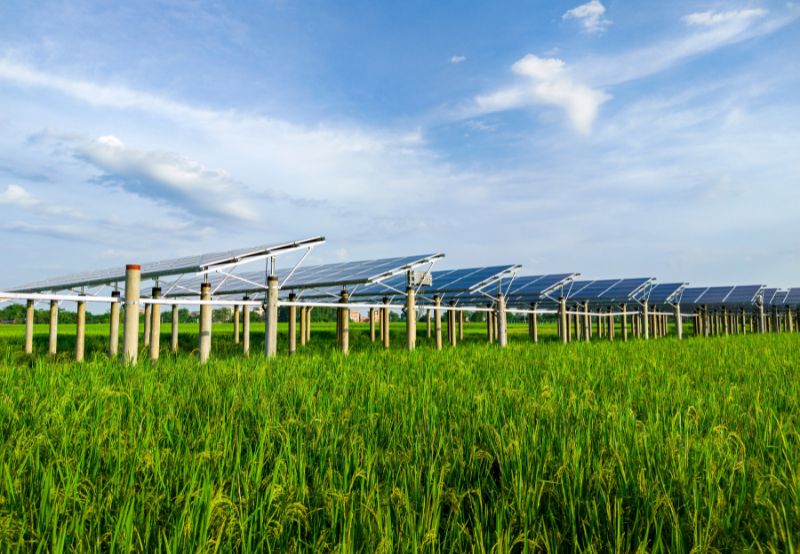
The rapid increase in solar installations under Pradhan Mantri Kisan Urja Suraksha evam Utthaan Mahabhiyaan (PM-KUSUM) in Maharashtra is leading to developers facing high land-leasing costs and delays in project execution. The issue of higher land leasing is most prominent in Maharashtra, as the state accounts for the majority of PM-KUSUM projects in the country. According to KUSUM developers, land costs have risen by 25% to 30% since the program was launched in Maharashtra.

The rapid rollout of the PM-KUSUM program is gradually transforming India’s rural solar landscape by enabling decentralized, feeder-level solar power projects for agricultural use. The solarization of agricultural pumps in states such as Maharashtra and Rajasthan has also led to an increase in the use of robotic module-cleaning systems under PM-KUSUM and state-linked programs such as Maharashtra’s Mukhyamantri Saur Krushi Vahini Yojana.

The total global corporate solar funding dropped by 16% year-over-year (YoY) with $22.2 billion raised in 175 deals, compared to $26.3 billion in 157 deals in 2024, according to Mercom Capital Group’s newly released 2025 Annual and Q4 Solar Funding and M&A Report. Global venture capital and private equity funding in the solar sector totaled $3.5 billion across 75 deals in 2025, 22% lower than the $4.5 billion raised in 60 deals in the previous year.

In 2025, tender announcements for utility-scale solar projects declined to nearly 44 GW, down 45% from 2024, according to Mercom India Research. During the year, around 20 GW of projects were auctioned, a 57% decline compared to 2024. Solar tender and auction activity declined in 2025 as state distribution companies showed limited appetite for signing new long-term solar power purchase agreements amid falling daytime power prices and a backlog of awarded solar and wind capacity awaiting power sale agreements.

India added 6.3 GW of wind power capacity in 2025, an 85.2% YoY increase from 3.4 GW in 2024, according to Mercom India Research. The additions marked the highest annual wind installations recorded in the country. India’s wind power market improved in 2025, supported by higher tender activity, stronger bidder participation, and more competitive tariffs. While land acquisition and grid connectivity remain challenges, developers are addressing these issues, helping keep projects on track for commissioning.

A new building code rolled out by the Bureau of Energy Efficiency (BEE) to improve energy efficiency in commercial buildings and office spaces could drive renewable energy adoption, provided states incorporate it into local building bylaws. The BEE has issued the Energy Conservation and Sustainable Building Code 2024, which establishes standards to enhance energy efficiency in commercial and office buildings.

In recent standalone battery energy storage system (BESS) auctions, several companies have won projects at tariffs below the levelized cost of storage, signaling an increasingly aggressive bidding environment. At such low tariffs, there is a fear that projects may become unviable. Industry insiders say some bidders have secured projects by hedging against a future decline in BESS prices, betting that projects will become viable at lower tariffs over time. This trend of underbidding has become more pronounced, with tariffs in a free fall.

The Ministry of Power (MoP) proposed amendments to the Electricity Rules 2005 to simplify the regulatory framework for captive power generation. Under the existing rules, a power project qualifies as a captive generating project only if two core conditions are met. Captive users must hold at least 26% ownership in the project and consume at least 51% of the electricity generated.

The Ministry of Road Transport and Highways released draft guidelines for implementing the battery pack Aadhaar system, a nationwide digital identification framework designed to ensure end-to-end traceability of battery packs throughout their lifecycle. Battery pack Aadhaar introduces a unique digital identity for every battery pack placed on the market, enabling standardized tracking from manufacturing and usage to repurposing, recycling, or final disposal.

The Ministry of Heavy Industries notified amendments to the Production-Linked Incentive (PLI) program for the automobile and auto components industry. The amendments have revised the performance criteria for electric vehicles (EVs) eligible for incentives and aligned them with new national electric mobility programs, such as the PM Electric Drive Revolution in Innovative Vehicle Enhancement program. Earlier, under the PLI-auto notification, EVs were eligible for incentives if they met the Faster Adoption & Manufacturing of Electric Vehicles in India-II criteria; now, it is linked to category-specific performance criteria.

The Delhi Government approved a proposal to implement a Carbon Credit Monetization Framework to convert the city’s green projects into revenue-generating assets to support pollution control and sustainability efforts. Under the framework, every verified reduction of one metric ton of CO2 equivalent from Delhi’s climate initiatives would generate a tradable carbon credit, which can be sold in voluntary or compliance carbon markets globally.

MoP temporarily waived the Department for Promotion of Industry and Internal Trade registration requirement for bidders using lithium-ion cell technology with transfer-of-technology arrangements involving land-border-sharing countries, allowing them to participate in tenders for grid-connected battery energy storage projects. The waiver will be for a one-year term, effective January 9, 2026.

MoP released the draft National Electricity Policy (NEP), 2026, for public consultation, aiming to align India’s power sector with the country’s long-term energy transition goals. The central vision of NEP 2026 is to ensure a reliable, affordable, and high-quality 24×7 electricity supply through a financially viable and environmentally sustainable power sector. Draft NEP 2026 has been formulated under the mandate of the Electricity Act, 2003, replacing the earlier policy notified in 2005.

In a major relief for the renewable energy sector, the Ministry of New and Renewable Energy approved time extensions for projects delayed due to the prolonged case in the Supreme Court over power transmission lines in the Great Indian Bustard areas of Rajasthan and Gujarat. The time extension will be calculated from the later of the date on which the developer applied for approval under Section 68 of the Electricity Act, 2003, or March 21, 2024, up to December 19, 2025, the date on which the Supreme Court delivered its final judgment.

Bengaluru-based lithium-ion battery solutions provider Nash Energy commissioned a 2 GWh fully automated prismatic battery pack manufacturing line at its facility in Dobbspet, Karnataka. Prismatic battery packs incorporate flat, rectangular Li-ion cells with stacked internal components and a rigid metal casing. Such batteries enable compact stacking with minimal wasted space, offering high energy density and efficient space utilization for applications such as electric vehicles and battery energy storage systems.

The CSIR-National Physical Laboratory launched two apex-level calibration facilities to strengthen India’s national quality infrastructure and reduce reliance on foreign certifications. One of them is the National Primary Standard Facility for Solar Cell Calibration, a system to calibrate solar cells and modules. It is built around a laser-based differential spectral responsivity primary reference measurement system developed in collaboration with PTB Germany.

RELATED POSTS

Get the most relevant India solar and clean energy news.

RECENT POSTS