PM KUSUM 2.0 to Have 10 GW Agrivoltaics Component: Pralhad Joshi

The new component will enable farmers to generate power alongside crops

thumbnail

Follow Mercom India on WhatsApp for exclusive updates on clean energy news and insights


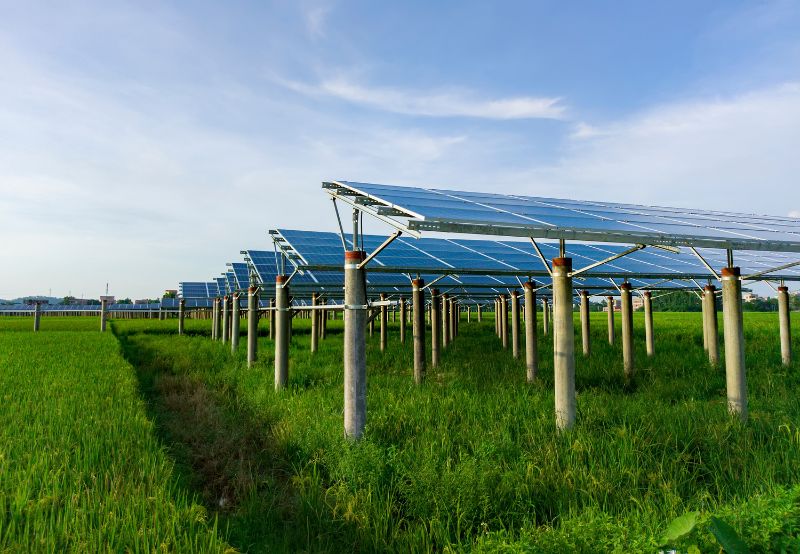
The second phase of the Pradhan Mantri Kisan Urja Suraksha evam Utthaan Mahabhiyan (PM-KUSUM) will include a 10 GW agrivoltaics component to promote the colocation of solar panels with crops.

According to Minister for New and Renewable Energy Pralhad Joshi, the Union Government is preparing PM-KUSUM 2.0, with a focus on enabling farmers to generate electricity while continuing to cultivate agriculture on the same land. This will create a decentralized renewable energy model across rural India and support farm productivity.

As of November 2025, more than 1 million feeder-level installations have been solarized under the existing PM-KUSUM program, with Maharashtra accounting for 654,695 installations and Rajasthan 117,840. In all, over 1.3 million grid-connected agricultural pumps have been solarized.

The program entails central financial assistance (CFA) of ₹344.22 billion (~$3.8 billion), with feeder-level solarization projects eligible for CFA of up to 30% of installation costs, capped at ₹10.5 million (~$116,488)/MW.

“A farmer irrigating his field today may be doing so using solar power, and a household that once worried about electricity bills may now be producing its own electricity through rooftop solar. This is not just an energy transition, it is also a transformation of the rural economy,” Joshi said.

The PM-KUSUM program was launched in 2019 to enhance energy access, increase farmers’ incomes, and curb environmental pollution using solar energy. The program will end of March 31, 2026.

The minister also emphasized that solar irrigation pumps are playing a significant role in reducing farmers’ dependence on diesel-based irrigation systems.

Diesel irrigation can cost nearly ₹6,790 (~$73.88)/acre for wheat cultivation and more than ₹8,000 (~$87.05)/acre for crops such as cotton, making it a major cost component in farming.

Solar irrigation pumps, however, can help farmers save between ₹5,000 (~$54.41) and ₹6,500 (~$70.73)/acre annually, while also enabling reliable daytime irrigation and reducing emissions associated with diesel use.

Last October, the Ministry of New and Renewable Energy clarified that the relaxation allowing the use of non-DCR modules for solar projects under Component C of the PM KUSUM program applies only to projects that had letters of award issued on or before March 31, 2024.

RELATED POSTS

Get the most relevant India solar and clean energy news.

RECENT POSTS