

Daily News Wrap-Up: Maharashtra Banking Curbs Make Storage Key for Solar
Solar’s share in India’s renewable energy capacity rises to 55% in Q1 2026
May 4, 2026

Follow Mercom India on WhatsApp for exclusive updates on clean energy news and insights
Maharashtra’s revised renewable energy and multi-year tariff framework ties solar consumption directly to the time of generation. The order defines solar hours as 09:00 to 17:00, an eight-hour window that captures the majority of solar generation. Energy banked in this period can be drawn only within the same time-of-day slot.
Solar power accounted for 28.4% of total installed power capacity and 55% of total installed renewable energy capacity as of March 2026, up from 26.5% and 52.7%, respectively, in the previous quarter. Solar project installations have increased by about 12% quarter-over-quarter and 46% year-over-year.
The Central Electricity Regulatory Commission held that renewable energy generators are liable to pay bilateral transmission charges for the associated transmission system until their projects achieve commercial operation. It rejected their request to quash the invoices issued by the Central Transmission Utility of India.
The Haryana Electricity Regulatory Commission approved the procurement of solar power by the Haryana Power Purchase Center for a cumulative capacity of 126.8 MW under Component A of the Pradhan Mantri Kisan Urja Suraksha evam Utthaan Mahabhiyan program at a levelized tariff of ₹3.11 (~$0.0328)/kWh.
The Ministry of Heavy Industries amended certain provisions of the PM Electric Drive Revolution in Innovative Vehicle Enhancement program, mandating an increase in domestic production of specific components for electric trucks under the N2 and N3 categories. The N2 category includes trucks with a gross vehicle weight (GVW) exceeding 3.5 tons but not exceeding 12 tons, while the N3 category includes trucks with a GVW exceeding 12 tons but under 55 tons.
The Central Electricity Regulatory Commission released a staff paper outlining a framework for introducing capacity markets in India to address gaps in electricity resource adequacy, reserve availability, and short-term market efficiency. Stakeholders can submit their comments by May 27, 2026. India’s current system relies on long-term power purchase agreements that serve as capacity contracts.
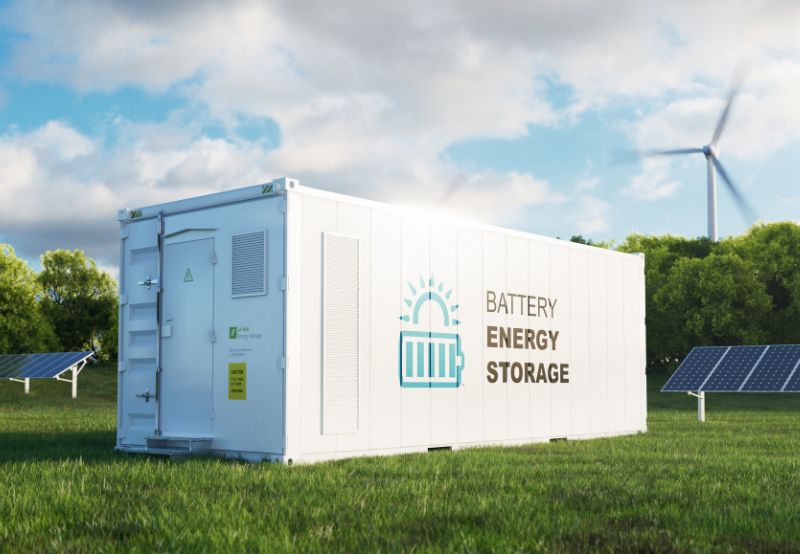
The Maharashtra state cabinet approved a five-year ₹123.03 billion (~$1.48 billion) program to accelerate the deployment of renewable energy and storage. The initiative, Maharashtra: Accelerating Green Energy and Storage Technologies in Connected Grid, focuses on addressing rising electricity demand through renewable sources and improving grid capacity.
As commercial and industrial (C&I) consumers, particularly micro, small, and medium enterprises, seek to transition to sustainable energy solutions, the upfront capital required to set up projects is often a key barrier. However, banks and non-banking financial companies are increasingly addressing this challenge by offering customized financing solutions for the C&I segment.
Mumbai-based Bajel Projects, an engineering, procurement, and construction company specializing in power transmission and distribution infrastructure, secured two international orders for 500 kV overhead transmission lines in the Middle East and North Africa region from undisclosed customers.
Dalmia Cement (Bharat), a wholly owned subsidiary of Dalmia Bharat, entered into agreements to acquire a 41% stake in Oyster Green Hybrid Five to source power from its 35.6 MW wind-solar hybrid project on a captive basis. The stake corresponds to 26% on a fully diluted basis. Oyster Green Hybrid Five is a special purpose vehicle of Oyster Renewable Energy.
Solar module manufacturer Waaree Energies’ revenue from operations for the fourth quarter of the financial year 2026 rose 111.8% year-over-year to ₹84.80 billion (~$894.34 million) from ₹40.04 billion (~$422.28 million). The company attributed the revenue increase to strong module sales, advancing upstream integration, and consistent delivery through operational efficiency.
Clean energy sources met all global electricity demand growth in 2025, marking a structural turning point for the power sector and halting the long-standing expansion of fossil fuel generation, according to a report by Ember. Global electricity demand rose by 2.8% year-over-year, or 849 TWh. Low-carbon generation increased by 887 TWh, exceeding demand growth and resulting in a slight 38 TWh decline in fossil generation, or 0.2%.
ROSI, a France-based solar module recycling company, secured over €20 million (~$23 million) in funding to support its expansion across Europe. The funding includes a Series B round along with French and European grants. The company said the capital will support the rollout of its industrial projects, including a planned facility in Teruel, Spain.
Eurowind Energy, a Denmark-based renewable energy project developer, entered into a definitive agreement with Blackstone Infrastructure for an investment of up to €2 billion ($2.34 billion). The investment will give Blackstone an initial 24.7% ownership stake in Eurowind Energy.


Mercom Staff
More articles from Mercom Staff.