Storage Becomes Critical to Solar Economics After Maharashtra Banking Changes
Storage allows consumers to access higher-tariff periods and maintain cost advantages
April 30, 2026
Follow Mercom India on WhatsApp for exclusive updates on clean energy news and insights
Maharashtra’s revised renewable energy and multi-year tariff framework ties solar consumption directly to the time of generation. The order defines solar hours as 09:00 to 17:00, an eight-hour window that captures the majority of solar generation. Energy banked in this period can be drawn only within the same time-of-day (ToD) slot.
Under the earlier framework, banked solar energy could be used across all non-peak hours within the billing cycle. This included night and morning periods, with the only restriction that such energy could not be drawn during peak hours.
The revised structure limits this adjustment to the solar time slot only. The usable banking window is therefore now restricted to the 09:00 to 17:00 period. Consumption outside this window must be met through grid supply or other means.
The ToD tariff structure reinforces this alignment. Solar hours receive a 15% to 25% rebate, while peak hours from 17:00 to 24:00 carry a 20% premium over the base tariff. The night-hour rebate of ₹0.80 (~$0.0085)/kWh has been removed.
The Maharashtra Electricity Regulatory Commission (MERC) has linked these changes to the increase in daytime renewable generation and the need to shift consumption toward periods of higher solar availability.
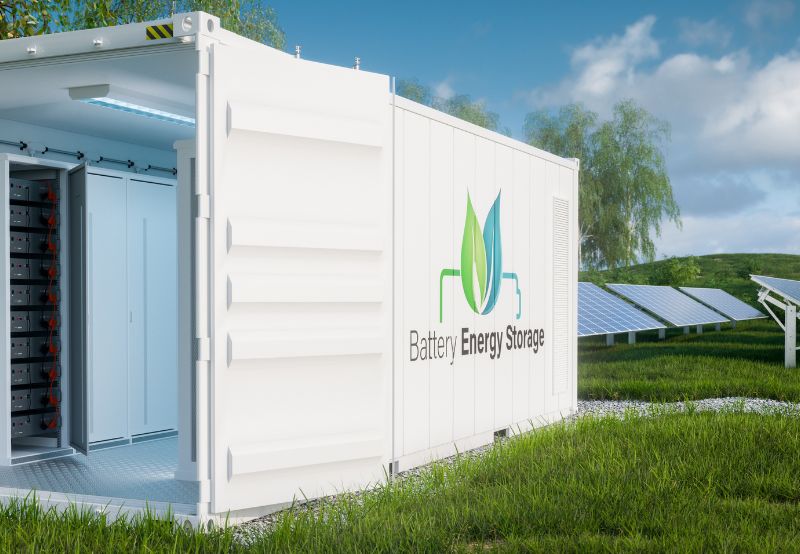
A storage requirement is introduced alongside these provisions. New renewable energy projects above 100 kW must include battery capacity equal to 50% of installed capacity, with a minimum two-hour discharge duration, effective April 1, 2026. This requirement places the responsibility for balancing generation and consumption at the project level.
The cost structure reflects this addition. The capital expenditure (capex) for a battery storage system currently ranges from ₹12,000 (~$128)/kWh to ₹15,000 (~$160)/kWh. At these price levels, a 1 MWh battery storage system would require an initial investment of roughly ₹12 million (~$127,592) to ₹15 million (~$159,490).
For a 1 MW solar project that meets the minimum storage requirement, this significantly increases the project installation cost. A 1 MW solar project that previously required around ₹40 million (~$425,306) to ₹42 million (~$446,571) now requires up to ₹65 million (~$691,121) when battery storage is included.
Delivered power cost increases correspondingly from about ₹2.5 (~$0.026)/kWh for standalone solar to around ₹5 (~$0.053)/kWh, and to ₹6 (~$0.064)/kWh when storage is integrated.
The increase in capital costs is accompanied by a change in how savings are realized over time. For HT I (A) industrial consumers, the base tariff is ₹7.48 (~$0.080)/kWh and the peak ToD tariff is ₹8.976 (~$0.096)/kWh. For HT II (A) commercial consumers, the corresponding tariffs are ₹9.26 (~$0.099)/kWh and ₹11.112 (~$0.118)/kWh.
At these tariffs, daytime solar consumption reduces costs by about ₹4.98 (~$0.053)/kWh for industrial consumers and ₹6.76 (~$0.072)/kWh for commercial consumers.
When energy is stored and used during higher-tariff periods, it continues to substitute grid consumption at those rates, with a difference of about ₹2.98 (~$0.032)/kWh for industrial consumers and ₹5.11 (~$0.054)/kWh for commercial consumers. Here, we are not considering the operating costs of the battery storage system.
The falling tariffs discovered in solar-plus-storage auctions also demonstrate the improving economics of installing energy storage alongside solar projects.
The savings indicate that, even with higher upfront investment, the ability to offset both daytime and higher-tariff consumption periods contributes to overall cost reduction over the life of the project.
Project design now depends on how generation, storage, and consumption are aligned across ToD slots. Solar energy used during the day receives tariff rebates, while stored energy enables consumption during periods with different tariff structures.