


Fujiyama to Add 1 GWh Lithium Battery Production Capacity in Madhya Pradesh
The company plans to invest ₹50 million to fund the capacity addition
August 25, 2026

Follow Mercom India on WhatsApp for exclusive updates on clean energy news and insights
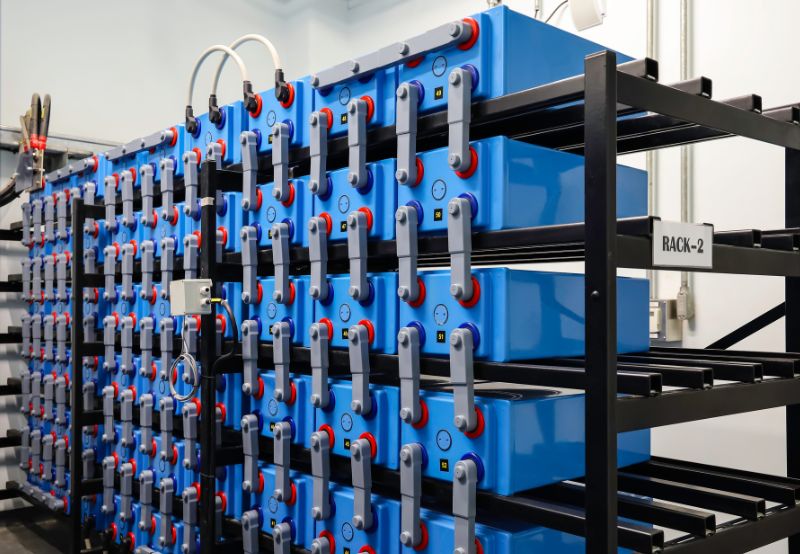
Solar energy solutions provider Fujiyama Power Systems (UTL Solar) will invest ₹50 million (~$524,001) to add 1 GWh of lithium battery manufacturing capacity at its Ratlam plant in Madhya Pradesh.
The company plans to finance the expenditure through internal accruals.
The proposed 1 GWh capacity will be added to the 2 GWh expansion previously announced for the Ratlam facility. After completing both expansions, the company expects the plant’s lithium battery manufacturing capacity to reach approximately 3.5 GWh.
The additional capacity is projected to be commissioned and begin commercial operations by the second quarter (Q2) of the financial year (FY) 2027.
Fujiyama said the expansion is intended to strengthen its lithium battery manufacturing capabilities, address anticipated market demand, and support its growth plans in the energy storage segment.
The company currently has 500 MWh of operational lithium battery manufacturing capacity at its facility in Greater Noida, Uttar Pradesh. The facility is operating at approximately 70% capacity utilization.
Recently, Fujiyama announced the commissioning of its 2 GW power electronics manufacturing facility in Ratlam district of Madhya Pradesh. The newly commissioned facility will manufacture a wide range of power electronics products, including solar inverters, UPS systems and other related solutions.
This May, Fujiyama commissioned a 2 GW solar module manufacturing facility in Ratlam, Madhya Pradesh, as part of an integrated manufacturing expansion. The facility is also planned to manufacture batteries and inverters, supporting the company’s broader push into energy storage and solar power electronics.
India added 4.6 GWh of battery energy storage capacity in Q1 2026, a 941% increase from 442.7 MWh added in Q4 2025, according to Mercom India Research’s Q1 2026 India’s Energy Storage Landscape Report. The country’s cumulative installed battery energy storage capacity reached 5.9 GWh as of March 2026.
Standalone energy storage accounted for 73% of India’s cumulative installed capacity, followed by 15% from solar-plus-wind with storage (RTC capabilities) projects and 11% from solar-plus-energy storage projects. Other configurations, including solar-plus-wind with storage and floating solar with storage, contributed less than 1%.


Parth Shukla
More articles from Parth Shukla.