


Daily News Wrap-Up: Solar Tenders, Auctions Down in 2025
Rising grid tariffs push businesses to procure solar power
January 27, 2026

Follow Mercom India on WhatsApp for exclusive updates on clean energy news and insights
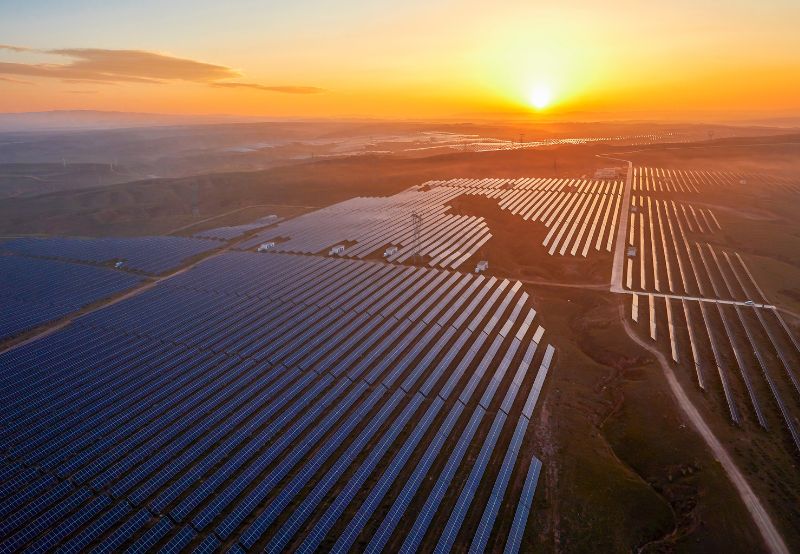
In 2025, tender announcements for utility-scale solar projects declined to nearly 44 GW, down 45% from 2024, according to Mercom India Research. During the year, around 20 GW of projects were auctioned, a 57% decline compared to 2024. Solar tender and auction activity declined in 2025 as state distribution companies showed limited appetite for signing new long-term solar power purchase agreements amid falling daytime power prices and a backlog of awarded solar and wind capacity awaiting power sale agreements.
Rising electricity tariffs and evolving regulations are pushing India’s commercial and industrial consumers to rethink how they procure power. Businesses are increasingly turning to renewable energy sources to meet their power requirements. Rooftop solar, green energy open access, supported by battery energy storage solutions as required, can significantly reduce electricity costs while improving the availability of reliable power.
The Gujarat Electricity Regulatory Commission allowed petitions filed by Gujarat Energy Transmission Corporation seeking amendments to the state’s wind, solar, and wind–solar hybrid tariff orders, 2024, granting significant relief to renewable energy developers by restoring longer timelines for evacuation infrastructure and commissioning.
Hyderabad-based solar module and cell manufacturer, Premier Energies, announced the commissioning of a 400 MW solar photovoltaic cell manufacturing facility at its E-City plant in Maheshwaram, Telangana, through its wholly owned subsidiary, Premier Energies Photovoltaic. The commissioning is part of the expansion of its existing facility.
The Union Cabinet approved equity support of ₹50 billion (~$545.72 million) to the Small Industries Development Bank of India (SIDBI). SIDBI offers loans to micro, small, and medium enterprises for the purchase of machinery, working capital, and projects, including solar installations. The Department of Financial Services will infuse this equity support into SIDBI in three tranches.
Nxtra Data, Airtel’s data centre arm, outlined its sustainability strategy and performance for the financial year 2025 in its Sustainability Report, highlighting progress in energy transition, climate action, energy efficiency, water stewardship, and green buildings. The company highlighted that an efficient energy transition was the need of the hour to meet the growing power demands of data centers.
NTPC invited expressions of interest to develop a pilot or utility-scale project for a compressed air-based, including liquified air-based, long-duration energy storage system with a storage capacity of up to 1,000 MWh. The last date to submit the bids is February 23, 2026, and bids will be opened the following day. The EoI does not require any earnest money deposit or bank guarantee at this stage.
New Delhi-based solar and waste-to-energy company SAEL Industries commissioned 800 MW of solar projects at the Khavda Renewable Energy Park in Gujarat. The company commissioned projects with capacities of 400 MWp and 500 MWp through its subsidiaries, SAEL Solar P4 and SAEL Solar P5, respectively.
Power transmission and renewable energy company IndiGrid raised ₹15 billion (~$163.15 million) in funding through an institutional placement, bringing the total funds raised in the financial year 2026 to ₹19.38 billion (~$210.8 million). IndiGrid Investment Managers, the investment management arm of IndiGrid, approved this fundraise last year.
Researchers at the University of New South Wales, Sydney, set a world record efficiency for solar cells based on antimony chalcogenide, achieving a certified power conversion efficiency of 10.7%, according to a study published in Nature Energy. The result, independently verified and supported by a laboratory-measured efficiency of 11.02%, marks the highest confirmed performance for the emerging photovoltaic material and its first inclusion in the international Solar Cell Efficiency Tables.
Berlin-based climate fintech company Cloover secured over $1.2 billion in funding commitments, comprising equity and debt facilities from investors, to build an AI operating system to support residential and decentralized renewable energy solutions. The funding package comprised $22 million in Series A equity financing and a $1.2 billion debt facility.
Asia-Pacific continues to drive global wind growth, led by China and India, as worldwide wind capacity is expected to surpass 2 TW by 2030, according to the Global Wind Energy Council’s (GWEC) Global Wind Market Outlook Q3 2025 Update. GWEC Market Intelligence revised its 2025 installation outlook upward by 8.8%, or 13.3 GW, reflecting faster-than-expected buildout across Asia.


Mercom Staff
More articles from Mercom Staff.