


Antimony Chalcogenide Solar Cell Efficiency Hits a New High of 10.7%
Adding a small amount of sodium sulfide stabilized the reaction kinetics
January 23, 2026

Follow Mercom India on WhatsApp for exclusive updates on clean energy news and insights
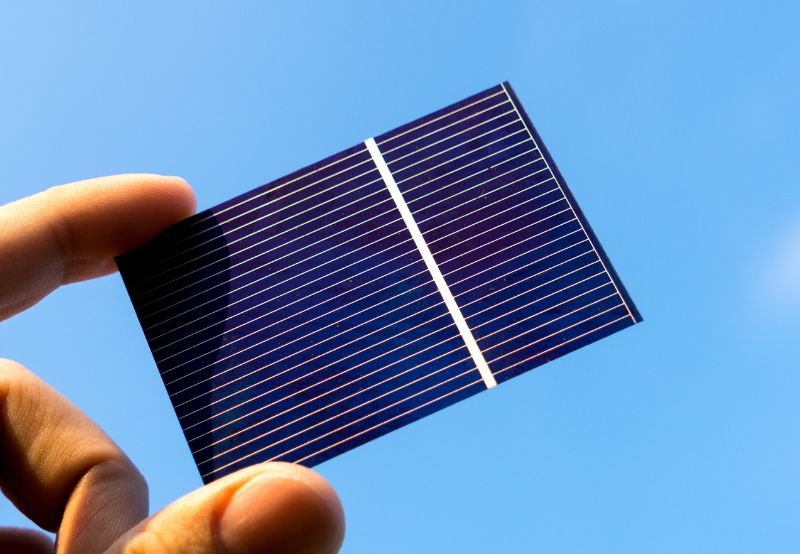
Researchers at the University of New South Wales (UNSW) Sydney have set a world record efficiency for solar cells based on antimony chalcogenide, achieving a certified power conversion efficiency of 10.7%, according to a study published in Nature Energy.
The result, independently verified and supported by a laboratory-measured efficiency of 11.02%, marks the highest confirmed performance for the emerging photovoltaic material and its first inclusion in the international Solar Cell Efficiency Tables.
According to the research team, the result is significant not only because it marks an efficiency milestone but also because it identifies the fundamental chemical mechanism that had previously limited the material’s performance.
Antimony chalcogenide solar cells based on the compound Sb₂(S, Se)₃ have been under development for several years, but efficiencies have remained below 10% since 2020 despite multiple fabrication improvements.
The researchers identified that the key bottleneck was an uneven distribution of sulfur and selenium during hydrothermal deposition, a low-temperature manufacturing process used to form the light-absorbing layer.
This non-uniform elemental distribution created an unfavorable gradient in the valence-band maximum across the absorber layer, effectively forming an internal energy barrier.
That barrier impeded the movement of photogenerated charge carriers, increasing recombination losses and reducing the amount of electricity that could be extracted from sunlight.
To address this issue, the UNSW team added a small amount of sodium sulfide to the precursor solution used in the hydrothermal synthesis. This additive stabilized the reaction kinetics, resulting in a more uniform depth-dependent distribution of sulfur and selenium.
The improved chemical uniformity flattened the valence-band maximum gradient and suppressed the formation of deep-level defects in the absorber. The outcome was a measurable improvement in material quality and device performance, culminating in a certified efficiency of 10.7 ± 0.37% by CSIRO, one of nine internationally recognized independent photovoltaic measurement centers.
Antimony chalcogenide is attracting attention as a potential top-cell material for tandem solar architectures, where multiple cells are stacked to capture different parts of the solar spectrum. Tandem configurations are widely regarded as the next major step for commercial solar technology, particularly when paired with conventional silicon cells.
The material offers several practical advantages, including the use of abundant, relatively low-cost elements, an inorganic composition that provides greater long-term stability than some emerging alternatives, and a very high light-absorption coefficient. As a result, a layer only about 300 nanometers thick, roughly one-thousandth the thickness of a human hair, is sufficient to absorb sunlight efficiently.
Additional advantages include low-temperature deposition, which reduces manufacturing energy requirements and supports scalable, cost-efficient production. Beyond tandem panels, the researchers highlighted other commercial use cases.
The material’s ultrathin, semi-transparent nature, combined with a high bifacality of 0.86, makes it suitable for applications such as see-through solar windows. A UNSW-linked spinout, Sydney Solar, is already working to scale window-mounted solar “sticker” products using this technology.
The bandgap of antimony chalcogenide also aligns well with indoor lighting spectra, positioning it for indoor photovoltaic applications, including smart badges, e-paper displays, self-powered sensors, and internet-connected devices, where stability and low-light performance are prioritized over maximum efficiency.
The research team stated that further efficiency gains are expected through defect reduction using chemical passivation techniques, with a near-term target of reaching 12% efficiency as remaining material challenges are addressed.
In November 2025, Researchers at UNSW Sydney claimed they had increased the efficiency of solar technology by utilizing the concept of singlet fission, raising the theoretical efficiency limit of silicon cells to approximately 45%.


Meghana Prasad
More articles from Meghana Prasad.