Solar Policy Consistency Key to Investors’ Confidence in India: Interview

Grew Solar plans to be listed on the bourses after a reverse merger with one of its group companies

thumbnail

Follow Mercom India on WhatsApp for exclusive updates on clean energy news and insights


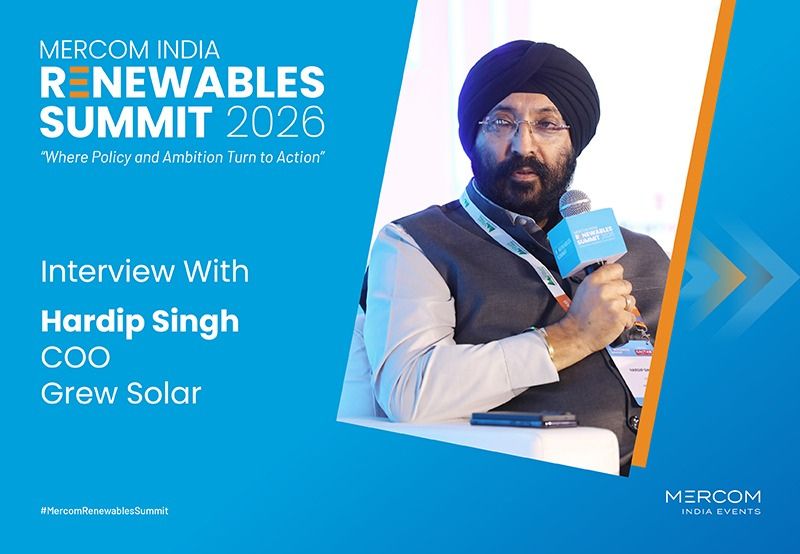
The Approved List of Models and Manufacturers (ALMM) mandate for solar cells, which came into effect on June 1, 2026, is one of the most widely discussed topics in India’s renewable energy industry today. In an interview on the sidelines of the Mercom India Renewables Summit held in New Delhi on July 1 and 2, Hardip Singh, Chief Operating Officer at Grew Solar, said the ALMM requirement for cells was a welcome step, as was the one for ingots and wafers that will come into force in 2028. He also spoke about Grew Solar’s reverse merger with one of its group companies and plans to go public within this year. 

Excerpts from the interview: 

The Approved List of Models and Manufacturers List-II mandate for solar cells is currently one of the biggest topics in the solar industry. With domestic cell manufacturing still lagging module capacity, how do you see the industry evolving? 

The current gap is largely because many manufacturers expected the implementation to be postponed. That assumption wasn’t entirely unreasonable because ALMM for modules had been extended multiple times before finally being enforced. 

The government announced ALMM for cells well in advance, giving manufacturers sufficient time to prepare. However, unlike module manufacturing, setting up cell manufacturing requires significantly higher capital investment, more complex infrastructure, reliable power and water supply, environmental clearances, and handling of chemicals and gases. 

These are normal growing pains for any country trying to build a self-reliant manufacturing ecosystem. The government has also announced ALMM List-III for ingots and wafers from 2028, giving the industry another two years to prepare. 

Do you believe the implementation should have been postponed? 

No. The government had provided adequate notice. Several manufacturers planned accordingly and have already established capacity. Those who assumed another extension delayed their investments. That created the current gap. 

Moreover, there is still a substantial pipeline of non-ALMM projects. Around 70-80 GW of bid-out projects remain, with nearly 40 GW already backed by signed power purchase agreements. These projects will continue to require non-ALMM modules over the next 18 months, giving manufacturers sufficient business during the transition. 

Do you expect a shortage of solar cells during the transition? 

I don’t think so. Today, demand is primarily coming from PM-KUSUM and PM Surya Ghar programs. Utility-scale and retail demand for ALMM-compliant products will increase gradually rather than overnight.  

Over the next six months, I expect roughly 70% of demand to remain for non-ALMM products and about 30% for ALMM-compliant products. By 2027-28, those proportions may reverse, but there will still be a sizeable market for non-ALMM modules. 

Grew Solar manufactures both modules and cells. Will your cell production be used internally or will it also be sold in the market? 

Our cell production line has recently become operational. We have applied for ALMM listing and expect approval within the next few weeks. Only after that can we begin commercial sales. 

Currently, our module manufacturing capacity is 6.5 GW, while our cell capacity is 8 GW. We are also developing an 8 GW ingot and wafer facility for which land acquisition has started. Unless we expand module manufacturing further, we will have surplus cell capacity available for sale. 

Can you elaborate on your ingot and wafer manufacturing plans? 

We are establishing an 8 GW ingot and wafer manufacturing facility. The project is already in an advanced planning stage. Since ALMM List-III comes into effect from June 2028, our objective is to have the first phase of about 3 GW operational by March 2028. 

What are your export plans for modules? 

We are actively pursuing export opportunities. We’ve participated in major international exhibitions such as RE+ in the U.S. and Intersolar Europe in Munich. 

The U.S. remains an attractive market, although recent tariff measures and geopolitical developments have slowed momentum. We expect opportunities to improve once trade agreements are finalized. Europe is also seeking alternatives to Chinese suppliers, which could create opportunities for Indian manufacturers. 

Given the increasing protectionist policies in the U.S., does it still remain an attractive market? 

Yes. Although the U.S. is encouraging domestic manufacturing, demand there continues to grow rapidly. Some Indian companies have established manufacturing facilities in the U.S., but I don’t believe domestic production alone will be sufficient to meet future demand as renewable deployment accelerates. 

How challenging is it to establish manufacturing facilities overseas, particularly in the U.S.? 

The U.S. offers several incentives, but there are also significant challenges. Labor costs are high, utilities are expensive, and regulatory requirements are very different. At present, we have no plans to establish overseas manufacturing. Our focus remains on manufacturing from India. 

From a regulatory and reforms perspective, what changes do you expect from the government to help companies like yours to grow?  

I have always been an advocate for policy consistency. If you don’t have policy consistency, you don’t inspire investor confidence. That (policy inconsistency) was why Indian manufacturers were not initially receiving investments for module manufacturing because the ALMM implementation timeline was repeatedly extended. I think the government also realized this and ensured that ALMM for cells came into effect as announced. 

Now that ALMM for cells has come into effect, ALMM-III for ingots and wafers is also unlikely to be deferred. So people have started working on it, which is good for the country and supports our sustainability goals and self-reliance.  

The most important requirement is policy consistency. Investors need the confidence that government policies will be implemented as announced. 

How easy or difficult is it for companies like yours to get access to capital? Some of the companies in the renewable energy sector are going in for IPOs. Do you have any plans to go public?  

We have already announced a reverse merger with one of our group’s listed companies. We expect Grew Solar to become a listed company by the end of this calendar year. 

As far as investment is concerned, policy certainty is critical. Investors primarily seek stable returns, and consistent policy implementation gives them the confidence to invest. 

Do you think India’s renewable energy targets should extend beyond 2030? 

Absolutely. The 500 GW renewable energy target for 2030 is only an intermediate milestone. India has already announced a net-zero target for 2070. 

One estimate suggests India will require around 3,000 GW of renewable energy by 2050 to achieve net zero by 2070. Solar demand will continue growing rapidly, driven not only by utility-scale projects but also by green hydrogen, electric vehicles, and other electrification initiatives. 

Have these emerging demand drivers influenced Gru Solar’s expansion plans? 

Yes. Our expansion strategy already factors in growing demand from green hydrogen, electric mobility, and other sectors. Hydrogen adoption, in particular, is progressing faster than many people anticipated. We believe these emerging applications will significantly increase long-term demand for solar manufacturing.

RELATED POSTS

Get the most relevant India solar and clean energy news.

RECENT POSTS