


Pune Engineering Firm Eyes Savings on Power Costs with Rooftop Solar
The 150-kW rooftop system is expected to generate 198,000 kWh annually and save ₹1.98 million

Follow Mercom India on WhatsApp for exclusive updates on clean energy news and insights
Manufacturing facilities, with their daytime electricity demand and available rooftop space, are increasingly turning to solar systems to cut their electricity costs.
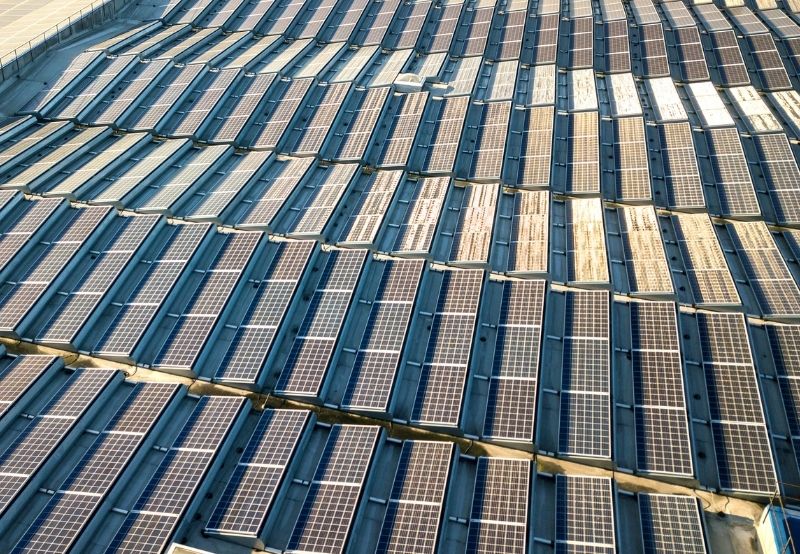
Material handling equipment manufacturer Technovision Engineers has installed a 150-kW rooftop solar system at its facility in Pune, Maharashtra, expected to generate about 198,000 kWh of electricity annually and an average of 542 kWh daily.
Installed in May this year by WinSun Green, the project comprises 256 solar modules spread across approximately 12,000 square feet of rooftop area.
The system is expected to generate approximately 198,000 kWh of electricity annually and result in estimated annual electricity cost savings of ₹1.98 million (~$20,791), assuming grid power at ₹10 (~$0.1049)/kWh.
WinSun Green also estimates that the project will help avoid approximately 162 metric tons of carbon dioxide emissions annually.
Technovision Engineers designs and manufactures vertical reciprocating conveyors, material handling conveyors, pipe and joint systems, industrial trolleys, lifts, racks, assembly tables, and other customized material handling equipment. The company has manufacturing facilities in Pune.
The project uses Panasonic solar modules with 550 Wp capacity and Growatt inverters. The inverter configuration comprises one 100 kW inverter and another 50 kW inverter, corresponding to the project’s overall 150 kW capacity.
Safety and rooftop accessibility were among the main challenges encountered during installation.
Before beginning the solar installation, the WinSun EPC team created safe rooftop access by installing a monkey ladder. The team then installed safety rope lines before work on the solar system began.
Approximately 12,000 square feet of rooftop provided sufficient space for the installation.
For C&I consumers, behind-the-meter rooftop solar can reduce the amount of electricity drawn from the grid during solar generation hours. The direct consumption of electricity generated on-site was an important economic consideration for such consumers.
Unlike electricity procured through open access or other off-site arrangements, electricity generated and consumed behind the meter does not incur certain grid-related charges associated with transmitting electricity from an external generating project.
India added 6.6 GW of rooftop solar capacity in the first half (1H) of 2026, up 131% year-over-year (YoY) from 2.8 GW, according to Mercom India Research’s newly released Q2 and 1H 2026 India Rooftop Solar Market Report.
Mercom India hosts a pan-India C&I Clean Energy Meet series, bringing renewable energy developers and commercial and industrial power consumers together to discuss clean energy adoption. The next event in the series will be held in Vizag on September 24, 2026.


Rakesh Ranjan
More articles from Rakesh Ranjan.