Oil Shock from US-Iran War Strengthens Case for Transport Electrification, Renewables

The war has underscored vulnerabilities in India’s energy security, particularly its reliance on imported LNG and oil

thumbnail

Follow Mercom India on WhatsApp for exclusive updates on clean energy news and insights


The U.S.-Iran war, now into its second week, has triggered ripple effects on the Indian economy, raising fears of supply chain, shipping, and logistics disruptions across sectors.

India’s energy security has been imperilled by the closure of the Strait of Hormuz, through which a quarter of global oil passes. Crude prices had risen above $100 a barrel before settling lower on March 12. Volatility is expected to continue until there is visibility about the end of the war. Liquefied natural gas (LNG) supplies have been choked off after Qatar declared force majeure and halted shipments.

Since the Strait of Hormuz has been closed, shipping companies have to take longer detours via the Cape of Good Hope, which could result in an additional surcharge of $1,500-$4,000 per shipment and longer transit times.

Reports indicate that over two dozen India-flagged vessels carrying oil and gas are stranded in and around the Strait.

India relies heavily on West Asia for its oil and gas supplies. In 2025, it imported nearly $100 billion worth of goods from the region, with oil and LNG accounting for the majority. India’s oil reserves are estimated to last less than a month, and if the conflict continues, the government will be forced to raise pump prices. This could result in prices across commodities and services spiralling as transport and logistics costs would rise.

On its part, the government has said India has enough oil and gas reserves to tide over the current crisis. But restaurants and households across India are battling a cooking gas shortage in the wake of the war. Eateries have scaled back operations, with some contemplating closure until the supply improves. Oil companies have told consumers they may have to wait for their cylinder refills due to the shortage.

According to industry estimates, even if the hostilities were to cease now, supply chain normalization could take between four and eight weeks.

Crude Oil Price Trends ($/Bbl)

The influence of geopolitics on global oil and pricing dynamics is well known. Historically, oil prices have risen by 25-300% during geopolitical crises over the last half-century, with the Yom Kippur War and the Arab oil embargo in the early 1970s triggering the worst price shock.

According to the International Energy Agency (IEA), an average of 20 million barrels per day of crude oil and oil products transited the Strait of Hormuz in 2025, or around 25% of the world’s seaborne oil trade. Oil and LNG markets would face significant supply disruptions if shipping through the Strait is interrupted for an extended period. We need to be very careful.

There is no wishing away fossil fuels, at least not in the foreseeable future, even as renewables rise. The IEA forecasts that, despite short-term declines in power generation, coal and oil will make up 55% of the global energy mix even in 2050.

Case for Rooftop Solar and Electric Vehicles

Expanding rooftop solar can play an important role in reducing India’s dependence on imported LNG for power generation. Distributed solar generation lowers peak daytime grid demand, which in turn reduces the need for gas-based generation during high-demand periods. As rooftop adoption scales across residential, commercial, and industrial consumers, it can meaningfully reduce reliance on fuel imports while improving energy security.

The turmoil in the Middle East underscores the need for countries to reduce their dependence on oil. According to the Organization of the Petroleum Exporting Countries (OPEC), India is projected to be the largest contributor to global oil demand growth till 2050. Road transportation will be the biggest driver of this growth.

This scenario strengthens the case for the electrification of transport, both mass and personal transit. It is a good sign that electric vehicle (EV) sales in India are rising steadily, thanks to government incentives both at the federal and state levels. In 2025, EV sales reached a record 2.27 million units, an increase of over 16% year-over-year from 1.95 million units sold in 2024. EVs accounted for 8% of overall automobile sales.

The government is also pushing for e-buses in mass transit, with innovative programs under which manufacturers lease buses to public transport corporations rather than the latter incurring high upfront acquisition costs.

More EVs on the roads mean lower dependence on oil. And with renewable energy capacity additions growing significantly, solar and wind can power EVs instead of grid power, which is mostly thermal.

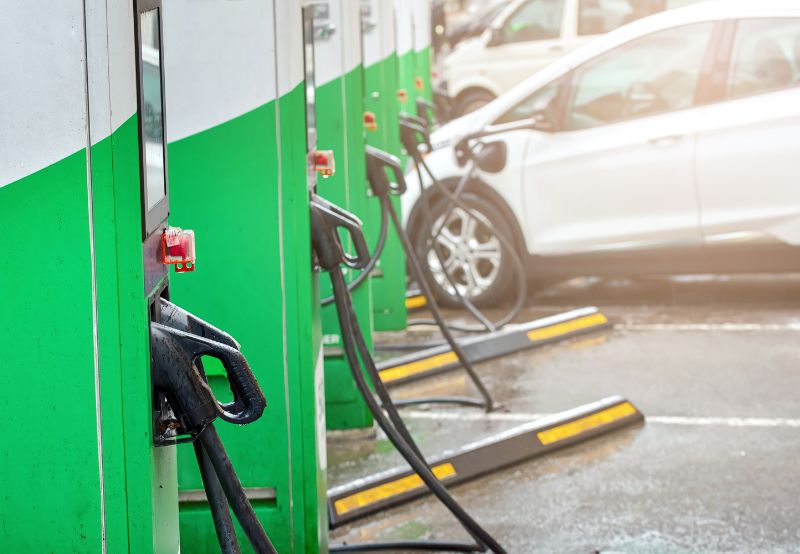
However, the transition to electrified transport cannot happen overnight. India’s EV adoption continued to be hamstrung by inadequate charging infrastructure. According to data from the Ministry of Power, only 29,151 charging stations are in place. Fast chargers constitute only 30% of the total.

RELATED POSTS

Get the most relevant India solar and clean energy news.

RECENT POSTS