MHI Slashes Incentives for Electric Two and Three-Wheelers Under PM E-DRIVE
Incentives for e-2Ws will be available until July 2026, and for e-3Ws until March 2028
April 1, 2026
Follow Mercom India on WhatsApp for exclusive updates on clean energy news and insights
The Ministry of Heavy Industries (MHI) has amended certain provisions of the PM Electric Drive Revolution in Innovative Vehicle Enhancement (PM E-DRIVE) program, reducing incentives for electric two-wheelers and three-wheelers.
The amendment clarifies that the program remains strictly fund-limited, with a total approved outlay of ₹109 billion (~$1.16 billion).
PM E-DRIVE was launched on October 1, 2024, and later extended until 31 March 2028. Its goals are to accelerate EV adoption, build domestic EV manufacturing capacity, support MSMEs and startups, create charging infrastructure, and enable the adoption of over 2.8 million EVs.
The government has specified that if funds are exhausted before the program’s end date of March 31, 2028, the program will be discontinued accordingly, and no further claims will be accepted.
The notification also introduces segment-specific timelines.
Incentives for registered electric two-wheelers will be available only until July 31, 2026, while electric three-wheelers will continue to be supported until March 31, 2028.
Additionally, the government has noted that the e-3W (L5) segment has already met its target and was discontinued from December 26, 2025.
The amendment has also revised the incentive structures for electric two-wheelers and electric three-wheelers.
This comes after the Parliament’s Standing Committee on Industry raised concerns about the dominance of the automobile and electric vehicle (EV) ecosystem in MHI’s budget, which is around ₹75.37 billion (~$802.49 million), accounting for about 94.9% of the total MHI demand.
Incentives for Two-wheelers
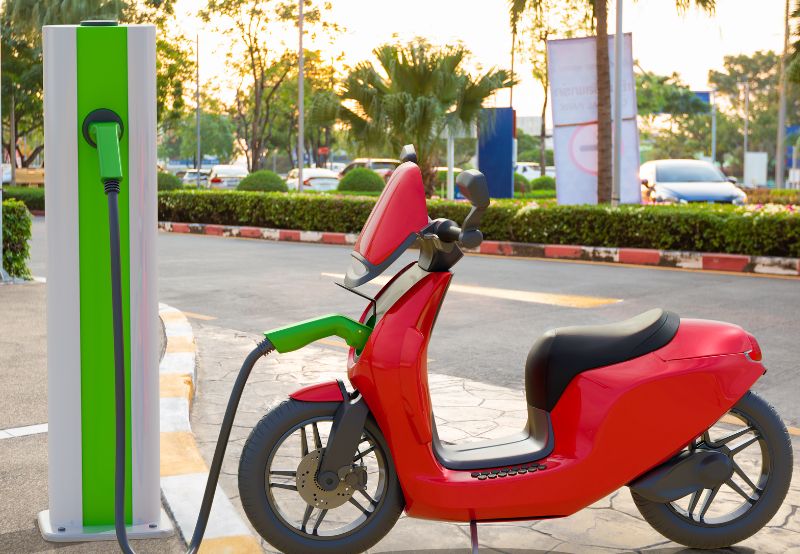
For electric two-wheelers, the program supports up to 2.48 million vehicles, with incentives of ₹5,000 (~$53.26)/kWh, capped at ₹10,000 (~$106.51) per vehicle for the financial year (FY) 2025, which has been reduced to ₹2,500 (~$26.63)/kWh, capped at ₹5,000 (~$53.26) per vehicle from April 2025 to July 2026.
The maximum eligible ex-factory price has been set at ₹150,000 (~$1,597), and the total financial support allocated for this segment is ₹17.72 billion (~$188.74 million).
Incentives for Three-wheelers
For electric three-wheelers, the program supports up to 39,034 vehicles. Incentives are set at ₹5,000 (~$53.26)/kWh, capped at ₹25,000 (~$266.28) per vehicle in FY 2025 and reduced to ₹2,500 (~$26.63)/kWh, capped at ₹12,500 (~$133.14) per vehicle in subsequent years until FY 2028.
The maximum eligible ex-factory price is ₹250,000 (~$2,663), with a total financial allocation of ₹500 million (~$5.33 million) for this category.
The incentives are subject to periodic review based on reductions in vehicle costs. Incentives are capped at the lower of the specified amount and 15% of the vehicle’s ex-factory price.
Recently, MHI amended the Phased Manufacturing Program requirements for electric buses and electric trucks under PM E-DRIVE, mandating domestic manufacturing of key EV components.