Maharashtra Targets 75% Clean Energy by 2047 in Latest Budget

The government expects to attract about ₹3 trillion in investments through its Renewable Energy and Energy Storage Policy

thumbnail

Follow Mercom India on WhatsApp for exclusive updates on clean energy news and insights


Maharashtra has set a target of achieving 75% clean energy by 2047, with the 2026–27 budget outlining measures across solar deployment, rooftop solar subsidies, and pumped hydro development.

The government also underscored the Maharashtra Renewable Energy and Energy Storage Policy 2025–2035, which aims to increase the share of green energy in the state’s electricity system to 50% by 2029 and 65% by 2035. The policy is expected to attract about ₹3 trillion (~$32.6 billion) in investment and generate approximately ₹156 billion (~$1.7 billion) in state GST revenue, Chief Minister Devendra Fadnavis said in his budget address.

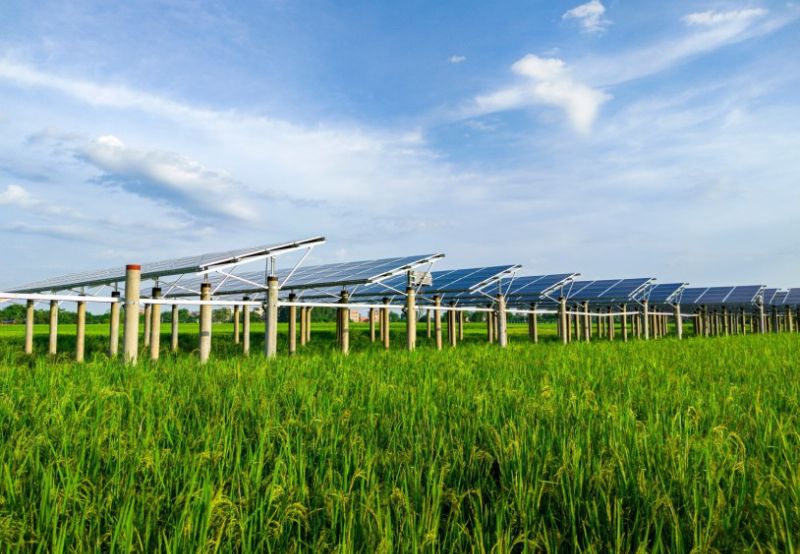
Solar energy for agriculture forms a major component of the state’s renewable push. Under the Mukhyamantri Saur Krishi Vahini Yojana 2.0, the government aims to develop 16,000 MW of solar capacity to provide daytime electricity to agricultural pump consumers. The state reported that 3,349 MW has already been commissioned, with about 10,000 MW of additional capacity expected by December 2026.

The government highlighted the expansion of agricultural solarization through the PM-KUSUM Component B and the Magel Tyala Saur Krishi Pump program, stating that 663,324 pumps have been installed in Maharashtra so far.

In the residential sector, rooftop solar deployment continues to grow under the PM Surya Ghar program, with about 457,000 households installing systems totaling more than 1,735 MW of capacity. The government said subsidies amounting to about ₹32 billion (~$347 million) have been disbursed under the program.

The state also highlighted the Self-Sufficient Maharashtra Residential Rooftop Solar (SMART) program, which targets households consuming up to 100 units of electricity. The program will provide ₹6.35 billion (~$69 million) in subsidies for about 500,000 beneficiaries.

The state recently issued a draft order proposing a generic tariff of ₹2.82 (~$0.031)/kWh for surplus electricity exported from rooftop solar systems under net-metering and net-billing arrangements for the FY2026–27.

To support renewable integration, the government emphasized energy storage development through pumped hydro projects. According to the budget documents, memoranda of understanding have been signed for 55 pumped hydro projects, which are expected to generate 78,215 MW of electricity, representing potential investments of about ₹4.16 trillion (~$45.1 billion) and creating approximately 128,000 jobs. Work has begun on six projects with a combined capacity of 10,300 MW.

The budget also states that additional subsidies will be provided for rooftop solar installations on homes built under the Pradhan Mantri Awas Yojana, which the government says will support household-level energy self-reliance.

Subscribe to Mercom’s real-time Regulatory Updates to ensure you don’t miss any critical updates from the renewable industry.

RELATED POSTS

Get the most relevant India solar and clean energy news.

RECENT POSTS