Maharashtra Aims to Meet 65% of its Power Needs from Renewables by FY 2036
The state targets procuring 100 GWh/day of energy storage capacity by FY 2036
March 20, 2026
Follow Mercom India on WhatsApp for exclusive updates on clean energy news and insights
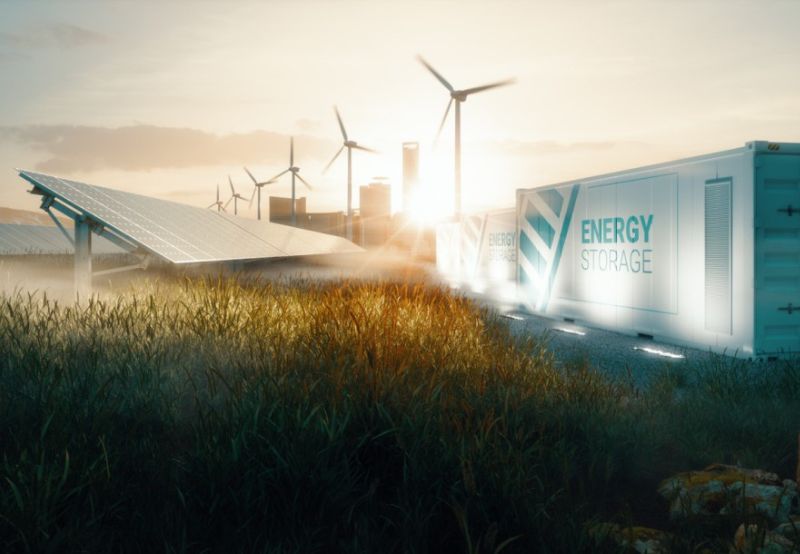
Maharashtra aims to meet 65% of its power needs from renewable energy sources and has set a target for power distribution companies to procure energy storage capacity equivalent to at least 100 GWh/day, or 10% of their power demand, by the financial year (FY) 2036.
These targets are part of the Maharashtra Renewable Energy and Energy Storage Policy for FY 2026 to FY 2036.
According to the policy, energy storage could be co-located with a renewable energy project or with a standalone project.
The minimum connectivity threshold for an energy storage system (ESS) seeking to connect to the intrastate transmission system (InSTS) network will be 5 MW. Standalone energy storage projects must apply for a grant of connectivity for the higher of the quantum of its proposed maximum injection of power to InSTS or proposed maximum draw from InSTS.
The ESS will be granted InSTS connectivity under MERC Transmission Open Access Regulations. The ESS may also draw power through InSTS for charging. It may also seek connectivity to the distribution network at either the 33 kV or 11 kV level.
The ESS, connected either to the InSTS or to the distribution network at the 33 kV or 11 kV level, will be exempt from transmission charges, distribution demand and wheeling charges, electricity duty, and cross-subsidy surcharge when drawing power for intermediate storage purposes. However, consumers drawing power from such ESS will pay the applicable tariff for their category.
Co-located ESS
Maharashtra aims to deploy at least 10 GW of new co-located ESS projects by FY 2030 and 25 GW by 2036.
The policy also mandates that DISCOMs must procure renewable energy from wind-solar projects with a co-located energy storage system. The energy storage must be at least 50% of the renewable energy project and configured for at least 2 hours of discharge for projects commissioned by the end of FY 2030. Such energy storage projects commissioned from the start of FY 2031 must be configured for a 4-hour discharge.
Existing renewable energy projects can also be integrated with energy storage systems; no changes to the existing power purchase agreement will be allowed. Such ESS can also increase the capacity of the existing project, provided the injection into the grid does not exceed the quantum granted under grid connectivity in any time block.
All existing and upcoming renewable energy projects evacuating power through a common pooling substation can set up storage projects. ESS can be integrated with individual renewable energy projects or at the level of the pooling substation as a whole for multiple projects.
Standalone ESS
Apart from pumped storage projects or battery-specific standalone storage tenders, DISCOMs may invite bids for technology-agnostic standalone storage tenders.
These standalone ESS projects may be operated in single or multiple cycles per day.
Standalone ESS may also be offered as storage-as-a-service or as a source of ancillary services to the grid.
The standalone ESS connected either to the InSTS or the distribution network at the 33 kV or 11 kV level will be exempt from transmission charges, distribution demand and wheeling charges, electricity duty, and cross-subsidy surcharge for drawing power for intermediate storage purposes.
Distributed ESS Projects
To improve supply reliability and increase the integration of distributed renewable energy projects, DISCOMs will conduct a cost-benefit analysis to assess the value of distributed storage in rural and urban areas within one year of this policy being notified.
DISCOMs will submit the analysis to the Maharashtra Electricity Regulatory Commission for approval and consider it under the demand flexibility portfolio obligation regulations and ESO targets.
The policy, the state must meet 10% of its energy storage target through decentralized ESS.
The projects can be financed through DISCOM ARR either in capital expenditure or total expenditure mode.
Priority will be accorded to the grid-connected renewable energy projects with energy storage integration.
For projects above 100 kW connected from April 1, 2026, storage must be provided for 50% of the total capacity and be configured for 2 hours of discharge.
All existing rooftop solar projects under various frameworks can also be integrated with ESS.
To meet the rising power demand, the government will also plan the development of solar plus storagre projects of 100-250 MW each in major urban and industrial areas.
Bundling Thermal Projects
To encourage the bundling of renewable energy or battery storage that would use a common transmission evacuation system with existing thermal plants and to reduce fuel costs, the MSPGCL and other IPPs selling power to DISCOMs in Maharashtra are encouraged to explore bundling projects.
The policy envisages a target of bundling projects comprising 2 GW of renewable energy and or ESS by FY 2030 and 5 GW of renewable energy and or ESS by FY 2036.
Land Availability
Government land can be provided for renewable-energy and battery-storage-integrated projects.
Private land on lease for renewable energy projects can be procured at the mutually agreed base annual lease rate, or at the higher of 6% of the land value determined for the year by the Registration and Stamps Department, or ₹125,000 (~$1,341.29) per hectare. The base lease rate will be increased by 3% annually.
The policy also allows non-agricultural land for renewable energy battery storage projects.
To increase renewable energy procurement, Maharashtra has planned to establish 10 renewable energy industry zones by FY 2030 and 15 by FY 2036. Each renewable energy industry zone must be at least 100 MW.
The state government will allocate ₹₹5 billion (~$53.68 million)for the development of these renewable energy industry zones.
Grid Infrastructure
The state transmission utility, along with the Maharashtra State load dispatch center, will revise the transmission integrated resource plans to account for 65% renewable energy injection and 10% energy storage by FY 2036.
To further encourage the development of solar-plus-storage and wind-solar hybrid projects, the state may introduce differentiated injection-scheduling rights between solar and non-solar hours for renewable energy projects.
To reduce right-of-way issues, reconductoring/upgrading of existing AC transmission lines to higher voltage AC lines with multiple circuits / multiple voltages and uprating using new-generation High Temperature Low Sag conductors must be explored to conserve existing RoWs, enhance power flow, and reduce losses per meter of RoW.
The policy also envisages the use of grid-forming inverters to improve grid stability as levels of renewable energy injection increase.
The state has issued the following framework for direct procurement up to 100 kW:
To improve competitive supply procurement by MSMEs and to meet their energy banking requirements, MSEDCL will conduct a bulk procurement program for BESS systems ranging from 10-100 kW with two to four hours of storage.
Open Access
The state government has also set targets of 5 GW/10 billion units (BU) for long-term Green Open Access procurement by FY 2029-30 and 10 GW/20 BU by FY 2035-36.
Long-term captive green energy open-access projects supplying power within Maharashtra and integrated with energy storage for 50% of the renewable energy project’s capacity, and for at least 4 hours of discharge, will be exempt from payment of electricity duty for 10 years.
DISCOMs are encouraged to assist the commercial and industrial sectors in meeting 100% of their power needs through renewable energy under a special tariff category. Such contracts to meet 100% of power needs through renewable energy must be for at least 1 year and must include an additional round-the-clock green tariff.
The Maharashtra government may designate an existing state company or establish a new one to provide 100% renewable energy to interested commercial and industrial consumers. The company may also apply to register as a renewable energy implementing agency with the Ministry of Power. It may also sell renewable energy RTC power to other states and consumers there.
Subscribe to Mercom’s real-time Regulatory Updates to ensure you don’t miss any critical updates from the renewable industry.