


How Renewables Help C&I Businesses Cut Costs While Future-Proofing Operations
Solar is central to energy predictability and competitive advantage
February 17, 2026

Follow Mercom India on WhatsApp for exclusive updates on clean energy news and insights
Tamil Nadu’s commercial and industrial (C&I) renewable energy market is entering a more mature phase, where the discourse is shifting from simple tariff savings to long-term strategy, infrastructure planning, and export competitiveness.
As of December 2025, renewable energy accounted for 57.5% of Tamil Nadu’s power mix, with solar at 20% and wind at 29%, while thermal power contributes 39%. Yet, despite renewables crossing the 50% threshold, industry experts believe the state’s C&I sector still has significant room to deepen clean energy adoption, especially through rooftop solar, open access, and emerging storage solutions.
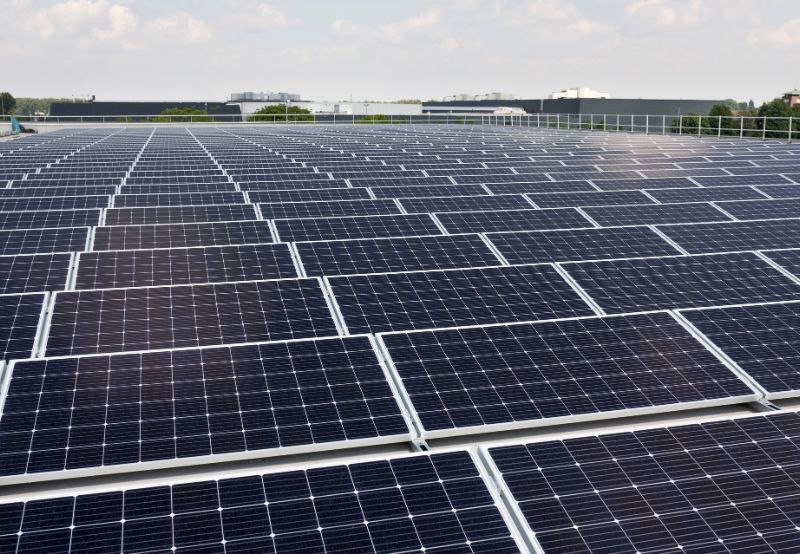
Rooftop Solar
According to Sudheer Garimella, General Manager, Business Development at Candi Solar, the economic viability of solar is no longer debated. “From a tariff standpoint, solar is a no-brainer,” he said, adding that the real question is whether the facility can accommodate and absorb the generation.
The starting point for any project is a detailed study of electricity bills, contracted demand, tariff structure, and slot-wise consumption. Daytime consumption between 10 AM and 2 PM plays a critical role in sizing rooftop systems to maximize self-consumption and minimize exports.
In continuous-load industries, rooftop solar systems typically achieve payback periods of 3 to 5 years. With accelerated depreciation benefits, this can drop to under two years. However, optimal sizing remains crucial; over-sizing can affect returns, while under-sizing reduces savings potential.
Seasonal industries may face additional complexity, especially where the load varies significantly during certain months. In such cases, storage or other optimization strategies may be required.
Rooftop and Open Access
While rooftop solar is often the first step, open access provides additional coverage once on-site capacity is exhausted. Businesses may pursue short, medium, or long-term open-access arrangements to expand renewable sourcing beyond their premises.
Rahul Kodali, Managing Director at Vyomaa Energy, explained that renewable procurement is often sequential. “Companies typically begin with rooftop solar and then move to open access once on-site capacity is exhausted.”
He noted that rooftop installations can provide 20% to 30% savings with minimal transmission losses, while open access, which often covers 40% to 50% of consumption in some cases, adds scale.
Industry guidance suggests that 60% to 70% renewable coverage is an optimal balance; pushing beyond that can significantly increase costs for marginal gains.
Transmission and distribution losses in open access systems, absent in rooftop installations, are an important consideration. Rooftop solar systems also provide greater tariff predictability through long-term power purchase agreements (PPAs), shielding businesses from rising grid tariffs and enhancing strategic cost clarity.
Kodali emphasized that price alone should not drive decisions. Solar projects must be executed, commissioned, and maintained properly to deliver expected savings. Operational clarity, performance monitoring, and long-term maintenance planning are critical components that often get overlooked.
Pricing Variables and Hidden Costs
The cost of a rooftop solar system ranges between ₹28 million (~$315,840)/MW and ₹32 million (~$360,960)/MW, depending on site conditions. However, cost variations between vendors often stem from differences in design assumptions, cable routing, safety provisions, rooftop orientation, shadow analysis, and the distance to electrical rooms.
Garimella pointed out that if the scope is identical, vendor prices should not differ significantly. Differences usually stem from capacity estimations and design interpretations rather than pure material cost variation.
He cautioned businesses against focusing solely on payback. “The more important metric is the lifetime cost of energy,” he noted, stressing that performance beyond the initial five years determines the real value of a project.
Financing Models
For companies concerned about capital expenditure, three primary models exist: full CAPEX, bank financing, and developer-owned OPEX structures.
Candi Solar has also introduced a hybrid “performance-linked loan” model. Under this structure, the asset remains on the customer’s books, enabling accelerated depreciation and GST input credit benefits, while the developer assumes execution and performance risk.
This structure blends the advantages of CAPEX and OPEX models while shifting operational risk to the developer.
Technical Considerations
Inverter selection depends on project scale. For installations below 10 MW, string inverters are generally preferred due to design flexibility and efficiency advantages. Central inverters are increasingly deployed in large utility-scale projects.
Connection at high tension (HT) or low tension (LT) levels does not inherently affect efficiency if systems are properly designed; loss management depends more on cable sizing and layout.
Power factor penalties can arise after solar integration, particularly in smaller installations. Maintaining power factor close to unity is critical. Adding capacitor banks can mitigate penalties and stabilize system performance.
Battery Storage
Battery energy storage systems (BESS) are gaining attention, but adoption in the C&I segment remains at an early stage.
Kodali highlighted that batteries involve inherent round-trip losses. “If you put 100 units into a battery, you may get only 74 to 76 units out after accounting for charging and discharging losses,” he explained.
Garimella drew parallels with the early solar market, suggesting that scale will also drive cost reductions in storage. Rising grid tariffs and policy evolution may improve battery viability over the next three to four years.
While battery prices are declining and scale is improving, pure arbitrage models may not yet justify widespread adoption. Storage paired with solar or wind improves viability, especially for hospitals, universities, and other critical facilities that require reliability.
Renewable Energy as Competitive Strategy
Beyond savings, renewable adoption increasingly shapes global competitiveness. International buyers and retailers already assess suppliers based on their renewable adoption and carbon-reduction performance.
Renewable adoption enhances ESG alignment and strengthens supplier positioning in international markets.
Solar is no longer merely a green initiative or a cost-saving tool. It is becoming a strategic infrastructure decision that affects energy predictability, operational focus, and long-term competitiveness.
The discussions at Mercom India’s Coimbatore C&I Clean Energy Meet emphasized that Tamil Nadu’s industries must look beyond short-term payback and evaluate renewable investments through a lifecycle and strategic lens. In a state with high renewable energy penetration, the next phase of growth will be defined not by whether companies adopt solar, but by how intelligently and sustainably they do so.
The next Mercom India C&I Clean Energy Meet event will be held in Bhopal on March 13, 2026.
Contact us if you plan to install solar and need guidance or vendor recommendations.


Meghana Prasad
More articles from Meghana Prasad.