

EV Charging Software Company Ionage Raises $1.3 Million
The pre-series A round was led by strategic investors and a CXO consortium
October 7, 2026

Follow Mercom India on WhatsApp for exclusive updates on clean energy news and insights
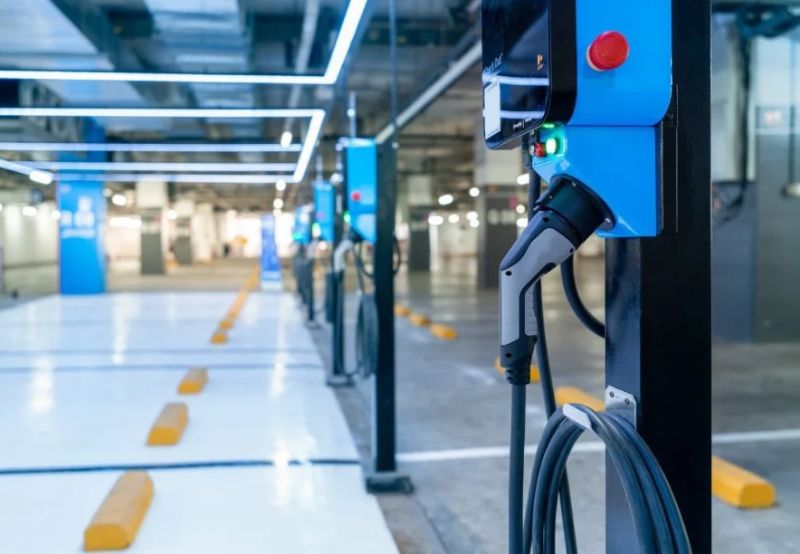
Ionage, an artificial intelligence-based charging and energy management platform for electric vehicles (EVs), has raised $1.3 million in pre-series A funding.
The funding round was led by strategic investors and a consortium of CXOs from energy and infrastructure companies.
The company plans to use the fresh capital to expand its platform coverage across active charger networks in India and help small and medium-sized charge point operators set up and improve station efficiency.
Ionage’s solutions span offices, malls, hospitality, and residential housing societies and operate in 33 states/Union Territories covering nearly 3,000 cities. The company plans to create and support new CPO micro-clusters in Tier 2 urban centres within the next 18 months.
So far, Ionage has onboarded over 25,000 four-wheeler charge points and now supports more than 63 fleets charging across the country. Backed by a network of over 75 charging partners, Ionage is on track to process a monthly energy throughput of more than 20 million units within the next 12 months and expects a month-on-month growth of over 25%.
In the third quarter of 2026, EV sales in India reached 951,884 units, marking a year-over-year increase of 64.4% from 578,987 units recorded in the corresponding quarter of 2025.
According to the data released by the Ministry of Road Transport and Highways through its Vahan Dashboard, EVs accounted for about 12.5% of overall automobile sales, which totaled 7,636,606 units during Q3 2026. India now has over 10.41 million registered EVs.
Last October, the ministry had notified operational guidelines for deploying EV public charging stations under the PM Electric Drive Revolution in Innovative Vehicle Enhancement program.
The government will offer subsidies for EV public charging stations and battery swapping stations or battery charging stations. While subsidies will primarily cover upstream infrastructure costs, the support may also extend to EV supply equipment costs in certain cases.
The guidelines specify connector standards in line with the Indian Standard (IS 17017 series). For electric two-wheelers and three-wheelers, the standards are Light EV DC and Light EV AC/DC Combo, both with a capacity of up to 12 kW.