

Daily News Wrap-Up: Power Ministry Sets 20% Local Content for BESS VGF
Solar’s changing economics and what it means for corporate energy strategy in India
December 26, 2025

Follow Mercom India on WhatsApp for exclusive updates on clean energy news and insights
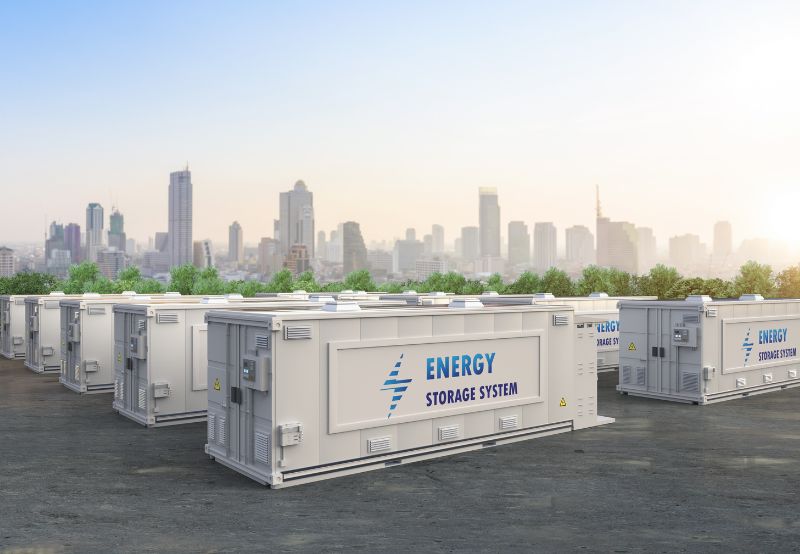
The Ministry of Power directed states and procuring entities to ensure a minimum of 20% local content in the procurement of battery energy storage system projects being implemented under the viability gap funding (VGF) program, supported through the Power System Development Fund (PSDF). In a communication addressed to the energy departments of 15 beneficiary states and NTPC, the Ministry said the requirement would apply for the disbursement of funds under the PSDF guidelines.
For commercial and industrial consumers in India, electricity shifted from being a predictable operating cost to a strategic risk. Rising tariffs, volatile fuel adjustment charges, tightening time-of-day pricing, and uncertainty around banking regulations are forcing businesses to re-examine how they source and manage power. Fuel adjustment charges can swing sharply, ranging from near zero to around ₹0.60 (~$0.0066)/kWh to ₹0.90 (~$0.010)/kWh in some months, pushing effective grid power costs toward ₹8.5 (~$0.094)/kWh to ₹9 (~$0.10)/kWh for many users and reinforcing the need for hedges.
Here are the top five funding deals in the solar sector in India during 2025, according to Mercom’s Q3 2025 India Solar Market report: In the top funding deal, Blueleaf Energy, a Singapore-based renewable energy platform provider, partnered with Noida-based Jakson Green to invest $400 million to develop three solar projects totaling 1 GW in Rajasthan. The projects, funded through debt and equity, will likely be commissioned between 2025 and 2026.
India made significant strides in strengthening its domestic upstream renewable energy supply chain and added substantial solar generation capacity in 2025. However, the renewable energy sector also faced several major challenges, including transmission infrastructure, solar curtailment, energy banking, and glitches in the PM Surya Ghar: Muft Bijli Yojana portal. Between March and August this year, Rajasthan witnessed nearly 4 GW of solar and wind power curtailment due to a combination of transmission delays, corridor congestion, and subdued power demand during an extended monsoon season.
Grid Corporation of Odisha invited bids to allocate water-surface areas at the Rengali Reservoir in Odisha for setting up floating solar projects for captive use. The allocation will be made through a premium-based competitive bidding process. The total water surface area available at the reservoir is 5,195 acres.
Central Electronics issued a tender to set up 4.125 MW grid-connected solar projects at IIT Kharagpur in West Bengal. The installations will comprise 2,900 kW of rooftop solar projects, 225 kW of ground-mounted projects elevated on structures to serve as car parking, and 1,000 kW of ground-mounted projects of normal height. The ground-mounted projects will be located at the institute’s Balarampur Pump House, which has a separate power supply from the West Bengal State Electricity Distribution Company at the 11 kV level.
Grid Corporation of Odisha invited bids for the development of a 225 MW floating solar power project at the Upper Indravati Reservoir, part of the Upper Indravati Solar Park in Odisha. The total planned capacity of the project is 225 MW, structured as three independent units of 75 MW each, to be developed at the designated water body within the Upper Indravati Solar Park.
SJVN Green Energy commissioned the full capacity of the 1,000 MW Bikaner Solar Power Project. The project is being developed at a cost of ₹54.92 billion (~$612 million) and executed under the Domestic Content Requirement mode, using locally manufactured solar cells and modules. This project will generate 2,454.55 million units of electricity in its first year of operation, and approximately 56,838 million units cumulatively over 25 years. The tariff has been set at ₹2.57 (~$0.011)/kWh, thereby helping ensure affordable green power for consumers.
Maharashtra-based Vikran Engineering received a work order from Onix Renewable valued at ₹20.35 billion (~$226.66 million) for the engineering, procurement, and construction of 600 MW of grid-connected solar power projects in Maharashtra. The work must be completed within 12 months.
Haryana-based solar module manufacturer Saatvik Green Energy (SGEL) operationalized a 2 GW encapsulation polyolefin elastomer (EPE) film manufacturing facility at its campus in Ambala, Haryana. EPE films ensure strong adhesion between solar cell layers to maintain electrical insulation and enable long-term durability under varied operating conditions.
With the new in-house EPE manufacturing facility, A new Crux survey suggests the U.S. clean energy market is moving quickly on Foreign Entity of Concern (FEOC) compliance, but many firms still don’t feel ready for what is in store for 2026. In an October 2025 survey of 50 developers, manufacturers, and other market participants, more than 90% said they have already begun some combination of ownership reviews, contract audits, and supply-chain mapping, yet only 38% described themselves as fully prepared for 2026.
Korea Zinc entered into a partnership with the U.S. Department of War and the U.S. Department of Commerce to develop a large-scale critical minerals smelter in Clarksville, Tennessee, U.S. The smelter will manufacture 13 nonferrous metal products, including zinc, lead, copper, gold, silver, antimony, indium, bismuth, tellurium, cadmium, palladium, gallium, and germanium, as well as sulfuric acid and semiconductor-grade sulfuric acid. Eleven of these products are classified as “critical minerals” by the U.S. government. Some of these critical minerals are used in electric vehicles and renewable energy technologies.


Mercom Staff
More articles from Mercom Staff.