Daily News Wrap-Up: PM-KUSUM Achieves 27% of Target as Sunset Date Nears

CTUIL issues draft norms for change in control of grid connectivity

December 5, 2025

thumbnail

Follow Mercom India on WhatsApp for exclusive updates on clean energy news and insights


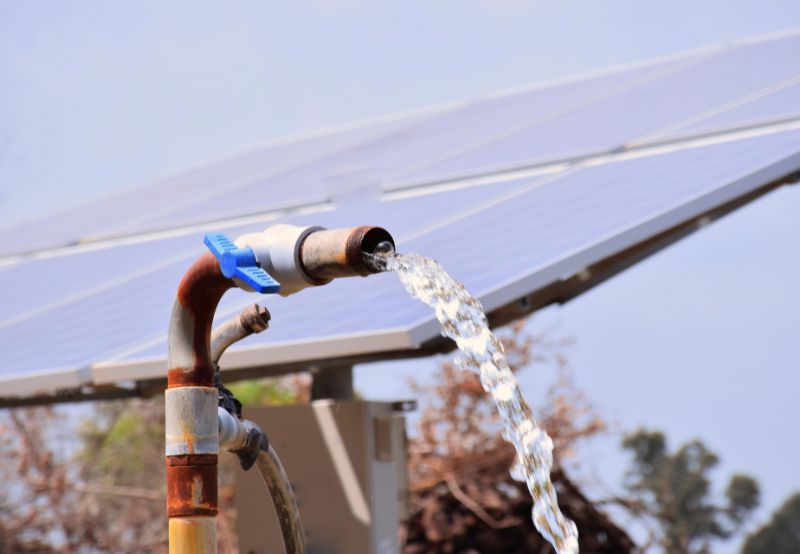
The government’s ambitious program to solarize the agriculture sector met only 27.2% of the 34,800 MW target so far, with the deadline less than four months away. As of October 31, 2025, 9,466 MW of solar capacity has been achieved under all three components of the Pradhan Mantri Kisan Urja Suraksha evam Utthaan Mahabhiyan (PM-KUSUM), according to data furnished in Parliament by the Minister of State for New and Renewable Energy, Shripad Yesso Naik. Under Component A, 653.49 MW of solar projects have been installed. Under Component B, 917,275 solar pumps have been installed, while 984,993 pumps have been solarized under Component C.

The Central Transmission Utility of India (CTUIL) issued the draft procedure for seeking approval of the change in control of grid connectivity grantees before the commercial operational date of renewable energy projects. Stakeholders must send their feedback on the draft procedure before December 17, 2025. A connectivity grantee is the entity that has received the final grant of connectivity and has signed the connectivity agreement with CTUIL. The procedure applies to all renewable energy generation stations (excluding hydro generating stations) or energy storage systems (excluding pumped storage projects).

The NTPC Vidyut Vyapar Nigam invited bids for the engineering, procurement, and construction of a 2 MW ground-mounted solar project at the India Security Press, Nashik, Maharashtra. The last date to submit bids is December 23, 2025. Bids will be opened on December 24. The scope of work covers the design, engineering, supply, testing, erection, and commissioning of the project. It also covers operation and maintenance for five years. The project also entails conducting a topographic survey of the site. The successful bidder will collect real-time generation data from the project, in 15-minute time blocks, using the solar meter for remote metering and billing.

Terra Clean, a wholly owned subsidiary of Indian Oil Corporation, issued a request for proposal for land aggregation to develop a 300 MW intrastate transmission system-connected solar project in Gujarat. The project will have a greenshoe option for an additional 300 MW. The project will be located near the 220 kV Bhalgamda GETCO Substation in Morbi district. Bids must be submitted by January 1, 2026. Bids will be opened on the same day. The projects must be completed within nine months. The scope of work entails arranging land for the solar project. Bidders must have arranged land for solar, wind, hybrid, or solar park projects with a cumulative capacity of at least 20 MW, including at least one project with a capacity of 10 MW.

AMPIN Energy Transition secured a $50 million long-term investment from FMO, a Dutch entrepreneurial development bank. The funding will be utilized to support the development of greenfield renewable energy projects. FMO has a total committed portfolio of €13.5 billion (~$15.73 billion) spanning over 85 countries. It supports sustainable private sector growth in developing countries and emerging markets. AMPIN Energy has a total portfolio of 5 GW of renewable energy projects across 23 states in India. Its projects comprise a blend of solar, wind, and storage, catering to utility, commercial, and industrial customers. The company’s clients include companies in sectors such as pharmaceuticals, automobiles, cement, steel, information and technology, and data centers.

JK Cement made a further investment in O2 Renewable Energy V, a special purpose vehicle of O2 Power, to increase its shareholding in a 22 MW group captive wind power project in Kudligi Taluk, Bellary, Karnataka. The company acquired 4,645,658 equity shares from JSW Neo Energy, representing a 12.21% stake in the SPV, for a total cash consideration of ₹51.93 million (~$577,706). Following this purchase, JK Cement’s holding in the SPV will rise from 16.76% to 28.97%. An amendment to the existing share subscription and shareholders’ agreement will be executed among the parties. The 22 MW project is part of a 240 MW wind-solar hybrid park located in Kudligi Taluk.

Global alternative asset management firm TPG and MAVCO-led consortium created an independent wind energy platform, Vayona Energy, post the acquisition of Spain-based wind turbine manufacturer Siemens Gamesa’s onshore wind business in India and Sri Lanka. The new entity will address the growing renewable energy demand in India. The formation of Vayona Energy follows a strategic partnership announced between TPG, Siemens Gamesa, and MAVCO to create a new independent wind energy platform. TPG’s investment is made through TPG Rise Climate, the firm’s dedicated climate investing platform.

Lineage Power, a material subsidiary of Pace Digitek, received an order valued at ₹997.10 million (~$11.24 million) from Advait Greenergy, a subsidiary of Advait Energy Transitions, for the supply of lithium iron phosphate battery energy storage system (BESS) units and related equipment. The initial delivery must occur within 102 days, and all subsequent deliveries must be completed within 31 days. As per the defined shipment schedule, the first consignment of 50% of the BESS blocks must be delivered by March 15, 2026, followed by the remaining system components by April 15, 2026.

The Indian Energy Exchange (IEX) traded a monthly electricity volume of 11.41 billion units in November 2025, a 17.7% year-over-year increase. IEX said the country’s energy consumption during the month reached 123.4 BU, declining nearly 1% from the same month in 2024. Increased hydropower, wind, and solar generation led to higher liquidity on the exchange, driving down the day-ahead market (DAM) and real-time market (RTM) prices. The DAM market-clearing prices stood at ₹3.07 (~$0.034)/kWh during the month, a 6.9% YoY decrease. The RTM price was ₹3.14 (~$0.035)/kWh, reducing 9.2% from November 2024. IEX said these prices presented an opportunity for distribution companies and commercial and industrial consumers to meet their demand at competitive prices and replace their costlier power by purchasing through exchanges.

Lithium-ion batteries dominate today because of their long service life, high energy density, high efficiency, and fast power delivery. However, rising demand raises concerns about the availability and affordability of critical materials. The International Renewable Energy Agency’s report ‘Sodium-ion Batteries: A Technology Brief’ links recent interest in alternative chemistries to the vulnerabilities revealed in lithium-ion supply chains. It notes that supply disruptions in 2021 and 2022 and geopolitical tensions intensified concerns about the resilience and cost of lithium-ion batteries.

Italy’s energy management agency, the Gestore dei Servizi Energetici (GSE), awarded 940 MW of wind and 7,700 MW of solar projects under the Fonti di Energia Rinnovabile (FER) X Transitory program. The FER X Transitory program supports renewable energy projects with generation costs close to market competitiveness. GSE awarded 474 solar projects with a weighted average award price of €56.825 (~$66.22)/MWh, 37.4% lower than the ceiling price set by the Italian authorities. It also awarded 29 wind projects with a weighted average price of €72.851 (~$84.9)/MWh, 19.67% lower than the ceiling price. The highest tariff awarded under the auction for solar projects was €62.675 (~$73.04)/MWh, and for wind projects was €77.738 (~$90.59)/MWh.

A total of 27 companies won the Organization for Cross-regional Coordination of Transmission Operators, Japan’s 26th solar power auction for projects of at least 250 kW, securing 75.4 MW out of the original auctioned capacity of 163 MW under the country’s Feed-in Premium (FIP) program. The FIP program was introduced in 2022 to promote renewable energy by adding a premium to the market price of power generated from renewables. Thirty-three projects had applied for qualifications, and 27 submitted real price bids. All the price bids were won after the auction’s third round. The maximum allowed bid price was ¥8.75 (~$0.057)/kWh. The winning bid prices ranged from ¥4.97 (~$0.032)/kWh to ¥8.75 (~$0.057)/kWh, with an average of ¥7.13 (~$0.046)/kWh.

RELATED POSTS

Get the most relevant India solar and clean energy news.

RECENT POSTS