

Daily News Wrap-Up: India’s Rooftop Solar Additions Rise 127% in 9M 2026
India’s 92 GWh energy storage program faces execution risks
November 27, 2026

Follow Mercom India on WhatsApp for exclusive updates on clean energy news and insights
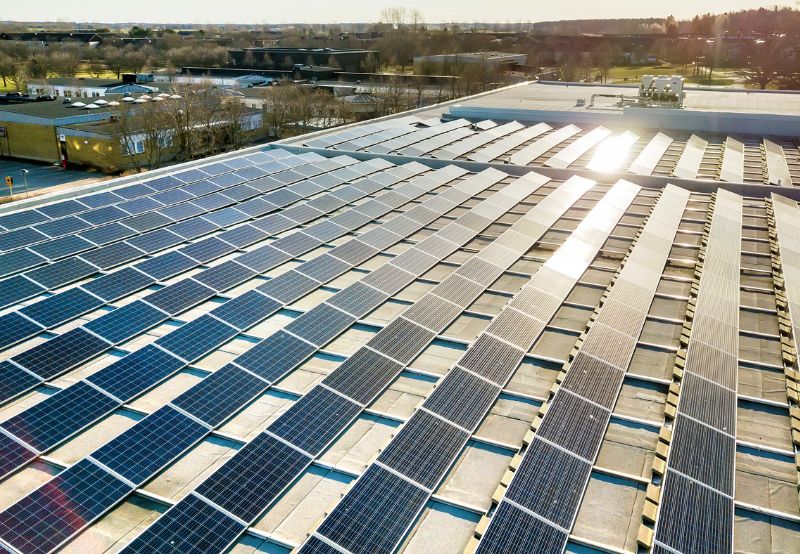
India added 11.2 GW of rooftop solar capacity in the first nine months (9M) of calendar year (CY) 2026, up 127.5% year-over-year (YoY) from 4.9 GW, according to Mercom India’s newly released Q3 and 9M 2026 India Rooftop Solar Market Report.
India’s ₹145 billion (~$1.53 billion) viability gap funding program to support 92 GWh of grid-scale energy storage capacity has the potential to accelerate renewable energy integration and attract private investment.
As Maharashtra considers mandating energy storage for net-metered and behind-the-meter (BTM) solar projects above 100 kW, exempting eligible BTM projects from List II of the Approved List of Models and Manufacturers (ALMM) could give them a cost advantage over net-metered installations for commercial and industrial (C&I) consumers.
As Maharashtra transitions from a renewable capacity-focused expansion model to a renewable-plus-storage model, Pune presents strong opportunities across segments for C&I consumers installing rooftop solar systems or procuring renewable energy through open access.
In an interview with Mercom India at the Renewable Energy India Expo 2026, Piyush Daliya, Managing Director at Gopin Semicon, discussed the imbalance between domestic solar module and cell manufacturing capacities, the impact of domestic sourcing regulations, and the challenges of developing indigenous manufacturing technologies.
The Ministry of New and Renewable Energy (MNRE) added 2,018 MW of solar cell manufacturing capacity to ALMM List-II, increasing the total capacity to 49,008 MW from 46,990 MW.
MNRE reduced the proposed 14-character alphanumeric code to 12 characters under the standardized nomenclature for solar cell models enlisted under the ALMM List-II, to improve product identification and traceability across the solar manufacturing value chain.
MNRE issued a concept note seeking stakeholder feedback on developing cybersecurity standards for electrolyzer control and communication systems and associated equipment.
The Odisha Electricity Regulatory Commission notified the Grid Interactive Distributed Renewable Energy Sources Regulations, 2026, raising the threshold for mandatory battery energy storage systems from the proposed 10 kW to over 100 kW for solar installations.
The Andhra Pradesh High Court directed customs authorities to grant a solar power developer permission to operate under the Manufacture and Other Operations in Warehouse Regulations, 2019, as they prevailed on June 24, 2024.
The Kerala State Electricity Regulatory Commission ruled that renewable energy projects exceeding 14.4 MW can obtain grid connectivity at 33 kV, subject to technical feasibility, potentially reducing power evacuation infrastructure costs for developers.
NTPC Renewable Energy invited bids for a land aggregation package to develop an interstate transmission system-connected solar power project in Mandsaur, Madhya Pradesh.
Global private equity investment firm GEF Capital Partners announced the first close of its India-focused climate fund, Fund IV, at $615 million (~₹56.8 billion). The close of Fund IV represents a nearly 40% increase over its previous fund of $440 million (~₹40.6 billion).
U.S.-based energy storage solutions provider Fluence Energy recorded an order backlog of $8.9 billion at the end of fiscal year 2026, a 68% YoY increase driven by growing demand from power producers, utilities, and data centers.
China added 123.69 GW of solar power capacity in the first ten months of 2026, a 51.1% YoY decline from 252.87 GW, according to data released by the National Energy Administration.
Italy’s transmission system operator Terna awarded 16 GWh of battery energy storage capacity in its second auction through the Electricity Storage Procurement Mechanism.
German battery recycling company cylib signed an agreement to acquire BASF’s battery recycling business in Europe and North America, expanding its operations and providing access to the North American market.
Peak Energy, a sodium-ion battery manufacturer, expanded its Series B financing to $157 million, comprising $132 million in equity and a $25 million debt facility from HSBC.
Thermal energy storage startup Good Heat raised €2 million (~$2.2 million) in funding to develop its project pipeline across Europe and Australia. Energy venture capital firm SET Ventures led the funding round, with participation from Shell Ventures and existing investor Investible.


Mercom Staff
More articles from Mercom Staff.