

Daily News Wrap-Up: Grid India Moots Grid-Forming Capability for 50 MW+ BESS
Maharashtra regulator clears MSEDCL’s 700 MW solar procurement
January 5, 2026

Follow Mercom India on WhatsApp for exclusive updates on clean energy news and insights
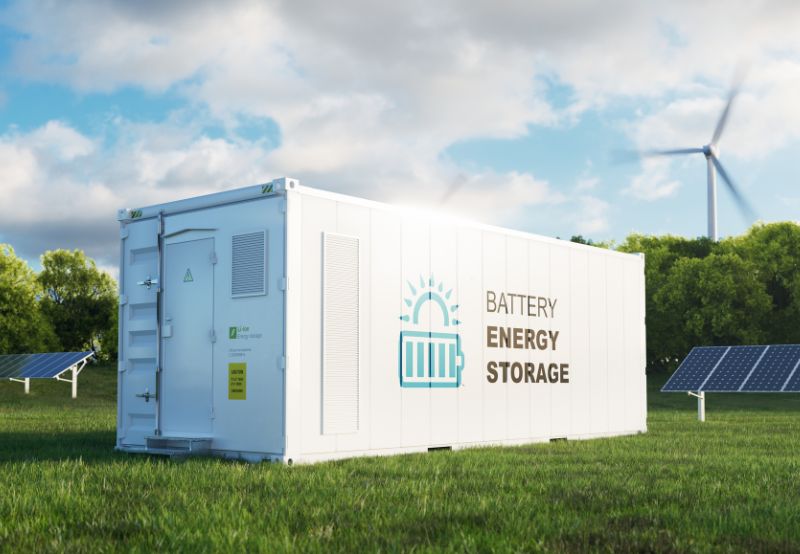
A Grid Controller of India (Grid-India) discussion paper proposed that all new battery energy storage system (BESS) installations of 50 MW and above should incorporate grid-forming capability, especially when located in weak grid or remote areas. Grid India notes that grid-forming inverter technology is becoming commercially viable and field-proven for transmission-connected applications, as evident from international deployments.
The Maharashtra Electricity Regulatory Commission approved the proposal of the Maharashtra State Electricity Distribution Company (MSEDCL) to procure 700 MW of solar power through the Solar Energy Corporation of India (SECI) under the Inter-State Transmission System Solar Tranche-XIII. The Commission adopted a tariff of ₹2.63 (~$0.031)/kWh, with a trading margin of ₹0.07 (~$0.0008)/kWh. It also approved the 25-year power sale agreement executed between MSEDCL and SECI.
NTPC Green Energy invited bids for the engineering, procurement, and construction of a 6 MW floating solar project with a 6 MW/24 MWh battery energy storage system at the Atal Bihari Vajpayee Thermal Power Station under the Chhattisgarh State Power Generation Company. The last date to submit bids is January 12, 2026. Bids will be opened on January 31. The scope of work covers the design, engineering, installation, and commissioning of the project on a turnkey basis. It also covers comprehensive operation and maintenance services for five years.
NTPC Renewable Energy invited bids for the engineering, procurement, and construction of a 250 MW solar project with a 50 MW/200 MWh BESS in Sitapur, Uttar Pradesh. The last date to submit bids is February 6, 2026. Bids will be opened on the same day. The scope of work covers design, engineering, manufacturing, installation, testing, and commissioning of the project. Successful bidders are responsible for the operation and maintenance of the solar project for three years and 15 years for the BESS.
The Proof & Experimental Establishment, a unit of the Defence Research and Development Organization, issued an expression of interest for the development and installation of a 5 MW grid-connected solar project with a BESS at Chandipur in Balasore district of Odisha. Bids must be submitted by January 30, 2026. Bids will be opened on the same day. The scope of work includes the design, engineering, financing, procurement, erection, testing, and commissioning of the 5 MW solar project along with the associated BESS.
Hyderabad-based Premier Energies secured orders valued at ₹23.07 billion (~$255.84 million) during the third quarter of the financial year (FY) 2026 to supply solar cells and modules to a mix of domestic independent power producers and other customers in India. The company will execute the orders during FY 2027 and FY 2028. Premier Energies said these orders will provide sustained revenue visibility and support its ongoing expansion plans for reaching 10.6 GW of solar cell and 11.1 GW of module capacity by September 2026.
Government-owned lender, Indian Renewable Energy Development Agency’s loan approvals for the nine months ended December 31, 2025, stood at ₹401 billion (~$4.44 billion), a 29% year-over-year increase from ₹310.87 billion (~$3.44 billion). The company’s loan disbursements grew by 44% from ₹172.36 billion (~$1.91 million) as of December 31, 2024, to ₹249.03 billion (~$2.76 billion) as of December 31, 2025. Its outstanding 9M loan book stood at ₹879.75 billion (~$9.75 billion), rising 28% from ₹689.6 billion (~$7.64 billion) in the same period of 2024.
Solar engineering, procurement, and construction company Mahindra Susten, the clean-tech arm of the Mahindra Group, commissioned 560 MW of utility-scale solar capacity in 2025. The commissioned capacity comprises two projects, each with 280 MW, located in Gujarat and Rajasthan. The projects represent the first batch of assets developed and commissioned by the company after the sale of 1.54 GW of renewable assets in 2024 to Sustainable Energy Infra Trust, an infrastructure investment trust co-sponsored by Mahindra Susten, in line with its capital-light business strategy.
Engineering, procurement, and construction contractor KEC International received orders totalling ₹10.5 billion (~$116.63 million) across various business verticals. Foraying into the wind energy segment, KEC won a balance-of-plant package for a wind project exceeding 100 MW in Southern India from a private developer. SAE Towers, a subsidiary of KEC, won orders for the supply of towers, hardware, and poles to the Americas.
Sodium-ion batteries could charge faster than lithium-ion batteries, according to an experimental study led by the Department of Applied Chemistry at Tokyo University of Science that directly compares the motion and reactions of sodium and lithium ions in hard carbon anodes. The findings, published in Chemical Science, provide quantitative evidence that sodium insertion into hard carbon is intrinsically faster than lithium insertion, challenging the assumption that lithium-based systems are always superior in performance.
China’s State Administration for Market Regulation issued compliance guidance in Hefei, Anhui Province, to regulate the order of price competition in the solar photovoltaic (PV) industry. SAMR briefed participants on price-related violations and risk issues in the PV sector, noting that current problems, such as low-quality competition and homogeneous, repetitive capacity expansion, have led to widespread profitability issues. These practices have distorted market resource allocation, dampened incentives for investment in technological innovation and product upgrades.


Mercom Staff
More articles from Mercom Staff.