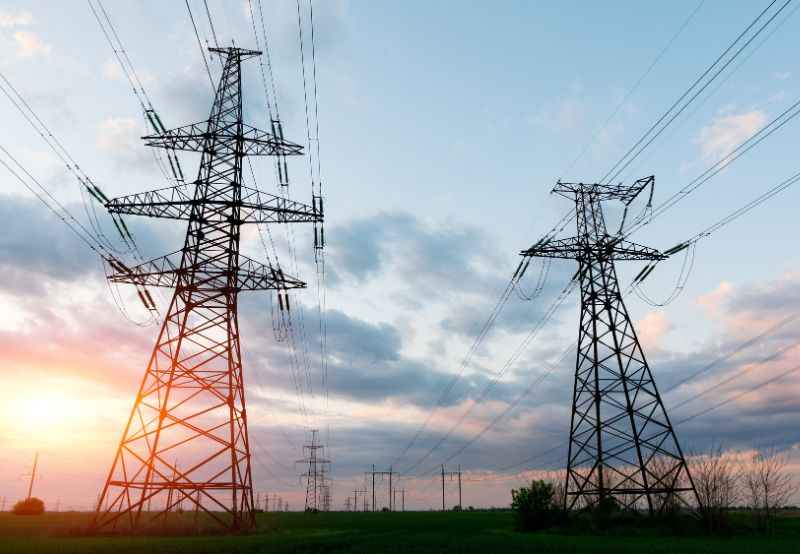
CTUIL Warns of Power Grid Congestion Without Demand-Led Planning
The utility flagged challenges due to a mismatch between actual demand and generation ambitions
February 6, 2026
Follow Mercom India on WhatsApp for exclusive updates on clean energy news and insights
India’s national power transmission utility has stressed that grid expansion must align with realistic demand growth and resource adequacy planning rather than by connectivity applications.
The Central Transmission Utility of India (CTUIL) warned that in the absence of such an alignment, there is a risk of building capacity that the grid cannot effectively absorb.
“Unchecked capacity addition without reference to demand and system capability may result in overcapacity, inefficient operation, and financial stress on the power system,” it said. CTUIL called for a coordinated, continuous planning mechanism among the concerned agencies to monitor implementation, account for delays or deviations, and enable timely course correction.
In a presentation on challenges in transmission planning at a meeting of the National Committee on Transmission, CTUIL flagged a growing mismatch between generation ambitions, actual demand growth, and the time required to build transmission infrastructure, raising the risk of congestion, renewable curtailment, and stranded assets by 2030–31.
Referring to the piling up of renewable energy connectivity applications, particularly in Rajasthan and Gujarat, due to the absence of finalized transmission systems, it pointed out that the Ministry of New and Renewable Energy had identified around 450 GW of renewable potential nationwide, with transmission planning decisions catering to only about 240 GW.
In Rajasthan alone, over 60 GW of renewable capacity is awaiting transmission approval, largely because of insufficient “landing points” to absorb surplus power at the all-India level. Similar challenges are emerging in Gujarat.
Renewable energy generation in Rajasthan continues to experience large-scale curtailment, despite new transmission projects coming online.
Demand Uncertainty
India recently recorded a peak power demand of around 250 GW, but demand projections for 2030–31 vary widely, ranging from about 310 GW to over 350 GW. At the same time, connectivity applications reflect more of developer interest rather than firm demand, making them an unreliable basis for long-term transmission planning.
Installed power capacity, currently under 500 GW, is expected to exceed 900 GW by 2030–31 based on ongoing projects and connectivity requests, significantly increasing planning complexity if demand does not materialize as anticipated.
Additional demand from emerging sectors such as green hydrogen, green ammonia, and bulk industrial consumers drawing power through the interstate transmission system is estimated at around 130-140 GW. However, CTUIL cautioned that the timing and certainty of this demand remain unclear, even as transmission planning assumptions factor in over 400 GW of additional generation capacity, including storage.
According to CTUIL’s load–generation balance studies for FY 2030–31, India could face a nationwide power surplus of 25–55 GW across seasons, potentially rising to 85–110 GW. This surplus makes it difficult to justify large new transmission corridors without clear absorption points, particularly for renewable-rich states.
CTUIL stressed that transmission projects, especially high-voltage direct current systems, require a gestation period of over four years from award. As a result, transmission systems to evacuate large renewable capacities in Rajasthan may only become available beyond 2032, creating near-term bottlenecks for upcoming projects.
Power evacuation infrastructure growth in India has lagged behind the pace of power capacity additions due to unique challenges faced by transmission projects, with implementation delays running into several months and even years.
Flexible Thermal Generation
CTUIL said India may experience surplus power during solar hours, but meeting evening peak demand will remain a challenge, highlighting the need for flexible thermal generation, ramping capability, and energy storage rather than only adding nameplate renewable capacity.
Energy storage could be a solution for both grid stability and improved transmission utilization, it said, advocating co-located storage with renewable projects, suggesting that even storage equivalent to around 10% of renewable capacity could significantly ease variability and congestion challenges.