Uttarakhand Includes BESS in Renewable Energy Tariff Regulations

These amendments are in effect from November 27, 2025

thumbnail

Follow Mercom India on WhatsApp for exclusive updates on clean energy news and insights


The Uttarakhand Electricity Regulatory Commission (UERC) has issued the second amendment to UERC (Tariff and Other Terms for Supply of Electricity from Renewable Energy Sources and non-fossil fuel based Co-generating Stations) Regulations, 2023 (Principal Regulations).

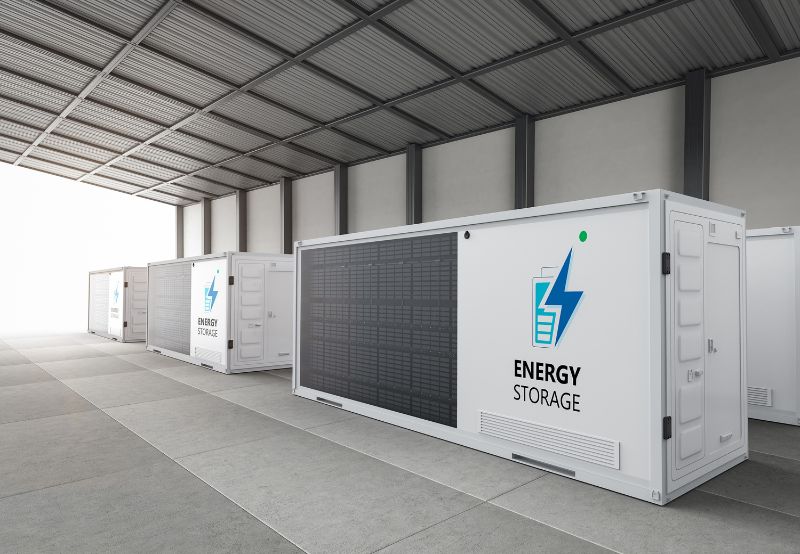
The amendments include changes to the nomenclature of the principal regulations, formal additions of battery energy storage systems (BESS) definitions, useful BESS life, depreciation, and tariff norms.

They also revise benchmark tariffs for the canal bank and canal top solar projects.

Amended Name and Effective Date

The amendments will change the regulations’ name to UERC (Tariff and Other Terms for Supply of Electricity from Renewable Energy Sources and non-fossil fuel based Co-generating Stations) (Second Amendment) Regulations, 2025.

These amendments will remain in force for five years from the commencement of the principal regulations, unless they are reviewed earlier or extended by the Commission.

Applicability

The updated regulations will apply to all electricity supply from renewable energy generating projects or BESS, commissioned after the effective date of the amendments. They will also apply to distribution licensees or local rural grids within Uttarakhand.

Projects commissioned before the effective date will retain their old tariffs. An additional ₹0.12 (~$0.0013)/kWh will apply to solar, and ₹0.5 (~$0.00056) will apply to small hydro projects over the generic tariffs.

Generic tariffs for wind, BESS, and solar projects will be the maximum tariffs.

Any solar, wind, BESS, or other renewable energy projects with installed capacities up to 1 MW will not be eligible to apply for project-specific tariffs.

Added Definitions

The amendments add multiple definitions not present in the principal regulations.

Under the amendments, BESS refers to systems utilizing methods and technologies such as electrochemical batteries, including lead-acid, lithium-ion, solid-state, flow, and nickel-cadmium. These batteries provide facilities to store chemical energy and deliver it as electricity, including, but not limited to, ancillary facilities (grid support).

Charge ramp rate refers to the time taken for storage resources to transition from the zero state to charge to the full state of charge.

Discharge ramp rate is the time required for storage resources to transition from no output to full output.

Cycle/round-trip efficiency of the energy storage system means the BESS’ ratio of discharge capacity to its charge capacity in a single cycle, regardless of its self-discharge loss.

The commercial operation date (COD) for solar projects will be considered as the date of power injection into the licensee’s grid after the project’s completion. These will be subject to compliance with two prerequisites:

  • Installation of the energy meter by the distribution licensee. The distribution licensee must install the meter within seven days of the complete application’s receipt
  • Issuance of the clearance certificate by the electrical inspector

The COD for BESS will be the date declared by the project develop or he implementing agency after the storage system’s testing and commissioning. After this, the BESS will be able to provide the contracted capacity under the agreed technical parameters. This will be subject to the following conditions:

  • The BESS has been tested and commissioned according to the applicable technical standards, including the CEA Grid Standard Regulations, IEEE/IEC standards, or the utility-specific commissioning protocols. The testing and commissioning must also be issued a clearance certificate by the electrical inspector
  • The completion of all contractual obligations related to the interconnection, grid synchronization, and metering. The distribution licensee must install the meter within seven days complete application’s receipt
  • The BESS’ performance demonstration for a minimum duration under the technical specifications from the distribution licensee

Useful Life of BESS

The useful life of BESS is 12 years with an optional five-year extension. However, the tariff during the extended period will be 50% of the original amount.

Additionally, the Commission can determine whether there is an impact or change in the BESS’ useful life due to technological intervention, innovation, or other causes.

Control Period

The control or review period under these regulations will be five years. The first year of this period will be considered the financial year 2024.

Depreciation Rate

Under the amendment, the depreciation rate for the tariff period’s first 15 years will be 4.67% per annum. The remaining depreciation will be spread over the BESS’ useful life left from the 16th year after considering the project’s value as 10% of its cost.

Levelized Fixed Charges Rates

The levelized fixed charge rates under the amendments include a net tariff of ₹4.31 (~$0.048)/kWh for canal bank solar projects and ₹4.48 (~$0.05)/kWh for canal top solar projects.

For BESS projects, the rates include a net tariff of ₹5.78 (~$0.064)/kWh.

Recently, UERC directed the Uttarakhand Power Corporation to initiate termination of power purchase agreements for 12 solar power projects that have made no progress or have pending statutory clearances.

RELATED POSTS

Get the most relevant India solar and clean energy news.

RECENT POSTS