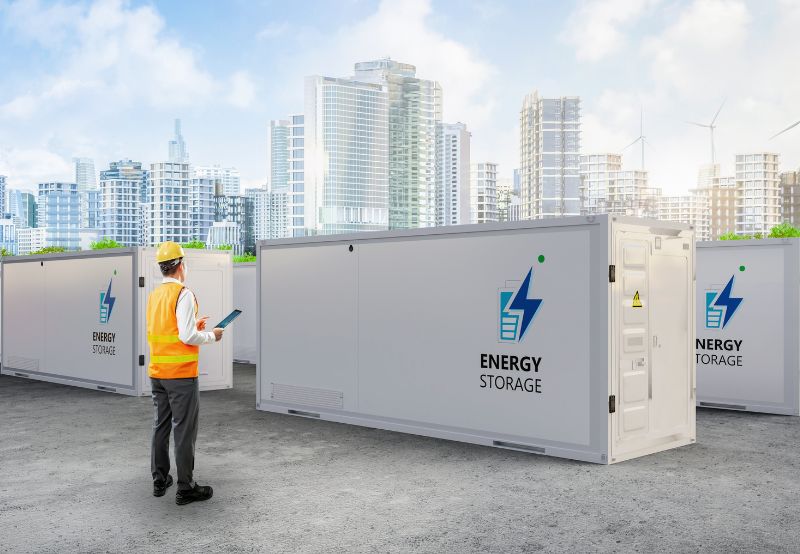
Tripura Issues Tender for 50 MW/200 MWh of Battery Energy Storage
The last date to submit bids is March 9, 2026
February 26, 2026
Follow Mercom India on WhatsApp for exclusive updates on clean energy news and insights
The Tripura State Electricity Corporation (TSECL) has issued an expression of interest to set up 50 MW/200 MWh of standalone battery energy storage systems (BESS) at suitable 33/11 kV substations.
The storage projects will be set up to support renewable energy integration, enhance grid stability, and manage peak demand, which has reached 378 MW and is expected to grow to 690 MW by 2030.
The storage projects will have a tenure of either 12 or 15 years.
Bids must be submitted by March 9, 2026. Bids will be opened on March 13.
The BESS will have a maximum discharge duration of four hours during non-solar peak times. These systems must have a minimum continuous discharge period of one hour.
Each battery unit in the storage systems must have a capacity of 5 MW/20 MWh.
Charging for the energy storage systems will be done during solar hours. Selected bidders can either arrange the charging power themselves or source it from TSECL.
Bidders must propose suitable implementation models, business structures, and deployment processes at strategic locations suitable for BESS operations at the 33 kV voltage level.
Last January, the Tripura Renewable Energy Department Agency invited bids for a pre-feasibility report for a pumped hydro storage project in the state.
The nearby northeastern state of Assam has also increasingly been looking to add storage capacity. In its clean energy policy, the state has offered distribution and wheeling charges waivers, a lifetime waiver of electricity duty, and 100% reimbursement of net SGST for seven years for BESS projects.
In October 2024, the New and Green Energy of Assam invited bids to supply, install, commission, operate, and maintain a 25MW/100MWh BESS project at 400 kV Kurkurmara (Mirza) grid substation in Kamrup district, Assam.
India added 48.4 MWh of energy storage capacity in the first half of 2025, a 74% decline from 186 MWh added in the same period last year, according to the India’s Energy Storage Landscape 1H 2025 Report by Mercom India Research.