


The Real Cost of BESS Goes Beyond Price per MWh: Interview
Supply chain depth, financing, technical capability, and long-term policy visibility are critical for battery storage deployment
August 19, 2026

Follow Mercom India on WhatsApp for exclusive updates on clean energy news and insights
Accounting for 21% of India’s auctioned renewable capacity in the first half of 2026, battery energy storage systems (BESS) are changing how utilities, developers, and commercial and industrial (C&I) consumers tackle challenges like peak demand management and grid reliability.
The rapid expansion of India’s BESS market highlights the preference for power procurement strategies that can deliver power beyond solar generation hours and match demand profiles.
At the same time, the storage industry continues to face questions about the country’s lagging domestic manufacturing capacity, the importance of skilled manpower for BESS assembly, how developers continue to underestimate risks linked to degradation and augmentation requirements, and whether storage systems can deliver contracted performance over their lifecycle.
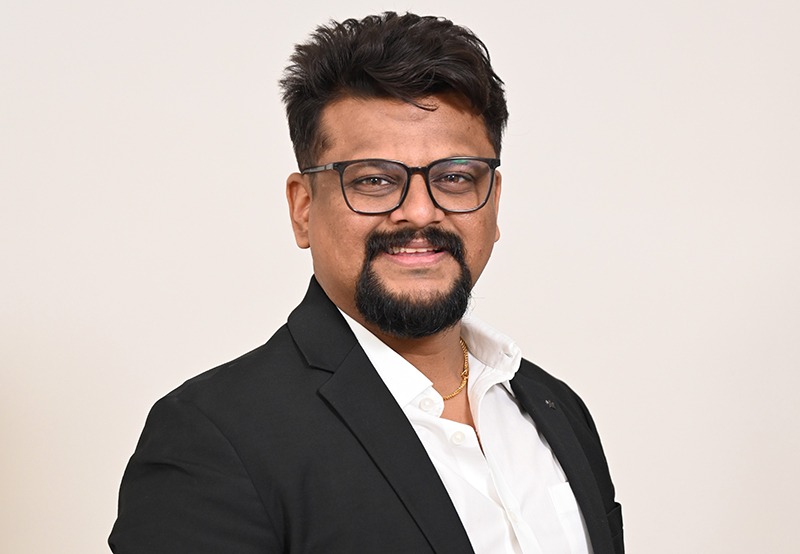
In an interview with Mercom India, Setul Shah, Managing Director of Mecpower Solutions, discusses the company’s manufacturing plans, the evolving demand for storage solutions, and the challenges that could shape India’s BESS market.
Mecpower has announced plans to set up a 5 GWh BESS assembly facility in Karjan, Gujarat. What products will the facility assemble in its initial phase, and which parts of the BESS value chain will be manufactured or sourced in India?
At Karjan, our focus is on BESS assembly, system integration, and engineering, and not localizing the entire battery value chain. The goal is to integrate battery packs, racks, battery management systems, power conversion systems and energy management systems into complete storage solutions for utility-scale and commercial and industrial (C&I) applications.
Initially, battery cells are likely to be sourced externally because domestic cell manufacturing capacity is yet to scale enough to meet market demand levels. Over time, we aim to deepen local engineering, integration, software and testing and potentially move upstream as the domestic ecosystem matures. Localization is not simply substituting imports; indigenous components must meet performance, safety, bankability and lifecycle reliability requirements.
Several Indian BESS assembly projects are expected to depend initially on imported battery cells. What level of domestic value addition does Mecpower expect to achieve, and what policy or market conditions would be required for the company to consider cell manufacturing?
BESS and cell manufacturing are fundamentally different capabilities. Our priority is assembly, system integration, engineering, testing and software while increasing domestic sourcing where commercially viable. As our sourcing architecture is still being developed, I would rather not give an arbitrary domestic value-addition percentage. We plan to raise localization as India’s supplier ecosystem develops.
Cell manufacturing is a much bigger commitment, requiring scale, technology access, significant capital, a dependable upstream material ecosystem and long-term demand visibility. We may consider it if those fundamentals create a competitive case
How is the demand for battery storage evolving across utilities, (C&I) consumers, and renewable energy developers? Which applications are gaining the most commercial traction today, and why?
Utility-scale storage and renewable-plus-storage projects are generating strong demand because facilities and developers need storage to manage renewable intermittency, particularly during high demand periods, and make renewable power more dispatchable. Storage is also becoming commercially relevant for C&I customers, who are evaluating it for peak demand management, time-of-day tariff optimization, renewable energy utilization and reliability rather than simply as backup power.
Over time, utility-scale projects will drive volumes and deployment, while C&I segment will shape up around customers’ load profile, tariff structure and operating requirements. Storage adoption will accelerate wherever the business case is clear.
India is pursuing both domestic battery manufacturing and large-scale storage deployment simultaneously. Which is likely to become the bigger bottleneck: manufacturing capacity, supply chains, financing, or skilled manpower?
It is difficult to identify one bottleneck because constraints will change as the market develops. In the near future, supply chain depth, financing and technical capability matter as much as assembly capacity.
Assembly capacity can be built relatively quickly, but developing a dependable upstream ecosystem for cells, components and critical materials takes time. Projects also need financing structures that account for degradation, augmentation, warranties and long-term performance risk.
Skilled manpower will also be critical. BESS assembly requires expertise in electrical engineering, thermal management, controls, fire safety, software and system integration. Building gigafactories is challenging, but sustaining an engineering ecosystem for 15-20 years is harder. Capacity, capital and capability need to grow together.
What risks associated with battery degradation, augmentation requirements, and replacement costs are still being underestimated by project developers and investors?
Evaluating BESS mainly on initial cost per MWh is a major mistake. A battery’s usable capacity changes over time with cycling, temperature, depth of discharge, operating strategy and cell chemistry. Developers, therefore, need to assess contracted capacity over 10 to 15 years, expected degradation, augmentation timing and who bears the cost if actual degradation differs from warranty assumptions. These factors directly affect returns. A cheaper system may cost more over its lifecycle if augmentation, replacement, efficiency losses and operating conditions are not properly modelled. The focus should shift from installed cost per MWh to lifecycle cost and performance.
How prepared are DISCOMs and transmission utilities to integrate large volumes of battery storage?
Preparedness is improving, but not uniformly. The debate has shifted from whether storage is needed to how it should be integrated, dispatched, scheduled and compensated. Some utilities and agencies are gaining experience through large-scale tenders, but greater scale requires better forecasting, scheduling, metering, market participation and grid operations. BESS differs from conventional generation because it can act as both a load and a power source.
Regulatory and operational frameworks therefore need to recognize the multiple services storage provides. CERC is evolving connectivity, scheduling and metering procedures as storage and renewable penetration increase. The technology can scale quickly; institutional, regulatory and market architecture must keep pace.
Looking ahead, what policy and regulatory changes would have the greatest impact on accelerating battery storage deployment while also encouraging long term investments in domestic manufacturing?
The industry needs long-term policy visibility. Clarity and consistency around storage tariffs, market participation, ancillary services, connectivity and monetization of multiple BESS use cases would create reliable business models and strengthen investor confidence.
Manufacturing also needs sustained demand visibility alongside localization incentives. The Advanced Chemistry Cell-PLI framework encourages domestic value addition, and the Ministry of Heavy Industries has opened another 10 GWh manufacturing opportunity for grid-scale stationary storage. Manufacturers will invest more deeply when they see a credible multi-year market rather than a short procurement cycle.
Policy should create predictable storage demand while making it commercially attractive to build technology and supply chains in India. This combination is more effective than manufacturing incentives or deployment subsidies alone.
What is one hard truth about India’s battery storage market that the industry is not discussing enough?
Announced capacity is not the same as a bankable, operating storage asset. BESS is attracting enormous interest, but the industry remains young. Winning a tender, announcing a factory or achieving a competitive headline price is only a beginning. Over the next 10-15 years, systems will be tested on whether they deliver contracted capacity, whether degradation assumptions hold, whether augmentation is properly planned and whether economics remain viable across the asset lifecycle.
The next growth phase will be less about who announces the most gigawatt-hours and more about who can deliver reliable performance over time. Companies combining manufacturing scale with engineering depth, lifecycle performance, intelligent energy management and long-term bankability will lead the next phase of the BESS industry.


Arjun Joshi
More articles from Arjun Joshi.