Textile Firm Agarwal Industries Benefits from Rooftop Solar Switch
The 302-kW system is expected to save about ₹3.6 million in electricity costs
Follow Mercom India on WhatsApp for exclusive updates on clean energy news and insights
Industries are gradually moving toward solar power as the cost of conventional power puts a heavy burden on them. Switching to solar helps them reduce operational costs and make them more sustainable.
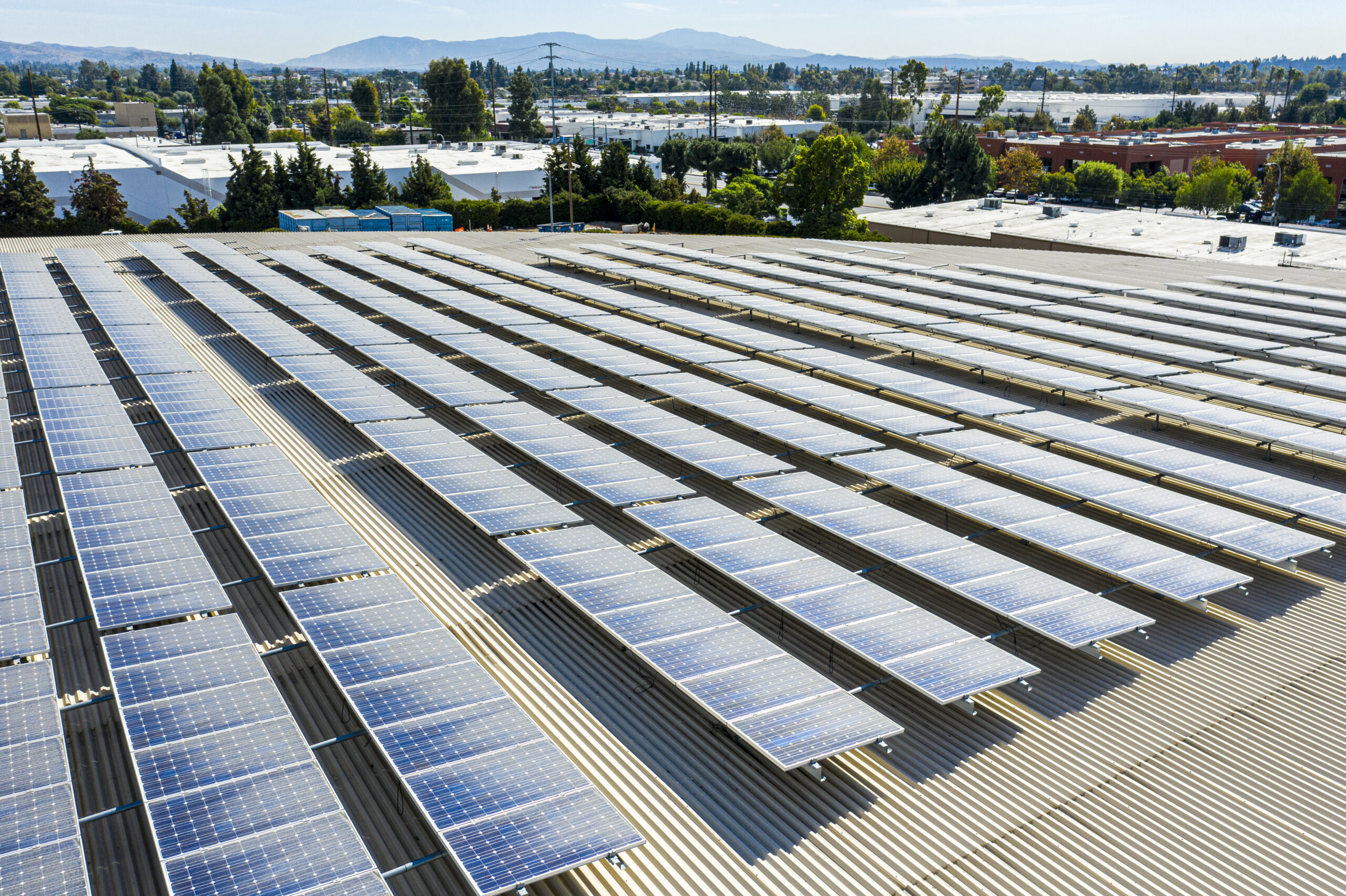
Recently, Agarwal Industries, a textile manufacturer in Bijainagar, Rajasthan, installed a 302-kW rooftop solar project.
Agarwal Industries was incurring over ₹20 million (~$222,410) in electricity expenses annually. The project is expected to save approximately ₹2.8 million in electricity costs. The project is expected to generate approximately 380,000 units of clean electricity annually.
Keshav Nagori, owner of Agarwal Industries, said, “Earlier, we had installed a 238-kW rooftop solar project at the spinning division in Bijainagar spinning division, which is just 200 meters from the new site. The savings from that project are around ₹2.2 million annually. The main reason for shifting to rooftop solar is to reduce production costs and have an uninterrupted power supply.”
The project is expected to offset nearly 370-400 metric tons of carbon dioxide annually, which is equivalent to planting 16,000 to 18,000 trees each year.
EcoMitram Sustainable Solutions commissioned the project for Agarwal Industries.
This project was the installer’s third project for the textile manufacturer.
Panasonic TOPCon 585 Wp bifacial solar modules were chosen for this rooftop project for their high efficiency and superior performance under high-temperature conditions. The project has also deployed two 125 kW Hitachi inverters.
Shashank Jain, Chief Executive Officer at EcoMitram Sustainable Solutions, said the project was engineered specifically for a textile manufacturing environment.
“In textile units, cotton threads and fiber dust are continuously present in the operating environment, and inverters are among the most vulnerable components in such conditions. To address this, the system design included careful inverter placement, protective enclosures, controlled ventilation, and optimized cable routing to minimize fiber ingress and dust accumulation,” he said.
India added 4.9 GW of rooftop solar capacity in the first nine months (9M) of the calendar year 2025, compared to 1.9 GW in the previous year, a 161% year-over-year increase, according to Mercom India’s Q3 2025 India Rooftop Solar Market Report.
Jain said rooftop solar adoption is growing rapidly across industrial, commercial, and residential segments in Rajasthan, which has consistently ranked among the top five solarized states in India over the past decade. Recent policy enablers, such as virtual net metering and group net metering, are expected to further accelerate rooftop solar adoption.
Mercom India hosts a pan-India ‘C&I Clean Energy Meet’ series to raise awareness among businesses about the benefits of adopting solar power, the associated financial advantages, evolving approaches, and the intricacies of integrating battery energy storage systems. The next event is scheduled for Coimbatore on February 5, 2026.