Storage, Engineering, and Service Become Distributed Solar’s Growth Drivers

Industry leaders say storage, engineering, safety, and lifecycle support, not just equipment pricing, will define success in India's evolving distributed solar market

thumbnail

Follow Mercom India on WhatsApp for exclusive updates on clean energy news and insights


India’s distributed solar and energy storage markets are expanding, driven by time-of-day (ToD) tariffs, evolving rooftop regulations, backup power requirements, peak-shaving applications, and falling lithium-ion battery prices.

Industry experts said the growth of hybrid and storage systems must be supported by accurate system sizing, stronger installer training, strict safety standards, reliable after-sales service, and lifecycle-based product selection. Without these safeguards, rapid adoption could lead to performance failures, higher operating costs, and declining customer confidence.

Distributed Storage Opportunities

According to Anirudh Bhardwaj, Regional Sales Manager, South at GoodWe, storage demand is expanding across both the utility-scale and distributed solar segments. In Maharashtra, for example, ToD tariffs and regulatory changes for rooftop systems above 100 kW are creating new applications for storage.

Bhardwaj added that engineering, procurement, and construction (EPC) companies must select suitable products and invest in technical training, as errors in system design, sizing, and pre-installation calculations can affect the performance of an entire project.

Peak shaving is also gaining traction, allowing consumers to avoid penalties for exceeding sanctioned demand during specific periods. Storage is increasingly being deployed for backup power and to reduce dependence on diesel generators.

GoodWe introduced hybrid inverters in India in 2025. Residential customers that require regular backup or experience outages lasting more than two hours are adopting batteries with hybrid inverters. In the commercial and industrial (C&I) segment, applications include replacing diesel generators and supporting larger systems constrained by regulations governing grid-connected installations.

Not every customer requires battery storage immediately. However, many are choosing storage-ready hybrid inverters that allow batteries to be integrated later as tariffs, regulations, or backup requirements change. Falling lithium-ion battery prices have also improved their economics compared with lead-acid batteries.

Babusasitharan K, Director, Projects at Kintech Greenurja, said India has installed about 5.9 GWh of energy storage capacity, with significant additions planned across the distributed, utility-scale, C&I and residential rooftop solar segments.

The company has established 1.4 GWh of manufacturing capacity and an additional capability of around 500 MWh. The company’s portfolio includes residential systems of up to 20 kWh, industrial systems below 200 kWh, and utility-scale products ranging from 5.04 MWh to 6.25 MWh.

Storage Product Expansion

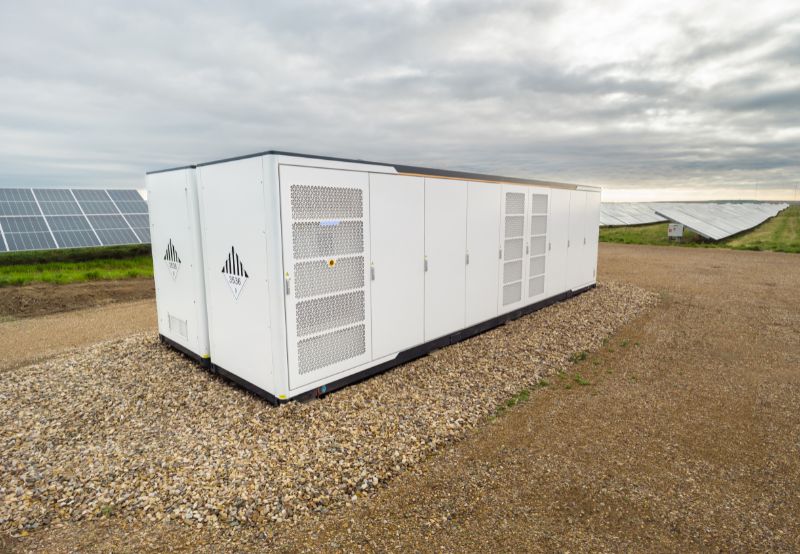
Ciju K Raj, AVP, Channels, at Swelect Energy Systems, said the company has recently launched residential storage solutions and is developing larger containerized systems. Its expansion into storage builds on its presence in module manufacturing, mounting structures, and balance-of-system products.

The company expects storage mandates alongside renewable energy systems to emerge gradually across states. A proposal in Kerala covering systems above 5 kW received a court-ordered extension, but similar regulatory approaches could emerge in other markets as states seek greater grid flexibility.

Residential hybrid systems can replace conventional inverters and batteries. Products with 48 V, 100 Ah lithium-ion batteries currently dominate the market, while 24 V, 100 Ah options are gaining traction. Containerized storage is more economical for projects above 100 kW.

Raj said the company is installing a large system at its factory as a proof of concept because customers increasingly want to evaluate operating projects before making investment decisions.

Inverter Selection Must Extend Beyond Price

Discussing the technical and commercial factors installers and EPC companies should consider when selecting inverter technologies, Bhardwaj said products must be evaluated over the entire project lifecycle rather than solely on upfront costs.

A product with a long operating track record in India, advanced monitoring capabilities, and support from a bankable manufacturer may justify a premium if it reduces downtime, improves safety, and provides dependable service over the project life.

Safety should remain the primary criterion. Features such as arc-fault circuit interruption, rapid shutdown, reverse-polarity protection, and terminal-temperature monitoring can help identify faults and prevent equipment damage.

Buyers should also assess monitoring capabilities that enable early identification of performance issues and preventive maintenance. Commercial considerations include the manufacturer’s presence in India, operating track record, bankability, service workforce, and warehouse network.

Since solar projects are designed to operate for approximately 25 years, faster replacement support and reliable after-sales service can be more valuable than marginal savings in equipment costs.

Distributor Support and Warranty Risks

Bhardwaj also addressed concerns among EPC companies about manufacturers shifting support responsibilities to distribution partners. He said GoodWe operates a dedicated after-sales network comprising a call center and state-level field application engineers. Several issues are resolved remotely, while regional teams provide on-site support when required.

Warranty terms vary by product, with some offering longer standard coverage or paid extensions. Hybrid system warranties may also depend on whether the same manufacturer supplies both the inverter and battery.

Before recommending a system, EPC companies should evaluate warranty coverage, exclusions, extension costs, and replacement timelines, and the division of responsibility among manufacturers, distributors, and installers.

Long-Term Storage Support

Babusasitharan said suppliers must plan for service, spare-part availability, and warranty support throughout a battery system’s operating life, which can extend from 15 to 20 years.

Buyers should assess battery chemistry, performance, safety, and compatibility among the energy management system, battery management system, and power conversion system. They must also account for cell degradation, end-of-life treatment, recycling, and waste management.

Storage economics cannot be assessed solely through the initial purchase price. Battery degradation, replacement requirements, system availability, operating efficiency, and end-of-life obligations all influence lifecycle costs. As India’s storage market evolves, manufacturers and customers are learning from early deployments.

Babusasitharan cautioned against compromising on safety or technology to reduce upfront costs, noting that higher-quality systems can lower lifecycle expenditure.

Gujarat, Rajasthan, Maharashtra, Karnataka, Andhra Pradesh, and Tamil Nadu are showing strong interest in storage tenders, reflecting growing demand for grid support, backup power, and the integration of renewable energy.

Engineering and O&M

Raj said successful EPC companies and installers differentiate themselves through customer-centric solutions, strong engineering, and reliable operations and maintenance (O&M).

Companies must assess whether a customer needs storage, backup power, electric-vehicle charging, or any other solutions rather than simply selling the latest technology. System design should account for the site structure, inverter selection, existing generators or home inverters, backup requirements, and future energy needs.

A technically advanced product will not deliver the intended value if it is poorly matched to the customer’s load profile or operating requirements.

Effective solar O&M, including regular visits, cleaning guidance, and responsive service, can generate referrals, particularly in residential markets. Customers should also evaluate manufacturers’ financial strength and service orientation because solar module product warranties can extend to 12 years and performance warranties to 30 years.

Under the PM Surya Ghar program, registered vendors that enroll rooftop solar customers are responsible for O&M for five years. Their responsibilities include addressing generation issues caused by shading, maintenance requirements, and site conditions.

This long-term obligation makes installation quality and after-sales capability critical considerations for vendors entering the residential rooftop solar market.

Installation Quality Gaps

Discussing the installation and design mistakes that most frequently affect system performance, Bhardwaj said such issues will persist without mandatory installer qualifications or certification. Aggressive price competition may also prompt EPC companies to cut costs in critical areas.

Common problems include incorrect cable and breaker sizing, improper torque settings, and failure to follow original equipment manufacturer (OEM) installation requirements. He noted that many inverter failures result from poor installation rather than equipment defects.

The knowledge gap is more pronounced in hybrid systems, where technicians may apply conventional on-grid installation practices. Hybrid projects require accurate calculations from the proposal stage. Undersized systems may not provide the promised backup, while oversized systems unnecessarily increase customer costs.

System design must integrate the inverter, modules, and battery while accounting for load profiles, outage frequency, critical appliances, occupancy patterns, and future expansion.

Bhardwaj recommended structured checklists, adherence to product manuals, and regular training for OEMs, EPC companies, and installers. He emphasized that no solar system remains maintenance-free throughout its 25-year operating life.

Market Knowledge Becomes a Competitive Advantage

The discussion highlighted that the next phase of distributed solar growth will require more than access to new products. Installers and EPC companies must understand changing tariff structures, storage economics, system integration, safety requirements, warranties, and long-term service obligations.

For suppliers, the market increasingly rewards companies that can combine reliable products with technical training, channel support, localized service, and practical demonstrations of operating systems. These capabilities will become increasingly important as customers move from conventional rooftop solar toward hybrid, storage-ready, and integrated energy solutions.

The industry experts shared these insights during Mercom India’s Renewable Energy Buyer-Seller Meet held on July 24, 2026, in Bengaluru. The event brought together installers, EPC companies, distributors, developers, and technology suppliers to discuss market requirements, emerging technologies, and regional business opportunities.

Mercom’s RE Buyer-Seller Meets connect suppliers directly with qualified installers, EPC companies, developers, dealers, and distributors evaluating modules, inverters, storage systems, and balance-of-system products. By addressing practical market challenges alongside curated business discussions, the events enable participants to identify customer requirements, strengthen channel relationships, and develop region-specific sales opportunities.

The next RE Buyer-Seller Meet will be held on August 20, 2026, in Hyderabad.

RELATED POSTS

Get the most relevant India solar and clean energy news.

RECENT POSTS