Rooftop Solar, Energy Efficiency Vital to MSME Decarbonization: NITI Aayog

Solar adoption, efficiency measures, and fuel switching can cut 87 MtCO₂e

thumbnail

Follow Mercom India on WhatsApp for exclusive updates on clean energy news and insights


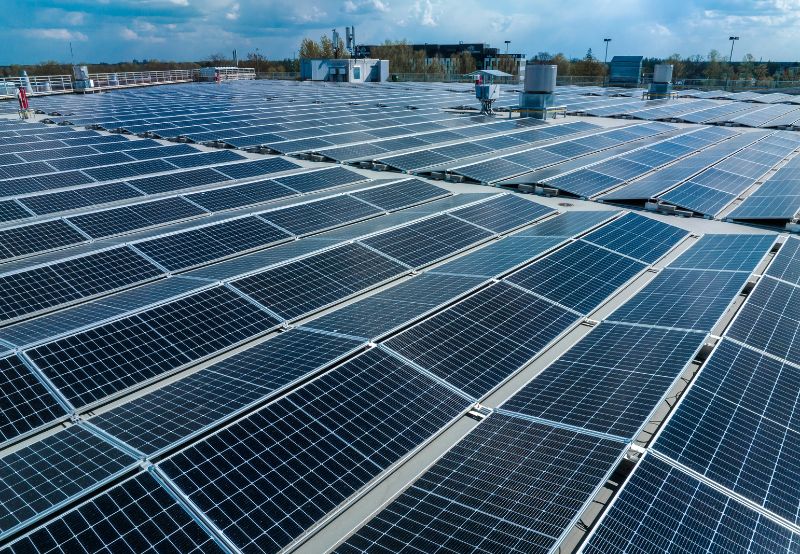
Rooftop solar and behind-the-meter renewable energy systems are expected to play a central role in reducing emissions and energy costs across India’s micro, small, and medium enterprises (MSMEs), according to a decarbonization roadmap prepared by NITI Aayog.

Rooftop solar tariffs range between ₹3.8 (~$0.042) and ₹6.5 (~$0.072)/kWh compared to grid tariffs of ₹5.6 (~$0.062) to ₹9.9 (~$0.109)/kWh, resulting in cost savings of ₹3 (~$0.033) to ₹4 (~$0.044)/kWh under capex models and ₹2 (~$0.022) to ₹3.5 (~$0.039)/kWh under opex models, the report said.

The roadmap estimates a requirement of 6,031 MW of solar capacity across the top 10 electricity-intensive clusters, with the potential to reduce emissions by 12.9 million tons of carbon dioxide equivalent (MtCO₂e).

Efficiency Measures

Niti Aayog identifies three primary decarbonization levers: energy efficiency, adoption of green electricity, and switching from high-emission fuels such as coal, furnace oil, and pet coke to lower-emission alternatives, including piped natural gas (PNG), biomass, and agro-residue fuels.

Energy efficiency is identified as the foundational intervention, with a total potential to reduce emissions by 36 MtCO₂e across MSMEs. In the five most emission-intensive subsectors, emissions could decline from 86.5 MtCO₂e to 63.6 MtCO₂e through efficiency improvements alone, supported by technologies such as efficient boilers, furnaces, process optimization systems, and efficient motors and drives.

Textile subsectors could reduce emissions from 24.7 MtCO₂e to 9.9 MtCO₂e, while paper and pulp emissions could decline from 30.3 MtCO₂e to 28.1 MtCO₂e. Foundry, forging, and steel rerolling subsectors could achieve reductions of 21%, 22%, and 12%, respectively.

Green electricity adoption represents the second-largest mitigation lever, with renewable electricity penetration projected to increase from the current 2% to 45% under the Line of Sight scenario and up to 60% under an aggressive transition scenario. This shift could deliver emission reductions of 30 MtCO₂e and 35 MtCO₂e, respectively.

Switching to PNG, biomass, and agro-residue fuels could reduce emissions by 9 MtCO₂e under the moderate scenario and by up to 16 MtCO₂e under the aggressive scenario.

Coal usage could decline significantly, with electrification and fuel switching reducing coal’s share to 65% under moderate transition pathways and to 45% under aggressive scenarios.

PNG consumption could increase by 15% to 20%, while biomass adoption could grow by 10% to 20%, although seasonal supply constraints and technical limitations remain barriers.

Electrification alone delivers only limited emission reductions unless combined with the adoption of renewable electricity, underscoring the importance of integrating clean power with electrification strategies.

MSME Economic Contribution

India’s MSMEs, comprising around 69 million units, are central to the country’s industrial output, exports, and climate transition.

The sector contributes 45.7% of India’s exports, 30% of gross value added, and 36.2% of manufacturing output, but emitted approximately 135 MtCO₂e in 2022.

The top five emission-intensive subsectors, textiles, paper and pulp, foundry, forging, and steel rerolling, account for 86.5 MtCO₂e, or 64% of total MSME emissions, while the remaining subsectors contribute 48.5 MtCO₂e.

NITI Aayog MSME


Coal and grid electricity dominate the sector’s energy mix, accounting for 48% and 19% of energy consumption, respectively, and together contributing about 91% of total emissions, with coal alone responsible for 50% and grid electricity for 41%.

Investment Requirements

The roadmap also outlines significant investment requirements, particularly in high-emission industrial clusters.

Financing mechanisms include viability gap funding of up to 15% of project costs, interest subvention, capital subsidies, concessional green loans, and risk-sharing facilities.

Government programs such as ADEETIE, GIFT, and SPICE support the deployment of energy-efficiency measures, green investments, and circular-economy initiatives.

The Pay-As-You-Save model, implemented through energy service companies, allows MSMEs to adopt efficiency technologies without upfront capital costs, with repayment structured around energy savings over 2 to 4 years.

Reforms and Emissions Reduction

Under the line-of-sight scenario, total MSME emissions could decline by 75 MtCO₂e, while the aggressive scenario could achieve reductions of up to 87 MtCO₂e, representing a 55% to 64% reduction from baseline levels.

These reductions are expected to deliver financial benefits of ₹25 billion (~$275.65 million) annually over a 10-year period. The roadmap positions MSME decarbonization as critical to achieving India’s national targets of 500 GW renewable energy capacity by 2030 and net zero emissions by 2070, while ensuring MSMEs remain competitive in global supply chains increasingly driven by sustainability requirements.

In 2022, NITI Aayog’s study found that carbon capture, utilization, and storage are vital to ensuring sustainable development and growth in India, particularly for producing clean energy.

RELATED POSTS

Get the most relevant India solar and clean energy news.

RECENT POSTS