

Powertrac Invests ₹6 Billion on 1 GWh Containerized BESS Facility
The facility will manufacture LFP battery pack assemblies
February 16, 2026

Follow Mercom India on WhatsApp for exclusive updates on clean energy news and insights
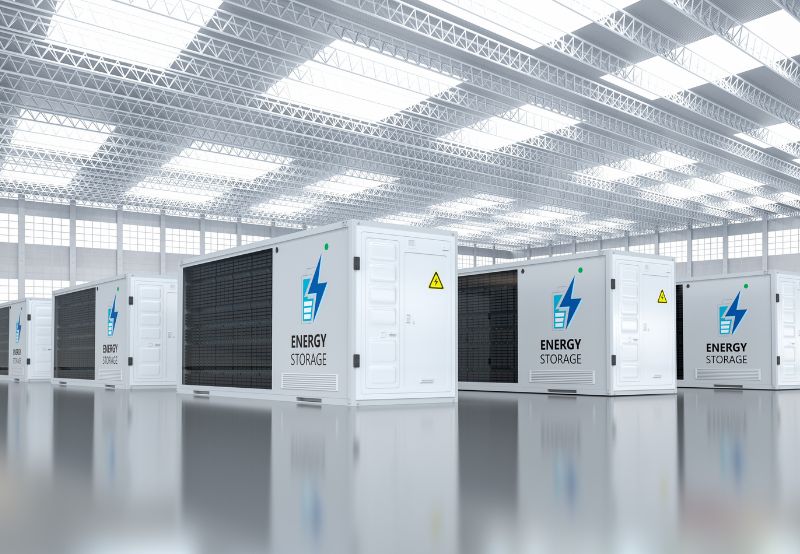
Ahmedabad-based renewable energy solutions provider Powertrac Group has invested ₹6 billion (~$66.17 million) to set up a 1,000 MWh per annum containerized battery energy storage system (BESS) manufacturing facility.
The facility will manufacture lithium-iron phosphate (LFP) battery pack assemblies, develop and integrate battery management systems in-house, produce 1 MWh to 5 MWh modular containerized grid-scale BESS, and work on solar plus BESS hybrid energy solutions.
The ₹6 billion (~$66.17 million) investment is part of Powertrac’s aim to achieve 1,000 MW of operational independent power producer projects by 2030.
Battery energy storage has moved from the periphery and has become an integral component of India’s clean energy transition
Bid prices in the BESS market are also declining sharply, driven by viability gap funding (VGF) support and intense competition. While VGF has reduced upfront project costs, it has also spurred aggressive bidding that may not fully reflect the actual levelized cost of storage, which represents the true lifecycle cost of storage assets.
The extension of Basic Customs Duty exemption on capital goods used for manufacturing lithium-ion cells for batteries used in BESS, announced in the Union Budget 2026, is likely to reduce the capital expenditure for cell manufacturing and BESS projects
India added 48.4 MWh of energy storage capacity in the first half (1H) of 2025, a 74% decline from 186 MWh added in the same period last year, according to India’s Energy Storage Landscape 1H 2025 Report by Mercom India Research. India’s cumulative installed energy storage capacity reached 490 MWh by the end of June 2025.
Solar-plus-storage systems accounted for nearly 56% of India’s cumulative installed capacity. This was followed by more than 32% from solar-plus-wind projects with round-the-clock capability, and over 12% from standalone battery energy storage systems. The remaining share came from floating solar with storage, and solar-plus-wind projects with storage capabilities.


Parth Shukla
More articles from Parth Shukla.