PM-KUSUM a Turning Point for Solar Irrigation: Interview

Oswal Pumps says the program boosted manufacturing scale

thumbnail

Follow Mercom India on WhatsApp for exclusive updates on clean energy news and insights


As India accelerates its shift toward renewable energy-powered agriculture, solar pumps are emerging as a key lifeline for farmers seeking dependable irrigation solutions without the burden of rising energy costs.

Despite the growth in installations, challenges such as limited awareness, financing hurdles, and the need for region-specific solutions continue to slow adoption in several rural pockets.

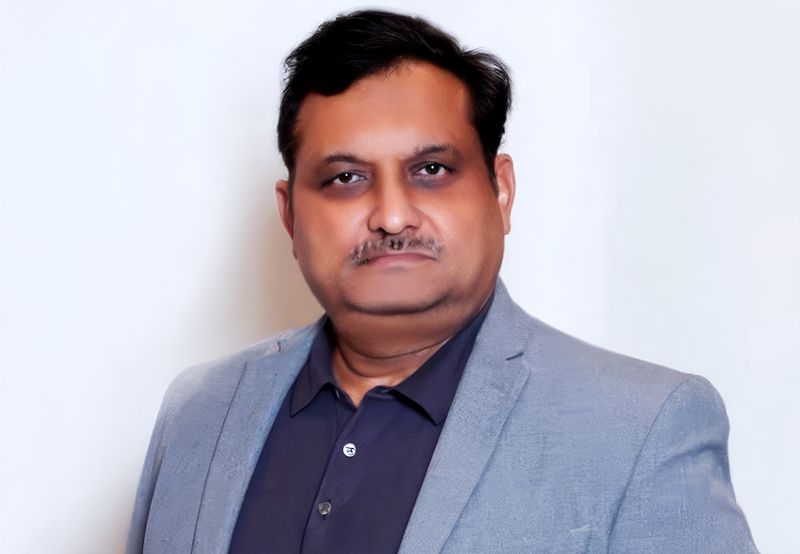
In an exclusive interview with Mercom, Vivek Gupta, Chairman and Managing Director at Oswal Pumps, explains how the company is reinforcing its ground engagement strategy, expanding its presence in underserved markets, and leveraging government initiatives like the Pradhan Mantri Kisan Urja Suraksha evam Utthaan Mahabhiyan (PM-KUSUM) program to make solar pumping systems more accessible.

How is Oswal Pumps working to expand solar irrigation in regions where awareness and adoption are still low?

When we look at rural India today, awareness of solar is growing, but there’s still hesitation, mainly because farmers want to see results before committing to a new technology. And that’s understandable. Irrigation is central to their livelihood, and they need proof, not just promises.

That’s why, at Oswal, our focus has been on ground-level engagement. We conduct live demonstrations, work with local dealer networks, and collaborate with agricultural officers to help farmers experience the benefits firsthand. Once they see a solar pump running reliably on a neighbor’s farm, the confidence builds naturally.

So our approach is simple: make technology visible, make it approachable, and let real-world performance drive adoption.

What impact has the PM-KUSUM program had on Oswal’s growth and overall business strategy?

PM-KUSUM has truly been a turning point for the solar irrigation sector. It has given both farmers and manufacturers a clear direction and a stable policy environment in which to work. From reducing farmers’ dependence on grid power to promoting renewable-led irrigation, the program has created a strong push for adoption.

KUSUM validated the investments we were already making. It encouraged us to scale our solar pump manufacturing, expand module business, and strengthen our after-sales network. The program also pushed us to innovate faster so we could support large-scale deployment across diverse terrains.

In many ways, KUSUM didn’t just support our growth; it aligned with our vision of making irrigation more reliable, affordable, and energy independent.

What new technologies or design improvements has Oswal introduced to enhance pump efficiency?

Efficiency has become the backbone of solar irrigation. Farmers expect maximum output from a limited energy source, and they want systems that can adapt to changing weather patterns.

Our recent research and development efforts have focused exactly on that. We’ve introduced high-efficiency motors, refined our hydraulic designs, and upgraded our MPPT (maximum power point tracking) controllers to improve performance in low or fluctuating sunlight. We’ve also shifted to longer-lasting, corrosion-resistant materials so the pumps stay dependable even in challenging water conditions.

Each improvement is designed to solve a real problem farmers face on the ground, not just to make the system more advanced, but to make it more practical.

How does Oswal ensure consistent pump performance in areas with fluctuating sunlight levels or low water tables?

In India, no two fields are the same. One region may see dense cloud cover; another may have deep borewells with low water tables. That’s exactly why solar pumps must be engineered for variability, not ideal conditions.

Our systems use MPPT-based controllers, efficient motors, and optimized hydraulics to maintain performance even in early mornings, late evenings, or cloudy weather. For areas with low water tables, we offer high-head and high-suction models designed to lift water efficiently without stressing the motor.

The idea is straightforward: a farmer shouldn’t have to wait for perfect sunlight or perfect groundwater. The pump should adapt to the field, and not the other way around.

What steps has Oswal taken to provide reliable after-sales service, especially in rural and remote regions?

After-sales support is one of the biggest deciding factors in rural adoption. Even the best technology falls short if service is slow or unavailable.

That’s why we’ve invested heavily in our service network. Today, Oswal has trained technicians across major agricultural belts, supported by regional hubs and a dedicated customer support team. We also conduct regular training programs to help local service partners diagnose and resolve issues quickly.

For us, the commitment doesn’t end when the pump is installed. It continues throughout the product’s life, and that’s something farmers value deeply.

What do you see as the next major innovation in solar irrigation, and how is Oswal preparing for it?

The next big leap will come from integrating digital intelligence with solar hardware. We’re moving towards a time when pumps won’t just run, they’ll communicate, self-adjust, and help farmers plan their irrigation more efficiently.

Remote monitoring, predictive maintenance, water usage insights – these are the areas that will define the future. At Oswal, we’ve already started developing integrated solutions that combine solar power with data-driven decision-making.

As the agricultural ecosystem becomes more tech-enabled, we want to ensure farmers benefit from solutions that are not only smarter but also simple and practical to use.

Please tell us about your solar module business. Are the modules intended only for captive use, or are they also available for sale in the broader market?

Our module business was built with one priority: quality. Solar pumps operate in demanding environments, and we wanted full control over the performance of the panels powering them.

Today, while a large portion of our modules supports our own pump systems, we also supply them to the open market. Our panels are BIS-certified, high-efficiency modules designed to deliver stable performance in rural conditions – heat, dust, long operating hours, everything.

Whether used internally or sold independently, our goal is to offer modules that the market can trust.

Oswal currently manufactures both solar pumps and solar panels. Are there plans to diversify into other segments of the solar ecosystem?

The solar industry is expanding rapidly, and naturally, there are many adjacent opportunities, from storage systems to smart controllers and integrated agri-solar solutions.

We do see room to grow, but our approach is deliberate. Any diversification we pursue must add real value for the end user, especially farmers. Our focus remains on areas where our manufacturing expertise and industry experience can genuinely improve reliability and performance.

Wherever technology can strengthen energy independence, irrigation reliability, and agricultural productivity, that’s where Oswal will continue to build.

RELATED POSTS

Get the most relevant India solar and clean energy news.

RECENT POSTS