MNRE Doesn’t Foresee Supply Constraints for Solar Cells and Modules: Interview

Scaling energy storage will be critical to overcome the intermittency of renewables

thumbnail

Follow Mercom India on WhatsApp for exclusive updates on clean energy news and insights


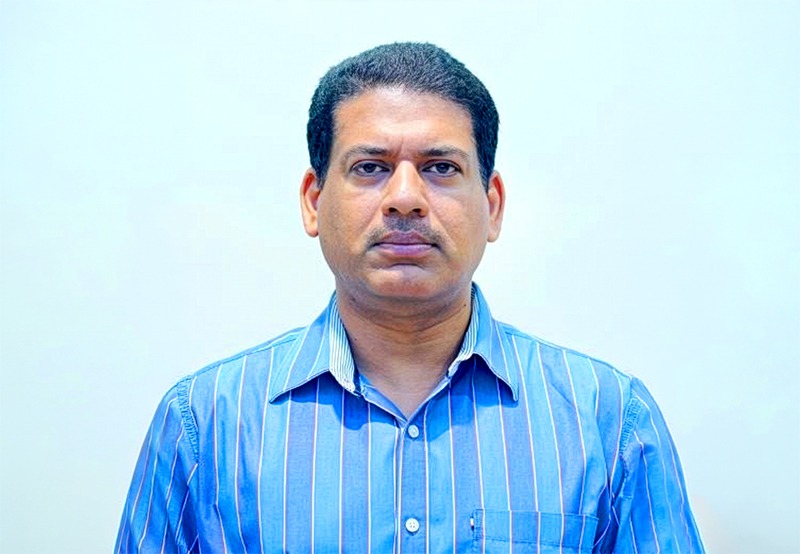
In an exclusive interview with Mercom India, Santosh Kumar Sarangi, Secretary, Ministry of New and Renewable Energy (MNRE), shares his views on the government’s policies and programs related to renewable energy development, the strategies to achieve India’s 2030 clean energy target, and steps to overcome challenges in land acquisition and right-of-way for solar and wind projects.

India recently announced achieving nearly 50% of its power demand from renewable sources. What key policy, infrastructure, and technology interventions will be critical for India to achieve its 500 GW renewable energy target by 2030?

The government has implemented several policies and regulatory measures to accelerate the deployment of renewable energy and fulfill its commitment to achieving 500 GW of non-fossil-fuel-based capacity by 2030. These include the introduction of Standard Bidding Guidelines for tariff-based competitive procurement of power from solar, wind, wind-solar hybrid, and FDRE projects; notification of Renewable Purchase Obligation and Renewable Consumption Obligation trajectory up to 2029-30 with penalties for non-compliance; and the permission of 100 percent Foreign Direct Investment under the automatic route.

Several targeted programs have also been launched, including PM-KUSUM, PM Surya Ghar Muft Bijli Yojana, the National Program on High-Efficiency Solar PV Modules, and the National Green Hydrogen Mission. To support large-scale project development, Solar Parks and Ultra Mega Solar Power projects are being set up to provide developers with land and transmission access.

On the infrastructure and technology side, interstate transmission system charges have been waived for solar, wind, green hydrogen, and offshore wind projects. The Green Energy Corridor has funded the construction of new transmission lines and substations to evacuate renewable power. A comprehensive transmission plan through 2030 has been prepared to support the steep trajectory of renewable energy. Quality Control Orders for solar photovoltaic products and storage batteries have been notified, alongside Standards and Labeling programs for solar modules and grid-connected inverters. The government has also issued a National Framework for Energy Storage Systems, Guidelines for Resource Adequacy Planning, and the Electricity (Green Energy Open Access) Rules, 2022, enabling consumers with a contracted demand of 100 kW or above to access green power.

Policymaking, however, is an ongoing process, and additional interventions will be introduced based on the Ministry’s feedback and assessments to ensure we meet the 2030 and Net Zero targets.

The MNRE has been encouraging the expansion of domestic solar manufacturing through the Approved List of Models and Manufacturers (ALMM). Given the current gap between solar cell and module manufacturing capacities, do you foresee potential module supply constraints in the near- to medium-term?

The module manufacturing capacity under ALMM was around 161 GW in February 2026. The current solar cell manufacturing capacity in the country listed in ALMM is around 27 GW, and this capacity is expected to rise exponentially. Further, not all projects are mandated to use solar cells from the ALMM List-II. Projects wherein the last date of bid submission was prior to December 9, 2024, are already exempt from ALMM List-II for solar PV cells. Net-metering and open access projects commissioned until May 31, 2026, are also exempt from ALMM List-II.  Thus, MNRE does not see any supply constraints for solar cells or modules.

 Land acquisition and right-of-way issues continue to be major bottlenecks for renewable energy projects and transmission expansion. What steps can be taken to address these challenges and accelerate project development?

Land is a state subject, and state governments generally carry out land identification for the establishment of renewable energy projects. In consultation with the states, the Ministry has identified and declared around 333 GW of renewable energy potential zones in 5 states.

To streamline land identification and other related processes, the Ministry has been writing to all states to identify suitable land for projects and to ease land rules, such as exempting non-agriculture land conversion. States like Karnataka have already implemented deemed conversion for land identified for renewable projects.

Most of the projects are executed by private developers, and it is their responsibility to identify and acquire the required land. The Ministry has been requesting the respective state agencies to expedite the allocation of revenue land, based on the requests from the developers. Private land is generally acquired or leased by the respective project developers at prevailing market rates.

Maharashtra is implementing an innovative model by creating SPVs to acquire land and obtain all necessary clearances for implementing PM KUSUM (Component-C) projects. The SPVs are then transferred to the project developer for the project implementation.

Moreover, the Ministry of Power has issued guidelines providing for compensation to landowners affected by land acquisition for transmission projects. While these guidelines have no statutory force, many states have either adopted them or issued their own government orders.

Harmonization of such provisions across states requires wider consultations, as land is a state subject, and forest clearances also necessitate state involvement. Generally, major bottlenecks and hindrances in infrastructure projects of national importance are addressed in PMG meetings chaired by the Secretary (Coordination), Cabinet Secretariat. Solar and wind projects are exempted from the Environment Impact Assessment (EIA) Notification 2026.

To further ensure the reliable and stable integration of renewable energy into the national grid, the following initiatives have been undertaken:

  • Regulations and standards governing interconnection and operations of renewable plants, such as the CEA connectivity standards, flexible thermal plant operations, and the Indian Electricity Grid Code 2023
  • Regulatory Framework for Resource Adequacy covering both short- and long-term planning
  • Resource Adequacy Initiatives like solar load shifting, storage targets, and large-scale battery storage pilots; and Establishment of Renewable Energy Management Centers for real-time forecasting, scheduling, and monitoring of RE generation across 12 RE-rich regions.

Grid instability and curtailment remain key concerns for the sector. How can India better manage the intermittency of solar and wind generation within the constraints of existing grid infrastructure? Do you expect mandatory integration of battery energy storage systems with renewables to emerge in the coming years?

India’s grid has demonstrated increasing capability to handle high levels of Variable Renewable Energy (VRE) penetration, with curtailment of only 0.12% of total VRE generation in FY 2024-25.  Further to address curtailment issues, the government is implementing potential-based transmission planning, enabling temporary General Network Access (T-GNA), promoting thermal flexibility, and deploying energy storage systems to enhance grid balancing and minimize curtailments.

To further ensure the reliable and stable integration of renewable energy into the national grid, several key initiatives have been undertaken. These include:

  • Comprehensive Regulations and Standards governing interconnection and operations of renewable plants, such as CEA connectivity standards, flexible thermal plant operations, and the Indian Electricity Grid Code 2023
  • Regulatory Framework for Resource Adequacy covering both short- and long-term planning
  • Resource Adequacy Initiatives, like solar load shifting, storage targets, and large-scale battery storage pilots; and Establishment of Renewable Energy Management Centers (REMCs) for real-time forecasting, scheduling, and monitoring of RE generation across 12 RE-rich regions.

The Government has introduced Energy Storage Obligations, waived ISTS charges for BESS, issued procurement guidelines for battery storage and pumped storage projects, expedited DPR concurrence, enabled budgetary support for PSP infrastructure, permitted ESS participation in ancillary services under CERC Regulations, and approved a ₹54 billion (~$583.21 million) VGF scheme to support the deployment of 30 GWh BESS capacity in India.

Energy Storage Systems help by storing excess renewable power and supplying it during periods of shortage, while also supporting grid stability through ancillary services. Currently, lithium-ion batteries (mainly LFP) dominate BESS, though sodium-ion and flow batteries show potential. Overall, intermittency can be managed through storage deployment, operational flexibility, and grid upgrades. The CEA has advised REIAs and state utilities to include co-located energy storage systems with solar power projects.

 BESS-integrated renewable energy projects are gaining momentum. What steps is India taking to reduce import dependence and build a domestic, backward-integrated supply chain for energy storage?

India recognizes that building a domestic BESS supply chain will reduce reliance on imports, strengthen supply resilience, create jobs, and enhance energy security. Here are the key steps being taken and emerging trends:

  • Ministry of Heavy Industries is having a Production Linked Incentive (PLI) scheme, ‘National Program on Advanced Chemistry Cell (ACC) Battery Storage’ for implementation of giga-scale ACC manufacturing facilities in India, to establish a competitive domestic manufacturing ecosystem for 50 GWh with a total budgetary outlay of ₹181 billion (~$2 billion). Out of 50 GWh capacity, 10 GWh has been earmarked for grid-scale stationary storage applications.
  • Ministry of Power amended the guidelines for disbursing funds under the Power System Development Fund. States and procuring entities must ensure a minimum local content of 20% of the total project cost in BESS procurements under the VGF Scheme.

What major policy or regulatory changes do you expect from MNRE and the Ministry of Power that could shape the next phase of growth in India’s renewable energy sector?

Several policy and regulatory interventions will shape the next phase of growth in India’s renewable energy sector. Strengthening compliance mechanisms for Renewable Consumption Obligations will be essential to ensure that mandated targets translate into actual demand for green power. Alongside this, scaling up energy storage systems will be critical to addressing the intermittency of renewable sources and supporting a round-the-clock power supply. Significant expansion and modernization of transmission infrastructure will be required to facilitate the timely evacuation of renewable energy from generation centers to consumption hubs. This would also require the development and use of stabilizing technologies, such as advanced chemistry cells and grid-forming inverters.

In the future, a major share of renewable capacity would come through Round-the-clock (RTC) and Firm & Dispatchable RE routes. Therefore, strengthening storage supply chains is of enormous importance.

Resource Adequacy Planning by states needs to be conducted thoroughly, taking into account domestic energy sources, the government’s commitments at international forums, technological advancements, and demand patterns likely to unfold over the next 8-10 years.

There is also a need to strengthen green instruments in India’s power markets, as this would enhance market depth and flexibility in purchasing renewable power.

RELATED POSTS

Get the most relevant India solar and clean energy news.

RECENT POSTS