

MENA Weekly Round-Up: Egypt Bags $4 Million Grant for Green Ammonia Project
Here are some noteworthy cleantech news and announcements from around the Middle East and North Africa region this week
September 23, 2026

Follow Mercom India on WhatsApp for exclusive updates on clean energy news and insights
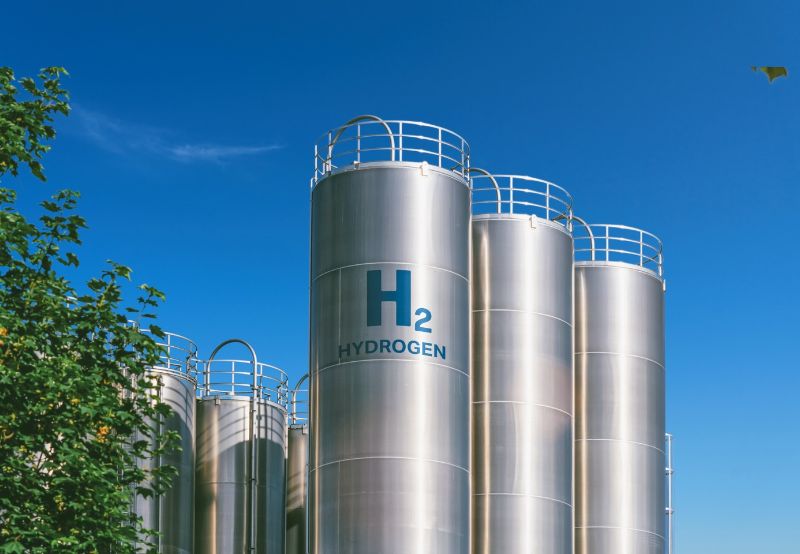
The African Development Bank Group (AfDB) will provide a $3.55 million reimbursable grant to support Egypt’s Ra green ammonia project in East Port Said under its Africa Green Hydrogen Program. The funding is part of the $20 million reimbursable grants approved by the AfDB for the development of four green hydrogen and derivatives projects in Egypt, Morocco, Namibia, and South Africa. The program aims to attract private sector participation and foreign direct investment in green hydrogen infrastructure. The Ra project, spread across 780 sq. km, is being developed primarily by Germany-based DAI Infrastruktur in partnership with Freepan Holdings. It is expected to produce 2 million tons of green ammonia annually, with commissioning targeted for the second half of 2028.
Türkiye plans to invest approximately $108 billion over the next decade to expand its renewable energy infrastructure and reach 120 GW of installed wind and solar capacity by 2035. Under its Renewable Energy 2035 Road Map, the country expects to invest about $80 billion in renewable power generation and $28 billion in transmission infrastructure.
Israel-based renewable energy company Airengy entered into an agreement of principles to acquire the 7.84 MW FLUX wind project in Poland from VH Invest for approximately €13.5 million (~$15.71 million). The transaction values the operational wind project at approximately $2 million/MW. The project comprises three GE wind turbines that began commercial operations in December 2015 and June 2016. The project sells electricity on Poland’s free electricity market without a long-term power purchase agreement.
Saudi Arabia has added 7 GW of solar and wind capacity and 3.5 GW/14 GWh of battery energy storage systems to its grid so far in 2026. The country has set a target to generate 50% of its electricity from renewable energy sources by 2030. Adding a total of 5.9 GW, four utility-scale solar projects led the renewable energy capacity. These were Haden (2 GW), Al-Muwayh (2 GW), Al-Khushaybi (1.5 GW), and Tabarjal (400 MW), according to the country’s Ministry of Energy.


Parth Shukla
More articles from Parth Shukla.