Made for Indian Grid Conditions: How PURE Energy Is Redefining Battery Storage

PURE Energy plans to scale its BESS manufacturing capacity to 5 GWh by 2030

thumbnail

Follow Mercom India on WhatsApp for exclusive updates on clean energy news and insights


India’s commercial and industrial (C&I) sector is rapidly adopting battery energy storage systems (BESS) for power arbitrage and greater grid independence, even as residential uptake accelerates.

A key growth driver is replacing high-maintenance, fuel-intensive diesel generators with cleaner, storage-based alternatives. BESS solutions can not only store and supply power, but they also allow customers to leverage off-peak hour tariffs to meet their consumption during peak hours.

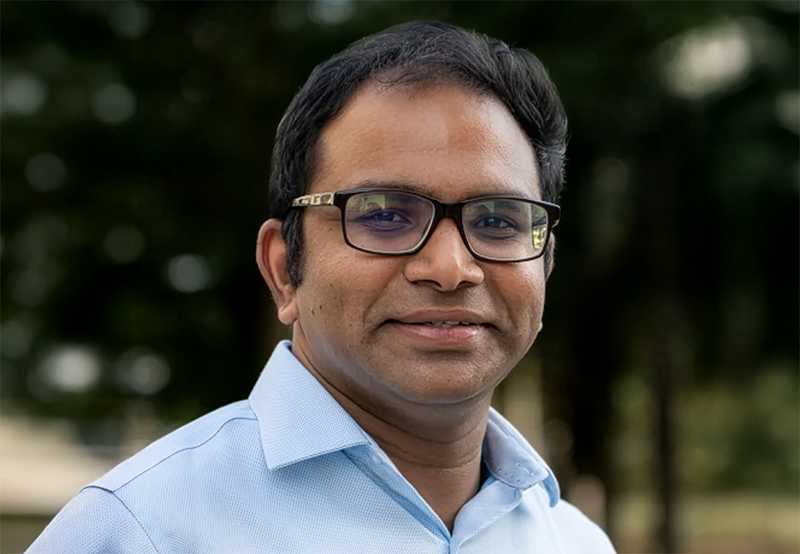
In an exclusive interview with Mercom India, Nishanth Dongari, Founder and Managing Director at PURE Energy, discussed his company’s offerings, the BESS market in India, and the regulatory and policy challenges faced by the energy storage segment.

Please provide an overview of PURE Energy’s offerings in the battery energy storage system (BESS) space.

PURE Energy’s core offerings comprise all-in-one energy storage systems for commercial and residential users, with hybrid solar compatibility and support for Time-of-Day (ToD) and Time-of-Use (ToU) tariff structures.

Traditionally, a customer had to assemble a fragmented solution using a grid-tied solar inverter, a standalone inverter, and heavy lead-acid batteries, and rely on third-party engineering, procurement, and construction, or service provider for the integration of all these components.

PURE Energy’s PuREPower Home and Commercial products disrupt this by integrating 5th-generation power electronics, advanced lithium-ion battery packs, and cloud-based AI into a single, compact, in-house-built unit.

To date, the PuREPower Home has been deployed at more than 5,000 locations, and the PuREPower Commercial at more than 500.

We also have a 0.5 GWh manufacturing site for BESS products located in Kandi/Hyderabad, Telangana.

How is PURE Energy differentiating itself in the BESS sector, especially given the competitive landscape of storage solutions in India?

PURE Energy’s differentiation lies in its deep-tech value chain. Our proprietary predictive AI and Cloud AI platforms link the cells, battery management system, all-in-one integrated motherboard, and nano-phase change materials (PCMs) to ensure the cells are kept at optimal temperature at all times.

It also includes other mechanical and electronics capabilities built in-house over the last six years, which have led to the development of over 100 IP applications.

Our proprietary power electronics enable our energy storage systems (ESS) to manage high-surge inductive loads from elevators, air conditioners, compressors, and industrial loads, which most imported or standard inverters fail to handle efficiently.

This strong vertical integration allows us to offer a product that is ‘Made in India, for Indian power conditions,’ handling voltage fluctuations and grid instability far better than standard global solutions.

What are the key demand segments driving growth in the BESS market for your business?

The greatest demand comes from the home and commercial segments, specifically in the 5 KVA to 75 KVA range, with customers looking to replace diesel generators. Diesel generators are expensive to run, costing around ₹30 (~$0.33)/kWh to ₹40 (~$0.44)/kWh, and incur high maintenance costs.

Our PuREPower Commercial products offer emission-free power at a fraction of the operational cost.

We believe that the residential segment is also growing rapidly as homeowners are moving beyond simple ‘backup’ to ‘energy independence.

How significant is the integration of BESS in the residential energy segment, and how do PURE Energy’s solutions address this growing need?

Residential battery energy storage systems (BESS) remain at a nascent stage in India, even as rooftop solar adoption accelerates. The mismatch between high solar generation around midday and peak household demand in the evening continues to pose a challenge for grid operators—one that residential storage could help address by shifting surplus daytime generation to evening consumption. We cannot just wait for grid-scale storage; we need at least 100 million home micro-storage units at the edge of the grid.

With the rise of modern appliances and electric vehicle chargers at home, the old inverter solutions are insufficient, and there is a greater need to replace millions of diesel generators that pollute the environment. Residential BESS offers voltage stability and true 24/7 reliability that matches the lifestyle of the modern Indian consumer.

As India moves toward ToD pricing for homes, a BESS will also turn from a cost center into a savings asset—allowing users to store cheap solar energy and avoid expensive evening grid tariffs.

Just as we aggressively subsidized light-emitting diode bulbs and rooftop solar, we need a similar push—policy frameworks and financing models—to put a smart battery in every solar home. That is the only way we can leapfrog from a centralized grid to a resilient, decentralized energy network.

With demand for BESS increasing, how do you see the market evolving over the next several years in terms of technology adoption and scalability?

Over the next several years, the BESS market will shift from being largely used for backup to power arbitrage.

With ToD tariffs coming into effect under new regulatory changes, users will adopt BESS to store solar/grid power at low tariffs during the day and utilize it during expensive peak hours.

Technologically, we see a massive consolidation around integrated power electronics. The market will move away from standalone inverters and batteries towards an integrated approach. Scalability in this market will largely depend on modularity, which is why our commercial systems are designed to be stackable, allowing businesses to start small and expand capacity as they grow.

Recent auctions have shown a consistent decline in BESS tariffs. How does the industry assess the long-term viability and quality assurance of projects awarded at these tariffs?

While aggressive tariff reductions drive volume, there is a risk that such projects may compromise cycle life and safety standards to meet low price points. Sustainable tariffs must also account for the quality assurance required for the projects.

At PURE Energy, we assess viability based on total cost of ownership rather than on upfront capital expenditure alone.

If a project is awarded at an aggressively low tariff but the batteries last only three years instead of the expected 10 years, the economics collapse and the project becomes unviable. We believe the industry must prioritize the use of advanced Li-Ion batteries, predictive AI-based firmware, power electronics integrated onto a single motherboard, intelligent battery management systems (BMS), and thermal management systems. Such technologies ensure the battery actually lasts the 10-15 years promised in the financial model.

Which BESS technologies or chemistries do you expect will dominate the market in the coming years?

For stationary storage in Indian climatic conditions, lithium-ion batteries will remain the workhorse due to their high discharge capacity and long cycle life. However, real technology isn’t just the chemistry—it’s the packaging, the master dispatch optimizer firmware, and the BMS, all of which are important.

We expect to see dominance in active thermal management with smart BMS systems that can keep batteries at optimal temperatures even during Indian summers.

Furthermore, solid-state technologies are on the horizon, but for the next seven to 10 years, the market will be dominated by lithium-ion integrated with AI-driven predictive maintenance.

The Ministry of Heavy Industries has mandated 100% domestic content requirements for various components under the PM E-Drive program. How is PURE Energy adapting its manufacturing supply chain to meet the demand for domestic content in the storage sector?

We have built a robust supply chain in which our power electronics, firmware, thermal management systems, battery packs, and cabinets are manufactured domestically.

By controlling the design and firmware development of the electrical and electronic boards in-house at Kandi research and development center in Kandi, we have significantly reduced our reliance on foreign original equipment manufacturers. We are aggressively moving towards higher domestic value addition, ensuring that our supply chain is resilient against global geopolitical shocks and currency fluctuations.

The industry’s biggest challenge is the inversion of the Goods and Services Tax structure and its classification of energy storage under it.

Currently, there is a need for clearer policies that distinguish between raw batteries and intelligent battery energy storage solutions integrated with hybrid solar power. We urge the government to take prompt decisions on this so that the entire BESS industry across all verticals can be part of an exponential growth story.

On the supply chain side, while cell manufacturing is starting in India, we will still be dependent on imported raw cells in the interim.

The challenge is to manage the volatility of global lithium prices while offering stable pricing to Indian customers. Our backward integration strategy helps mitigate this, but a faster ramp-up of the Production Linked Incentive for the Advanced Chemistry Cell Battery Storage program is critical for the entire industry’s stability.

What are PURE Energy’s growth plans and strategic roadmap for the next five years?

PURE Energy is aggressively targeting the massive existing market for diesel generators ranging from 5 KVA to 75 KVA.

Over the next five years, we plan to leverage our strong technology value chain to reduce costs further while increasing energy density.

We are moving from just providing backup to delivering energy independence, empowering millions of Indian establishments to generate, store, and consume their own power. We aim to lead this transition from consumer to prosumer.

We also plan to scale our manufacturing capacity for BESS products to 3 GWh by 2028 and 5 GWh by 2030.

This interview was sponsored by PURE Energy.

RELATED POSTS

Get the most relevant India solar and clean energy news.

RECENT POSTS