Karnataka Announces 3 GW Agricultural Feeder Solarization Program
The government plans to generate 4 GW of energy through solar microgrids
March 6, 2026
Follow Mercom India on WhatsApp for exclusive updates on clean energy news and insights
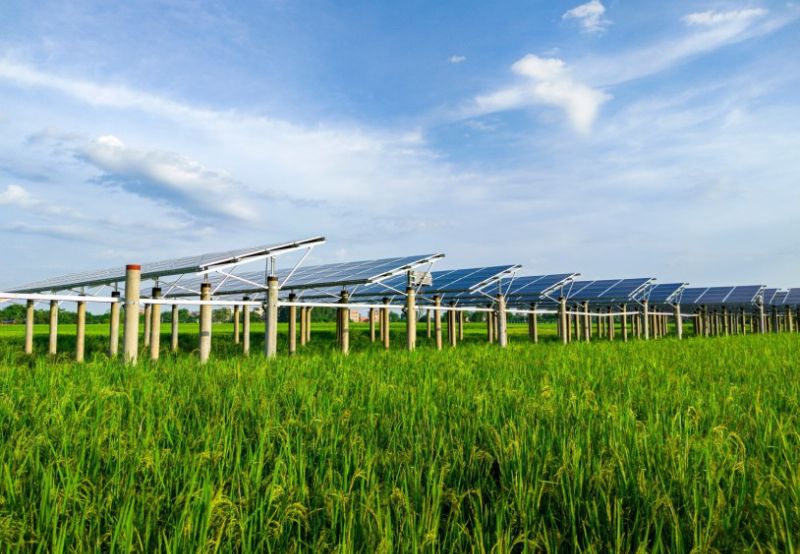
The Karnataka government has announced a new feeder-level solarization program, Mukhya Mantri Saura Krishi Yojane, under Pradhan Mantri Kisan Urja Suraksha evam Utthaan Mahabhiyaan (PM-KUSUM) Component C.
Under this program, the government aims to establish 3 GW of feeder-level solarization projects at Karnataka Power Transmission Corporation’s substations under the renewable energy service company model, with an outlay of ₹105 billion (~$1.14 billion).
The government also plans to execute 2,777 MW of solar projects under PM-KUSUM Component C this year.
The announcements were made by Karnataka Chief Minister Siddaramaiah in his Budget 2027 speech.
The government also announced a plan to generate 4 GW of energy through solar microgrids under the Anantha program, to be set up in all gram panchayats in the state. The solar microgrids will be established through a public-private partnership model.
Siddaramaiah also announced a project to install rooftop solar systems on buildings of 25 regional transport offices, driving tracks, and automated testing stations.
To encourage startups in the renewable energy sector, the government has proposed establishing an Incubation Center in collaboration with IIM Bangalore, the University of New South Wales, Australia, and IISc Bangalore, at an estimated cost of ₹200 million (~$2.18 million).
Recognizing the importance of battery storage projects for grid stability and peak-load management, the government plans to establish an additional 2 GWh of battery storage capacity at the Huliyur, Pavagada, and Kushtagi substations, at an estimated cost of ₹34 billion (~$370.53 million)
To promote the use of electric vehicles, it also proposed 1,250 electric vehicle charging stations in public places, with assistance from distribution companies (DISCOMs) under the PM- E-Drive program, at an estimated cost of ₹7.77 billion (~$84.67 million).
To strengthen the transmission network, Karnataka set up 100 new substations in FY 2026. Over the next year, it plans to establish another 100 substations.
Recently, Karnataka reduced tariffs for the use of agricultural pumps across DISCOMs to ₹6.57 (~$0.0713)/kWh and ₹7.79 (~$0.0845)/kWh, down from the prior unfirm rate of ₹8.30 (~$0.0901)/kWh.
Subscribe to Mercom’s real-time Regulatory Updates to ensure you don’t miss any critical updates from the renewable industry.