


India’s Grid Not Designed for Inverter-Based Renewable Power: Interview
Hyperaggressive tariff bidding reduces financial buffer for transmission projects

Follow Mercom India on WhatsApp for exclusive updates on clean energy news and insights
As renewable energy capacity expands and curtailment risks increase, transmission infrastructure is becoming central to India’s energy transition. The grid urgently needs to be redesigned to accommodate the variability of renewable generation, ensuring system stability, reliable power evacuation, and efficient integration of new capacity.
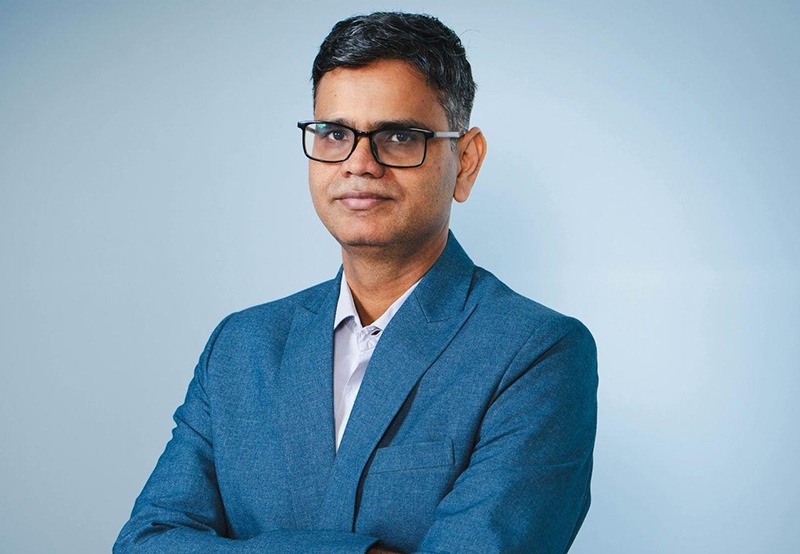
In an exclusive interview with Mercom India, Prashant Sinha, CEO of Resonia, discussed the pace of transmission infrastructure growth in India, the need to design transmission systems that can handle variable renewable energy, supply chain challenges, and dependence on imports for transmission equipment. He added that aggressive bidding is reshaping project economics for transmission projects.
India is adding renewable generation much faster than transmission infrastructure in several regions. What, in your view, is the fundamental reason for this mismatch, and how should generation and transmission planning change to prevent evacuation constraints from becoming a bottleneck?
India’s race to hit 500 GW of renewable energy is stalling due to severe delays in its ₹9.15 trillion (~$96.05 billion) power grid expansion. The fundamental issue has historically been a difference in development timelines. A renewable project can be built in roughly 18–24 months, while transmission can take 3-4 years from planning to commissioning.
If transmission planning waits for generation projects to be finalized, grid connectivity is delayed. Generation and transmission need to be planned as a single system, with realistic 30–36-month transmission timelines built into generation planning.
Although land, forest, and right-of-way disputes serve as the most visible roadblocks delaying competitively bid transmission projects, a deeper structural issue persists. Hyper-aggressive tariff bidding has stripped developers of their financial buffers. Unable to absorb unexpected costs, companies often overlook lingering regulatory and policy hurdles, creating compounding risks that leave long-lasting damage across the industry.
Curtailment is not simply a question of transmission capacity. Renewable power is inverter-based, whereas the grid was historically designed around rotating machines such as thermal and hydro. We therefore need more static synchronous compensators (STATCOMs), static var compensators (SVCs), synchronous condensers, high-voltage direct current (HVDC) systems, and advanced grid-management systems, alongside conventional lines and substations.
Renewable developers are reporting connectivity constraints and curtailment even while some transmission assets remain underutilized. What explains this apparent contradiction, and what changes in network planning, connectivity allocation, and commissioning coordination are needed to use transmission infrastructure more efficiently?
Firstly, capacity has not been built quickly enough in some renewable-rich regions, creating a mismatch between generation and evacuation timelines.
Secondly, even where physical transmission exists, the grid may not have the right equipment to absorb large amounts of inverter-based renewable power. The existing AC network was designed around rotating-mass generation.
The future grid needs to be more dynamic, digitally managed, and capable of handling variable renewable injection.
Transmission planning is increasingly being shaped not only by renewable generation but also by new electricity demand from green hydrogen, green ammonia, data centers, and industrial electrification. How will these emerging demand centers change where and how India builds transmission infrastructure?
The biggest change is that electricity demand is becoming more concentrated around new industrial clusters. Data centers, for example, need land, power, and fiber, and increasingly want reliable and renewable power.
Green hydrogen and ammonia will similarly create large, concentrated electricity loads. Instead of planning transmission only around generation locations, we will increasingly need to work backward from future demand centers and identify efficient corridors connecting generation and consumption.
Renewable-rich states such as Rajasthan and Gujarat will need to connect efficiently with industrial demand centers across states such as Maharashtra and Karnataka.
Lead times for transformers, switchgear, cables, conductors, and other critical equipment have lengthened globally. Which parts of the transmission supply chain are now the most vulnerable, and what would it take for India to build greater domestic resilience without increasing project costs significantly?
The biggest pressure points are high-end transformers and HVDC equipment. For 400 kV and 765 kV transformers, lead times have increased significantly, while HVDC is even tighter because only a handful of major suppliers are outside China.
The supply constraints have created both cost and schedule risks. India therefore needs greater domestic capability in critical transmission equipment, particularly transformers, HVDC systems and advanced grid technologies. However, localization should be driven by competitiveness and scale, not protectionism. The objective should be to create globally competitive Indian manufacturing, not merely domestic capacity.
India has successfully used tariff-based competitive bidding (TBCB) to bring private capital into transmission. As the next generation of projects becomes larger and more complex, how should the TBCB framework evolve to balance aggressive tariffs with execution quality, financial sustainability, and timely commissioning?
Firstly, we are seeing companies with limited transmission experience bidding aggressively for highly complex projects. Qualification requirements should therefore give greater weight to demonstrated experience, financial capacity, execution capability, and risk management.
The second issue revolves around the concentration of transmission projects with one entity. As the sector’s largest and most active bidder, the state-owned incumbent drives pricing across the transmission sector. By contesting and winning most interstate auctions as the lowest bidder, it effectively establishes the price benchmark that every other developer must match.
Data from industry bodies reveals that a single entity has captured roughly 56% of all competitively bid projects by CAPEX over the last five years.
When the market’s dominant developer uses its massive balance sheet to bid aggressively on nearly every line, rivals are forced to match these low benchmarks to win projects, driving winning tariffs down across the sector. This is evident in the trend of aggressive reverse bidding, which has driven final tariffs 14% below initial opening bids over the last three years.
How important will asset recycling become in financing India’s next wave of transmission investment, and what could make long-duration transmission assets more attractive to institutional investors and lenders?
Asset recycling will be important because transmission is a long-duration infrastructure business requiring substantial upfront capital. We have already demonstrated that operating transmission assets can be monetized and recycled into new projects.
Resonia has monetized more than $1 billion of assets and sponsored IndiGrid, India’s first power-transmission InvIT.
The advantage is straightforward: once an asset is operational and generating stable, predictable cash flows, it can attract long-term institutional investors such as pension funds, sovereign wealth funds, and infrastructure funds. The original developer can then release capital from the mature asset and redeploy it into new greenfield projects.
For India, this creates a virtuous cycle: build, operate, monetize, recycle, and build again. As the transmission pipeline grows, having a mature ecosystem of InvITs and institutional capital will become increasingly important.
What is the single biggest structural change India must make to ensure transmission infrastructure does not become the limiting factor in its clean energy transition?
I endorse the Electric Power Transmission Association’s proposal to cap any single developer’s share of under-construction projects at 40%, backed by continuous post-auction monitoring. Extreme price squeezing leaves developers with zero financial safety net for execution delays. These artificially low rates are a false economy, inevitably leading to higher system costs and renewable curtailment that consumers will ultimately have to pay.
The biggest structural change India needs is to make transmission planning and execution end-to-end and anticipatory. India has already done well in proactively planning transmission ahead of generation, which has helped it scale renewable energy rapidly.
The next step is to ensure every part of the ecosystem moves at the same pace with realistic project timelines, faster Centre-State coordination on right-of-way, adequate equipment manufacturing capacity, stronger project-development capabilities, and modern grid-management technologies.


Melvin Mathew
More articles from Melvin Mathew.