India Installs 47.6 Million Smart Meters, Bihar Stands First

In all, 203.3 million smart meters have been approved under RDSS

thumbnail

Follow Mercom India on WhatsApp for exclusive updates on clean energy news and insights


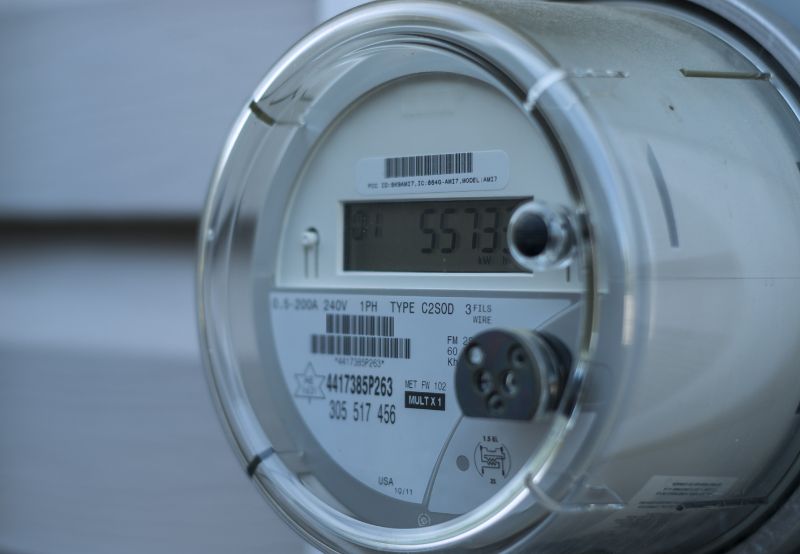
The Ministry of Power has reported that 47.6 million smart meters have been installed across the country so far under various programs as of November 15, 2025, while 203.3 million meters have been approved under the Revamped Distribution Sector Scheme (RDSS) based on proposals submitted by the states.

State-wise Smart Meters Installations as of Nov 15, 2025

Bihar, with 8,237,246 smart meters, Maharashtra (7,398,415), and Uttar Pradesh (6,506, 420) are the top three states that have installed the most smart meters.

Minister of State for Power Shripad Yesso Naik told Parliament that smart metering under RDSS is being implemented through the public-private partnership model in total expenditure (TOTEX) mode, in which the advanced metering infrastructure service provider (AMISP) supplies, maintains, and operates the metering system.

A minimum local content of 60% for meter manufacturing and a 100% local content requirement for the head-end system, and the meter data management system have been mandated by the government.

The Ministry has also constituted a working group to give recommendations to the distribution companies (DISCOMs) on accelerating prepaid smart metering, consumer engagement, and data utilization, and sharing best practices.

The group is chaired by the Director General of the All India DISCOMs Association and includes representatives from the DISCOMs of Assam, Bihar, Uttar Pradesh, Gujarat, Maharashtra, and Andhra Pradesh, the National Smart Grid Mission, Central Electricity Authority, National Power Training Institute, REC, PFC, Ministry of Power, and three major AMISPs.

Smart metering enables real-time monitoring of electricity consumption at the consumer, system, substation, and grid levels. Prepaid smart meters allow consumers to track usage and help utilities improve billing efficiency and cash flow. At the system level, data from feeders, transformers, and consumers is used for energy accounting and audits.

At the substation and grid levels, automation and IT integration, including supervisory control and data acquisition, and distribution management systems, help improve reliability, reduce outages, and support faster fault response. Funds have also been allocated for strengthening substations, transmission lines, and underground cabling to support digitalization and renewable energy integration.

According to the Ministry, installing smart meters has positively impacted the utilities of Assam and Bihar. About 44% of consumers in Assam saved roughly 50 units per month through consumption tracking and accurate billing. It has also helped the DISCOMs of the two states to reduce losses, the benefits of which would ultimately go to the consumers.

Recently, the Ministry of Power constituted a steering committee and a sub-working group of domain experts to standardize training modules and create standard operating procedures/guidelines for data utilization, standards-based regime adoption, and cybersecurity practices on smart meter data analytics for DISCOMs.

RELATED POSTS

Get the most relevant India solar and clean energy news.

RECENT POSTS