Global Long-duration Energy Storage System Installations Cross 15 GWh in 2025

Compressed air energy storage accounted for the largest share

thumbnail

Follow Mercom India on WhatsApp for exclusive updates on clean energy news and insights


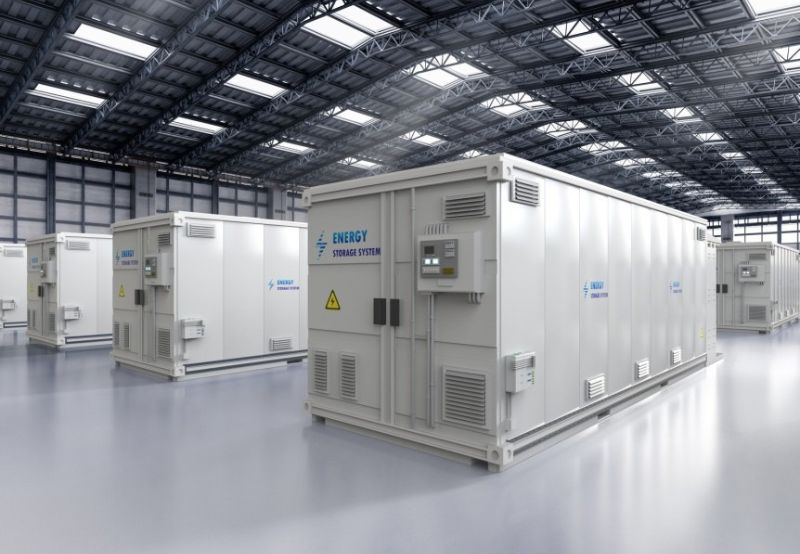
Global installations of long-duration energy storage (LDES) systems surpassed 15 GWh in 2025, marking a 49% increase compared with the previous year, according to Wood Mackenzie’s Long Duration Energy Storage Trends report.

Among LDES technologies deployed in 2025, compressed air energy storage (CAES) accounted for the largest share at 45%, followed by thermal energy storage at 33% and vanadium redox flow batteries (VRFB) at 21%.

Cost competitiveness remains a major obstacle for LDES technologies. In China, a four-hour lithium-ion battery project costs about $107/kWh, while thermal energy storage averages around $190/kWh and CAES about $201/kWh. These figures represent cost premiums of roughly 78% and 88% compared with lithium-ion systems.

China remained the dominant market, representing about 93% of cumulative global LDES installations. The country’s strong policy support has played a central role in driving deployments, including provincial energy storage requirements and the government’s Special Action Plan for the Development of New Energy Storage (2025–2027).

LDES Key to Net-Zero

Wood Mackenzie’s analysis indicates that achieving global net-zero targets will require significantly longer energy storage durations. Under its net-zero scenarios, the average duration of energy storage systems would need to rise from about 2.5 hours today to roughly 20 hours.

Countries aiming to increase the share of variable renewable energy beyond 50% by 2030, including Germany, Australia, and Denmark, are expected to rely more heavily on long-duration storage to maintain grid stability.

However, LDES technologies currently account for only around 6% of global energy storage installations in 2025. Typical lithium-ion battery projects deliver roughly two hours of storage, while VRFB and CAES projects average around four hours and thermal storage systems about eight hours.

The report notes that clearer revenue frameworks for LDES projects are emerging in markets such as the UK, Italy, the U.S., and Australia. Technology-specific procurement programs are also beginning to appear in countries including Spain, Ireland, and Germany. Nevertheless, most markets still lack capacity mechanisms, and revenues from multi-day energy arbitrage alone are generally insufficient to justify large-scale LDES investment.

Funding Declines

Investment in the sector weakened in 2025. Global funding for LDES projects fell by about 30% year-over-year, excluding the U.S. Department of Energy’s $1.76 billion support for Hydrostor.

Venture capital investment dropped even more sharply, declining 72% during the year, placing additional financial strain on many early-stage LDES companies.

Between 2021 and 2025, only three companies, Hydrostor, EOS Energy, and Form Energy, raised more than $1 billion each, together securing over $4 billion in funding. Despite these large capital inflows, many companies continue to face financial hurdles as projects move toward commercialization.

The report attributes the challenging investment climate to several factors. High interest rates have reduced the attractiveness of capital-intensive projects with long payback periods. At the same time, rapidly growing sectors such as AI data centers and grid infrastructure are competing for investment capital. Falling lithium-ion battery prices have further narrowed the economic advantage of alternative long-duration storage technologies.

The report notes that while costs for some LDES technologies are expected to decline, closing the gap with lithium-ion batteries will remain difficult. Project costs for vanadium redox flow batteries could fall by more than 30% by 2034. However, even then, they are likely to remain about 240% more expensive than lithium iron phosphate battery systems for four-hour storage applications.

Market Outlook to 2034

Wood Mackenzie expects lithium-ion batteries to maintain a dominant position in the energy storage market through 2034, accounting for about 85% of installations. In comparison, VRFB systems are projected to capture around 5% of the market, while CAES technologies may reach roughly 3%.

Lithium-ion manufacturers are also expanding into longer-duration products, enabling them to compete directly in the four- to eight-hour storage segment. Their cost advantages and large-scale manufacturing capacity, exceeding 1,000 GWh globally, continue to strengthen their market position.

Demand for multi-day storage remains limited in most regions, as two- to eight-hour storage systems already meet about 90% of grid storage requirements, with multi-day discharge events occurring fewer than 10 days per year in many markets.

Several large-scale LDES projects are currently under development worldwide. These include Highview Power’s 50 MW/300 MWh liquid air energy storage project in the UK, Energy Dome’s 20 MW/200 MWh CO₂ battery project in Italy, and multiple gigawatt-hour-scale CAES and thermal storage projects in China.

However, the report notes that transitioning from pilot projects to large-scale commercial deployment will remain difficult unless market design reforms provide stronger incentives and clearer revenue opportunities for long-duration storage technologies.

The capital cost for long-duration (4 hours or more) utility-scale battery energy storage systems in markets outside China and the U.S. reached roughly $125/kWh by October 2025.

RELATED POSTS

Get the most relevant India solar and clean energy news.

RECENT POSTS