


Germany Targets Phasing Out Fossil Fuels by 2045
Renewables are likely to account for 80% of gross electricity consumption by 2030
September 29, 2026

Follow Mercom India on WhatsApp for exclusive updates on clean energy news and insights
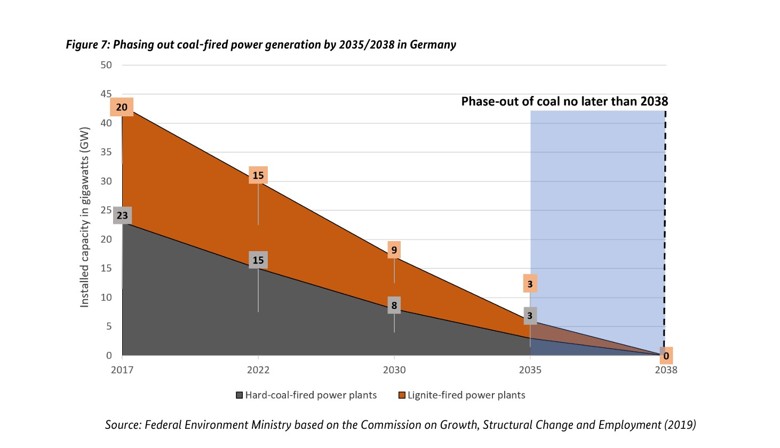
Germany has rolled out a roadmap to transition away from fossil fuels by 2045 and has proposed phasing out coal-fired power by 2038.
Federal Environment Minister Carsten Schneider recently presented the roadmap at the United Nations General Assembly in New York.
Renewables account for about 55% of Germany’s gross electricity consumption, and the figure is set to rise to at least 80% by 2030.
In 2025, more heat pumps than gas central heating systems were sold for the first time on Germany’s heating market.
In the energy sector, the country is moving toward decarbonizing power plants in line with its climate targets by 2045 at the latest. The government expects the coal phase-out, coupled with the decarbonization of dispatchable power plants and the expansion of electricity grids, to help make electricity supply climate neutral.
In 2025, renewables generated 290 TWh of electricity, accounting for about 55% of gross electricity consumption. Solar and wind power account for more than three-quarters of renewable electricity generated in the country.
The German government is also trying to speed up the transition to climate-neutral fuels in dispatchable power plants. The regulations require new power plants receiving funding to ensure supply security to be hydrogen-ready and to achieve climate-neutral operation no later than 2045.
The total number of grid-connected solar energy systems installed on roofs and properties in Germany stood at nearly 4.8 million units, with a total capacity of about 106.2 GW at the end of 2025.
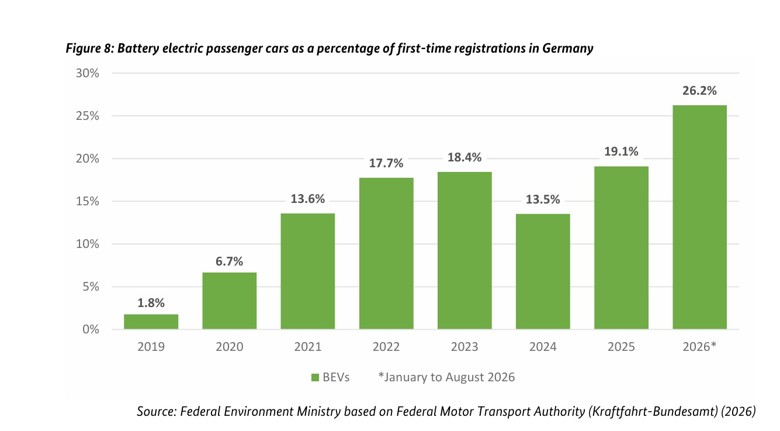
In the transport sector, the country is focusing on electrifying all vehicle categories. In August 2026, around 2.6 million battery electric passenger cars were already on German roads. Around 32% of all passenger cars registered for the first time in August 2026 were battery electric vehicles.
The country outlined the potential of hydrogen and its derivatives to facilitate climate-friendly mobility, particularly in hard-to-abate sectors like air transport, shipping and heavy goods transport.
As part of its 2026 Climate Action Program, the German government has introduced a funding program to help lower- and middle-income households purchase electric vehicles. The government plans to make around €2.8 billion (~$3.19 billion) in funding available by 2029 within the limits of available budgetary resources for the program.
The country’s building sector continues to witness a dynamic transition to climate-neutral heating systems. In 2025, some 300,000 heat pumps were sold in Germany, making them the most frequently purchased heating technology with a 48% market share.
The German government’s most recent projections expect heat pumps to be the predominant form of heating in Germany and account for more than 70% of all new heating systems sold in the country. With regulations like the Heat Planning Act and municipal heat plans, it aims to gradually decarbonize district heating systems by 2045.
As per the new Building Modernization Act, anyone who replaces an old heating system with a new gas or oil heating system after 29 July 2026 will, from 2029 onwards, gradually use an increasing share of carbon-neutral fuels (60% from 2040).
Under the proposed legislation to introduce a green gas/green heat quota, suppliers of gas, oil and liquefied natural gas will in future be required to ensure that, from 2045, the fuels used for heating buildings are switched entirely to climate-neutral fuels.
According to the roadmap, these developments allow Germany to significantly reduce its fossil fuel imports, thereby lowering its dependence on supply chains vulnerable to geopolitical crises. The 2026 Climate Action Program alone, with its 67 measures, will save almost seven billion cubic meters of natural gas and some four billion liters of petrol by 2030.
Germany added 7.39 GW of solar capacity during the first six months of 2026, according to data from the Federal Network Agency’s Market Master Data Register. The addition raised Germany’s cumulative installed solar capacity to 125.37 GW at the end of June 2026.
Solar remained the country’s largest source of new renewable energy capacity during the period. Germany added an estimated 1.27 GW of net solar capacity in June, compared with 1.30 GW in May and 1.29 GW in April.


Nimisha Dwivedi
More articles from Nimisha Dwivedi.