Mercom Insider

FDRE Projects Create New Revenue Streams Through Surplus Power Sales

Surplus solar power can be sold through power exchanges or bilateral arrangements

thumbnail

Follow Mercom India on WhatsApp for exclusive updates on clean energy news and insights


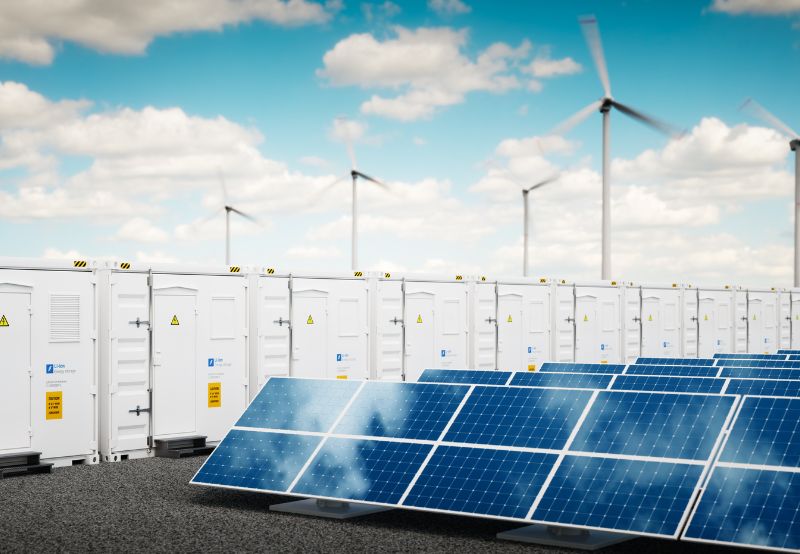
Firm and Dispatchable Renewable Energy (FDRE) projects are creating new revenue opportunities for developers by enabling the sale of excess renewable generation. These projects typically combine oversized solar, wind, and battery storage capacities to meet dispatch obligations while ensuring a reliable and continuous supply of renewable power.

Unlike traditional renewable energy power purchase agreements (PPAs), where all generation is typically allocated to the offtaker, FDRE projects offer developers greater flexibility to monetize surplus power. Since not all generation is required to meet contractual dispatch obligations at every hour, excess electricity can be sold through power exchanges or short-term bilateral contracts, creating an additional revenue stream.

This flexibility enables more dynamic market participation and improves overall project economics.

New Revenue Stream

As Arulkumar Shanmugasundaram, Chief Executive Officer and Managing Director of Swelect Energy Systems, noted, surplus solar generation is largely determined by the design of the FDRE project, particularly the balance between solar, wind, and battery storage capacities.

“Even under an optimized configuration with battery storage and complementary wind and solar resources, achieving an 85% plant load factor (PLF) can still result in approximately 15%–17% surplus solar generation, creating opportunities for additional revenue through merchant sales or short-term power markets.” Project developers can cash in on the surplus. According to Ankur Gupta, Head-New Products and Technology at Hexa Climate Solutions, “Surplus power generated beyond contractual supply obligations can be sold in the open market, power exchanges, or through short-term bilateral contracts, improving project economics and helping developers offer more competitive tariffs.”

He said excess solar power generation in FDRE projects can range from 10% to 20% of total annual generation, depending on the project structure and battery configuration.

Projects with lower battery storage capacity typically end up with higher volumes of surplus solar energy, most of which occurs during peak solar production hours between 11:00 AM and 3:00 PM. Surplus generation is observed throughout most of the year, except during the monsoon months of July, August, and September, when solar output is lower.

Gupta noted that FDRE projects differ fundamentally from conventional solar and wind PPAs, as they allow developers to monetize surplus generation independently.

Modes of Excess Power Sale

For FDRE projects, surplus power can generally be sold through power exchanges or bilateral arrangements, providing developers with additional revenue opportunities. However, Shanmugasundaram noted that this flexibility may be limited in certain state-level projects, particularly under some group captive structures, where the sale of excess power to third-party consumers may not be permitted.

In most cases, PPAs are project-specific and state-specific. “The Solar Energy Corporation of India’s tenders currently do not restrict such sale of surplus power,” he said.

However, the sale of surplus power can occur only after developers meet their contractual obligations. FDRE tenders specify that excess generation may be sold only after meeting all PPA requirements for that time block, not before. Any effort to sell power outside the contract without first fulfilling the contract’s obligations can result in a penalty, according to Gupta.

“Developers must account for the risk of revenue variation in their financial models and ensure the same is reflected during project execution. These assumptions are typically already factored into the model, and FDRE tariffs are generally derived based on such projections and assumptions,” Shanmugasundaram said.

Effectively, the project would be assigned to the off-taker, short-term buyer, or the exchange for the sale of power. This is allowed as per the grid regulations.

Excess power can be sold through exchanges in ISTS projects or purchased by the procurer at a predetermined rate, wherever regulations permit the sale of power to a third-party buyer.

“Revenue earned from surplus power sales belongs entirely to the developer, whether the electricity is sold through power exchanges or bilateral arrangements,” Gupta added.

Storage Maximizes Surplus

Battery storage systems in FDRE projects are also emerging as a key tool for maximizing the value of surplus renewable energy.

Gupta said batteries are increasingly being used to store excess solar generation during the day and dispatch it during evening peak-demand periods or high-price hours.

Some newer FDRE contracts now explicitly permit batteries to be used for revenue-maximizing opportunities outside their peak dispatch obligations, while earlier contracts had remained silent on the issue, he noted. “For FDRE projects, we are allowed to install battery storage. Such stored power can be sold at the developer’s discretion during any Time of Day (ToD) slot, peak or otherwise, to meet the capacity utilization factor (CUF) obligations under the PPA, said Vaibhav Roongta, Chief Business Officer at Rays Power Infra.

Battery storage is generally included in FDRE projects. “However, increasing battery storage capacity may lead to higher project costs and could impact overall FDRE tariffs,” Shanmugasundaram said.

Curtailment and Evacuation Risks

On curtailment and evacuation risks, Gupta said the responsibility currently rests largely with developers.

If grid congestion, evacuation constraints, or system instructions force the developer to curtail generation, that excess power cannot be sold through exchanges, bilateral contracts, or other third-party routes. So, every unit curtailed is a lost revenue opportunity.

Gupta noted that there are no carve-outs for curtailment losses under existing structures, although discussions are underway on sharing congestion and curtailment risks between developers and off-takers.

The developer will bear the associated risks. Curtailment may become an issue if the hybrid project is located in areas with underdeveloped grid evacuation infrastructure. Otherwise, the execution challenges would be like those faced by a standard solar or wind project.

“Currently, we are seeing significant curtailment in Rajasthan due to delays in commissioning the evacuation infrastructure. While this is expected to be a short-term issue, such risks are factored into the model if the project location is in Rajasthan. If surplus power cannot be evacuated, the loss is to be borne by the developer,” Roongta said.

However, some relief provisions exist in cases of grid unavailability. According to Gupta, if grid unavailability exceeds 175 hours in a year, developers would not face penalties for unscheduled power resulting from such grid outages, and compensation provisions are available under the framework.

The development of FDRE projects is in the nascent stage in India. Recently, Juniper Green Energy began the commissioning of India’s first FDRE project, which integrates 259 MW of solar, 280 MW of wind, and 200 MWh of battery storage across Rajasthan and Gujarat.

As of early June, the Solar Energy Corporation of India (SECI) has yet to find offtakers for its FDRE auctions. It has 200 MW of available capacity from Altra Xergi Power at a tariff of ₹8.1 (~$0.085)/kWh under its 8 GWh Tranche VI FDRE auction and 899 MW from its 1.2 GW Tranche VII FDRE auction.

Under the 1.2 GW Tranche VII FDRE auction, SECI has 100 MW of available capacity from Adyant Enersol at a tariff of ₹6.27 (~$0.066)/kWh. It also has 600 MW from Serentica Renewables India and 199 MW from AMPIN Energy Utility Nine, each at a tariff of ₹6.28 (~$0.066)/kWh.

As FDRE projects gain traction across India’s renewable energy sector, monetizing surplus solar generation is emerging as an important lever to improve project economics and tariff competitiveness. The ability to sell excess power through exchanges, bilateral contracts, or optimized battery dispatch is giving developers greater flexibility and opening revenue streams beyond traditional PPAs. However, long-term success will depend on grid readiness, regulatory clarity on surplus power sales, and effective management of curtailment and market risks.

RELATED POSTS

Get the most relevant India solar and clean energy news.

RECENT POSTS