


EU Trails 2030 Climate Goals as Solar-Storage Offers Fastest Fix: Report
SolarPower Europe says batteries and solar are key to EU targets
May 12, 2026

Follow Mercom India on WhatsApp for exclusive updates on clean energy news and insights
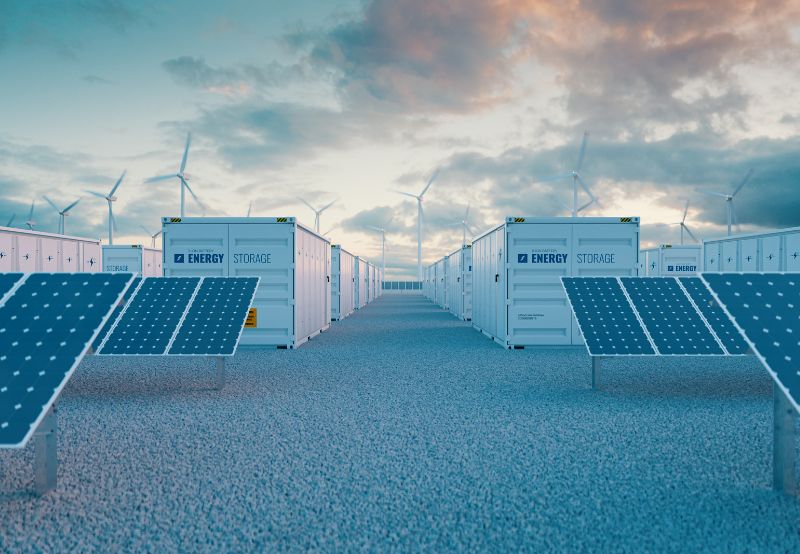
Accelerated deployment of solar systems combined with battery energy storage systems (BESS) offers the fastest and most cost-effective pathway for the European Union to reach its 2030 climate and renewable energy targets, according to a SolarPower Europe report.
The report states that the challenge facing the EU is no longer technological but rather about how the system is set up and regulated, requiring reforms to grid planning, electrification, flexibility markets, storage deployment, and electricity market design.
A “Solar+” pathway that integrates large-scale solar deployment with storage could simultaneously improve energy security, reduce electricity prices, lower fossil fuel dependence, and support decarbonization targets across the bloc.
EU Missing 2030 Renewable Targets
According to the report, the EU’s renewable electricity share stood at an estimated 48% in 2025 but needs to reach around 69% by 2030 to align with its climate objectives. EU greenhouse gas emissions had declined 37% from 1990 levels by 2025, significantly below the bloc’s 55% reduction target for 2030.
The EU’s overall renewable energy share was estimated at 26% in 2025 against a legally binding target of 42.5% by 2030.
Under current trajectories, solar capacity in the EU is projected to reach 574 GW by 2030, missing the target by 4%, while wind capacity is expected to reach 343 GW, remaining 19% short of the EU target of 425 GW.
The report states that annual solar installations have tripled between 2020 and 2023, exceeding 60 GW, while wind development has slowed due to permitting delays, supply chain bottlenecks, rising material and financing costs, and social acceptance issues.
Solar+ Scenario and Capacity Growth
The report models two pathways: a Base Case and the Solar+ scenario.
In the Base Case, renewables account for 62% of EU electricity demand by 2030. Under the Solar+ scenario, renewables reach 68% of electricity demand by 2030, broadly aligned with the European Commission’s benchmark.
Solar alone would supply more than 26% if EU electricity demand under the Solar+ pathway, while solar and wind together would generate 1,600 TWh of electricity annually. EU solar capacity would rise from 325 GW in 2025 to 732 GW by 2030 under the Solar+ scenario, exceeding EU targets.
Battery storage capacity would expand from 40 GW/77 GWh in 2025 to 171 GW/598 GWh by 2030. Wind capacity would increase to 372 GW under Solar+ but remain below the EU’s 425 GW target.
The report also notes that the average battery storage duration is expected to rise from 1.9 hours in 2025 to 3.5 hours by 2030 under the Solar+ pathway. Non-renewable electricity generation would decline from 52% of the EU electricity supply in 2025 to 32% by 2030 in the Solar+ scenario.
Electricity and Operating Costs
The report estimates that EU power system operating costs would fall by 29% in the Base Case and by 49% under the Solar+ scenario by 2030, translating into annual savings of about €55 billion (~$64.69 billion).
Average wholesale electricity prices across selected EU countries would decline by 7% in the Base Case and by 14% under Solar+.
Germany and Poland are identified as markets that would experience the largest price reductions under the Solar+ pathway, with electricity prices declining by 25% and 16%, respectively.
Finland, France, Germany, Poland, and Spain were used as representative electricity markets for modeling price volatility and market impacts.
The report states that, under the Solar+ pathway, renewables would set electricity prices 19% of the time, compared to 14% in the Base Case, reducing dependence on gas-fired marginal pricing. Power price volatility is projected to decline by 42% by 2030 under Solar+.
Storage Economics
According to the report, battery storage reduces negative price events, electricity price volatility, and solar price cannibalization effects.
Solar investment economics are currently threatened by low capture prices, negative price hours, and volatility, but coupling solar with storage is becoming standard practice in mature markets.
The report states that solar-storage systems in selected markets achieve capture prices that are 73% higher than 2025 solar-only capture prices.
Policy Reforms and Electrification
The report calls for an EU-wide Flexibility Strategy and a dedicated Battery Storage Action Plan. It recommends flexibility-first grid planning, cost-reflective grid tariffs, stronger participation in demand response, and incentives for deploying storage near renewable energy clusters and in congested grid areas.
The report also recommends an EU Electrification Action Plan to accelerate industrial electrification, reform electricity taxes and levies, and align infrastructure and permitting processes. Member States are urged to integrate electrification targets into their National Energy and Climate Plans.
The report also notes that rooftop solar generation remains significantly underestimated across the EU due to self-consumption patterns, incomplete registration systems, and metering limitations.
In 2025, the EU system reported solar generation at 275 TWh, while theoretical generation estimates indicate actual output may have been as high as 410 TWh, a 135 TWh shortfall, equal to 33% of the theoretical generation.
Recently, SolarPower Europe reported that public solar auctions and corporate power purchase agreements accounted for 92 GW of solar installations across the EU between 2022 and 2025.
Earlier this year, the EU installed 27.1 GWh of new battery storage capacity in 2025, marking a 45% year-over-year increase and the bloc’s 12th consecutive record year, according to SolarPower Europe’s EU Battery Storage Market Review 2025.


Meghana Prasad
More articles from Meghana Prasad.