


Chemplast Eyes Lower Energy Costs with Solar Power from 37.5 MW Project
The company plans to acquire a 27% equity stake in Yesaryes Energy

Follow Mercom India on WhatsApp for exclusive updates on clean energy news and insights
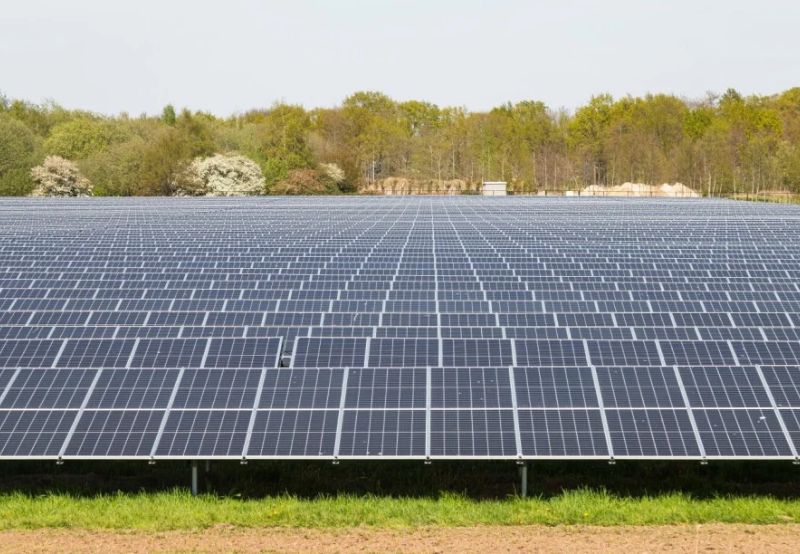
Specialty chemicals manufacturer Chemplast Sanmar will source solar power from Yesaryes Energy’s 37.5 MW project in Tamil Nadu under a group captive arrangement to reduce its energy costs.
The company plans to acquire a 27% equity stake in Yesaryes Energy for ₹4.5 million (~$46,653) through a share purchase agreement with Veebee Yarnntex and Yesaryes Energy. The acquisition may be completed in one or more tranches.
Incorporated on January 20, 2025, Yesaryes Energy commenced commercial operations in April 2026.
The development comes more than a year after Chemplast Sanmar and its subsidiary Chemplast Cuddalore Vinyls (CCVL) announced their plans to procure power from JSW Green Energy Nine’s 84.9 MW wind-solar captive power project in Tamil Nadu under a power purchase agreement.
Chemplast and its subsidiary acquired a 26.27% stake in JSW Neo Energy for ₹304.3 million (~$3.4 million) in two tranches. The shareholding comprised Chemplast’s 18.46% and CCVL’s 7.81% share of JSW’s stake at ₹213.8 million (~$2.4 million) and ₹90.5 million (~$103 million), respectively.
During the financial year 2024-25, Chemplast Sanmar procured 26,514 renewable energy certificates to reduce its carbon emissions and promote the use of clean energy.
With an installed renewable energy capacity of 28,348 MW as of July 1, 2026, Tamil Nadu plans to increase renewable energy’s share to 50% of its power mix by 2031.
Solar has overtaken wind to become Tamil Nadu’s largest individual renewable technology by installed capacity. As of July 1, 2026, the state had 15,278.74 MW of solar capacity, including grid-connected rooftop systems and projects connected through the Central Transmission Utility.
Its rooftop solar capacity across high-tension and low-tension consumers reached 1,746.59 MW. The government proposes adding another 550 MW during FY 2026-27 through various initiatives, including PM Surya Ghar.
The state is pursuing solar growth across utility-scale, distributed, residential, government-building, and solar-plus-storage segments.
India added 3 GW of solar open access capacity in the second quarter of 2026, the highest quarterly addition on record and an increase of 10% quarter-over-quarter and 0.2% year-over-year, according to the Q2 & 1H 2026 Mercom India Solar Open Access Market report.