

Battery Storage Shifts from Backup Power to Strategic Energy Asset in India: Interview
Commercial, industrial, telecom, and solar applications drive battery storage demand
June 19, 2026

Follow Mercom India on WhatsApp for exclusive updates on clean energy news and insights
India’s energy transition is rapidly reshaping the role of battery storage, with businesses across sectors and renewable energy developers increasingly looking beyond conventional backup solutions.
As renewable energy capacity expands and industries seek greater control over energy costs, Battery Energy Storage Systems (BESS) are emerging as a critical enabler of grid stability, peak power management, energy independence, and sustainable growth.
At the same time, advances in lithium-ion technology, intelligent battery management systems, and recycling are helping reefine how energy storage is perceived and deployed across the country.
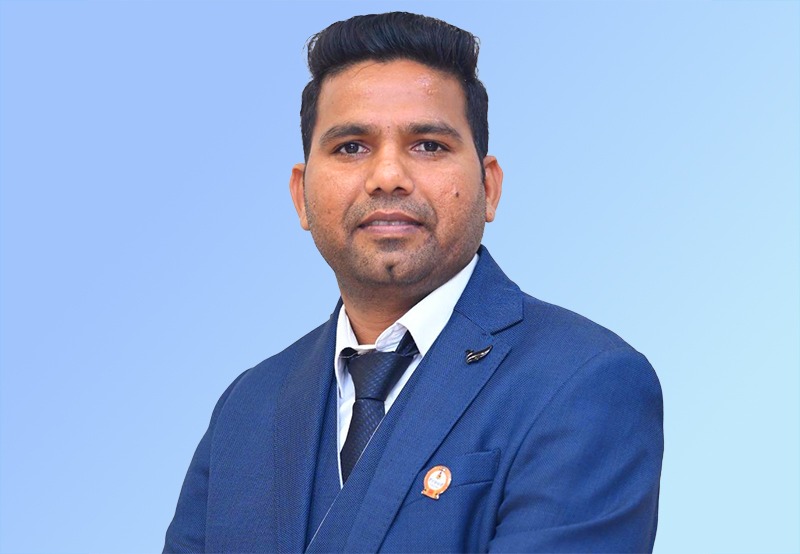
In an exclusive interview with Mercom India, Mukesh Gupta, Co-Founder and Chief Marketing Officer at Maxvolt Energy Industries, discussed the evolving demand for battery storage solutions in India, highlighting the growing adoption of BESS across commercial and industrial facilities, telecom networks, and solar-integrated applications.
What are the battery storage solutions offered by Maxvolt Energy? Which market segments are currently driving the strongest demand for BESS in India – residential, commercial & industrial (C&I), utility-scale, telecom, or microgrids?
MaxVolt Energy offers reliable and technologically advanced lithium battery packs designed for various applications, including electric vehicles, medical devices, and custom energy storage Systems. We specialize in building lithium architecture to enhance efficiency, deliver longer power cycles, and integrate advanced technologies such as fast charging.
Currently, there is a strong, immediate demand for BESS from the commercial & industrial segment, telecom, and residential solar.
This is because industries and businesses are actively seeking to optimize their energy costs and secure uninterrupted power. There is an undeniable clean mobility revolution in the Indian ecosystem, driving demand for localized storage.
What are the primary factors driving demand? Is it grid stability, peak power management, renewable integration, backup power, or energy cost optimization?
All these factors are interconnected. The primary factors driving demand from an industry perspective are energy cost optimization, renewable integration, backup and peak power management.
India has been increasingly pushing towards solar and wind power, and it requires strong, reliable storage to ensure smooth delivery as these renewable energy sources are integrated into localized or national grids.
On the other hand, C&I consumers are primarily focused on peak power management, in which storage energy is used during peak tariff hours. It significantly optimizes their operational expenditure and reduces reliance on diesel generators.
How are customer expectations around battery storage evolving? Are buyers today more focused on backup power, energy savings, energy independence, or sustainability goals?
There is definitely a shift in consumer psychology: initially, the conversation about battery storage focused on basic backup power during grid outages. But now, it has changed significantly. Those prior expectations have evolved into a demand for a hybrid model of energy savings and energy independence. These requirements align with the corporate sustainability goals.
Customers no longer view a battery system as a passive insurance policy against blackouts; rather, they view it as an active financial and environmental asset that yields clear ROI through smart energy management.
What are the biggest misconceptions customers and businesses still have about BESS?
The most common misconception is regarding the upfront cost versus the total cost of ownership. Many buyers still focus solely on initial capital expenditure and compare lithium systems directly with traditional lead-acid batteries or diesel generators.
They ignore the fact that lithium chemistry can offer several benefits, such as higher depth of discharge, zero maintenance, and continuous energy savings. Ultimately, it quickly offsets the initial investment.
Another false impression about lithium batteries is that they represent an environmental dead end at the end of their lifecycle.
However, MaxVolt Energy is consistently debunking this myth by building a circular ecosystem that highlights that used batteries can be repurposed for stationary applications or recycled to recover valuable raw materials.
Safety remains one of the most discussed topics around lithium-based energy storage systems. What operational and design considerations are important for the industry?
Across the industry, operational and design considerations have moved far beyond just selecting high-quality cells.
Today, the focus is heavily on intelligent Battery Management Systems that provide real-time monitoring of thermal parameters, voltage balancing, and early-warning fault detection.
Advanced thermal management architecture, robust mechanical enclosures designed to withstand harsh Indian climatic conditions, and strict adherence to global compliance standards are now mandatory design baselines to mitigate risks and ensure system integrity.
What are the major challenges slowing large-scale BESS adoption today? Is it financing, regulations, consumer awareness, grid readiness, or supply chain dependence?
While consumer awareness and financing structures (such as standardizing risk assessment for lenders) remain hurdles, supply chain dependence on core raw materials and regulatory frameworks governing grid integration are the primary bottlenecks slowing large-scale adoption.
Navigating raw material procurement requires aggressive management, which is exactly why MaxVolt focuses heavily on creating a self-sustaining ecosystem right here in India, reducing external dependencies over time.
What policy or regulatory changes would help accelerate battery storage deployment in India?
To fully realize the benefits of BESS across India, there must be a combination of targeted fiscal incentives and mandate-driven policies. One of the most impactful measures would be to further reduce or rationalize the GST on standalone BESS to align them with other components of renewable energy generation. This will increase their economic viability.
Additionally, establishing clear and consistent Time-of-Day tariff guidelines across all states would create strong financial incentives for businesses to adopt BESS for peak power and energy cost management, thereby accelerating BESS adoption.
Strengthening the implementation and enforcement of Energy Storage Obligations for both utility and large industrial electric power users will also contribute to the continued demand for the development and growth of a large, sustainable energy storage ecosystem throughout India.
Looking ahead, which applications or sectors do you believe will emerge as the biggest growth opportunities for battery storage systems in India over the next 3 to 5 years?
Over the next three to five years, we foresee massive growth exploding in EV charging infrastructure integration. At that point, BESS will be important to prevent high-power fast chargers from destabilizing local grids.
Elements like large-scale C&I microgrids and solar-plus-storage projects will dominate the market. Decentralized energy storage smoothly integrates solar power with heavy industrial loads. This will represent the largest commercial frontier, especially as cities continue to expand and industries commit to net-zero targets.
Does MaxVolt have any plans to foray into utility-scale BESS manufacturing?
Our core strength remains in custom lithium architecture, especially for clean mobility, medical devices, and localized energy storage.
The acquisition of 25,000 square meters of land in Aligarh for a recycling and repurposing facility is a testament to that scaling. Despite that, our huge infrastructure expansion is all to create a circular energy ecosystem.
Moving to larger utility-scale applications will be part of the evolution of our plans to provide clean energy for India’s future.


Meghana Prasad
More articles from Meghana Prasad.