



Q2 2026 RENEWABLE ENERGY POLICY IMPACT – INDIA’S RENEWABLE ENERGY POLICIES SHIFT TOWARD GRID INTEGRATION, DOMESTIC MANUFACTURING, AND COMPLIANCE
India’s renewable energy landscape continued to evolve in the second quarter (Q2) of 2026, with policy measures placing greater emphasis on grid integration, domestic manufacturing, transmission planning, energy storage, and regulatory compliance as the country prepares for the next phase of renewable energy growth, according to the Q2 2026 Renewable Energy Policy Impact Report by Mercom India Research.
Policymakers are shifting their focus from accelerating capacity additions to strengthening the foundations needed to support the next phase of renewable energy growth.
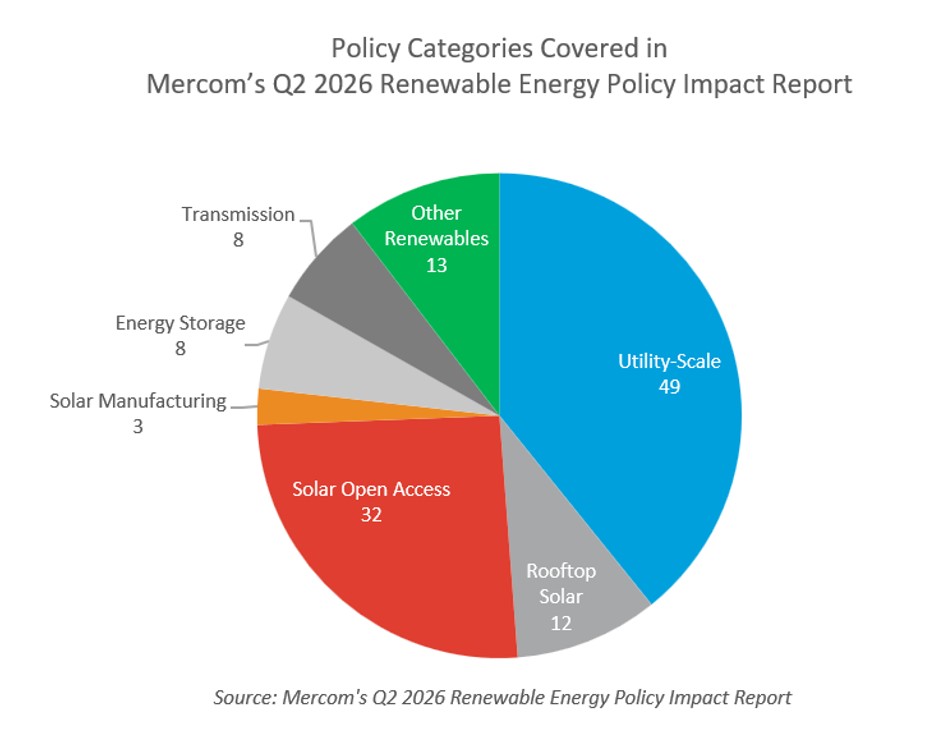
The one-of-a-kind report covers developments across the renewable energy value chain, examining key policies, regulations, frameworks, and orders issued during Q2 2026 and assessing their implications for utility-scale solar, wind, rooftop solar, open access, energy storage, renewable manufacturing, transmission, and emerging renewable segments. It also examines their impact on developers, EPCs, manufacturers, DISCOMs, C&I consumers, investors, and other stakeholders across India’s renewable value chain
The report finds that regulatory developments emphasized project execution, transmission readiness, renewable integration, equipment quality, technical standards, and implementation frameworks, reflecting the sector’s transition from rapid capacity expansion toward a more mature, reliable, and integrated power system.
One of the defining policy developments during the quarter was the implementation of ALMM List-II for solar cells, marking a significant milestone in India’s domestic manufacturing strategy. The report notes that the policy is expected to strengthen the domestic solar manufacturing ecosystem over the long term by accelerating investments in upstream manufacturing, improving supply chain resilience, and encouraging greater localization across the solar value chain. At the same time, developers and manufacturers are expected to adjust procurement strategies and supply chains as domestic manufacturing capacity continues to expand.
Battery energy storage and power system flexibility continued to move to the center of India’s renewable energy policy agenda, with storage increasingly recognized as a critical enabler of higher renewable energy penetration rather than a standalone technology. Policies covering storage deployment, demand response, resource adequacy, and flexible power systems aim to enhance grid reliability while supporting the integration of larger volumes of renewable energy.
Transmission and grid preparedness emerged as another key area of policy focus. As renewable energy deployment increasingly outpaces transmission expansion in several regions, policymakers are placing greater emphasis on coordinated planning between generation, transmission infrastructure, and storage. These initiatives are expected to support more efficient project implementation, reduce evacuation bottlenecks, and improve long-term grid reliability.
Distributed renewable energy also remained a policy focus. Policymakers continued to prioritize distributed renewable energy through measures aimed at improving consumer protection, implementation processes, technical standards, and overall project quality. Rather than focusing solely on accelerating rooftop solar deployment, policymakers are increasingly emphasizing system reliability, installation quality, consumer confidence, and long-term asset performance across residential, commercial, and industrial markets.
Mercom’s analysis of the quarter’s policy developments indicates that India’s renewable energy policy framework is evolving from supporting capacity expansion to enabling large-scale renewable energy integration. As the market matures, policy priorities are increasingly shifting toward strengthening domestic manufacturing, transmission infrastructure, energy storage, market design, implementation frameworks, and system reliability.
Mercom’s Q2 2026 Renewable Energy Policy Impact report covers 125 important policy and regulatory developments spanning every major segment of India’s renewable energy market. The report provides detailed policy analysis, implementation timelines, market implications, and strategic insights to help industry participants navigate India’s evolving regulatory landscape.
Call us for pricing and details: +91.80.4121.148, or email: info@mercomindia.com.
Clean EnergyResearch Reports
Mercom India Research delivers in-depth market reports, that includes Proprietary data intelligence across the clean energy sector.

Other Reports
Custom Research & Consulting
Do you need more tailored research that cannot be answered by any of Mercom’s popular reports?
Our custom research services may be the answer.
We provide data and analysis to help companies understand information specific to their particular segment so they can make sound strategic decisions relating to new market entry, product introductions, or to simply help them understand how they or their customers are positioned within the market.
Mercom’s custom research and advisory services provide clients data and analysis tailored to meet their unique needs. Call us today to learn more: research@mercomindia.com